

 Apple Podcasts

 Spotify

 Youtube Music
I Walked Away From God for Decades. Here's What Brought Me Back | Mike Drop Newsroom
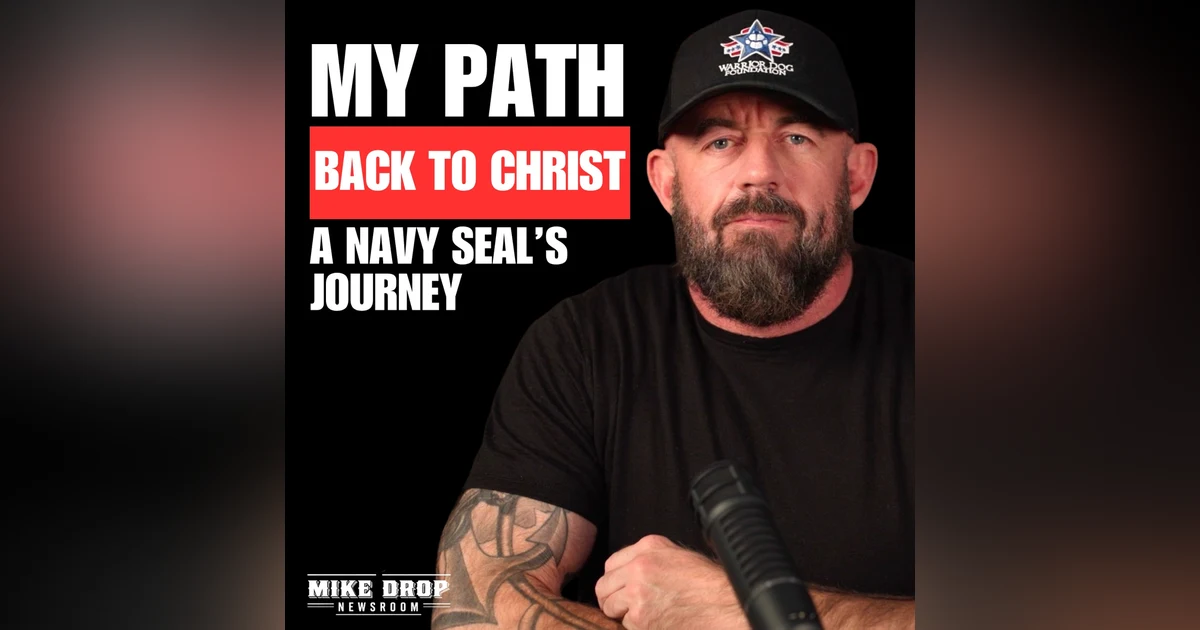
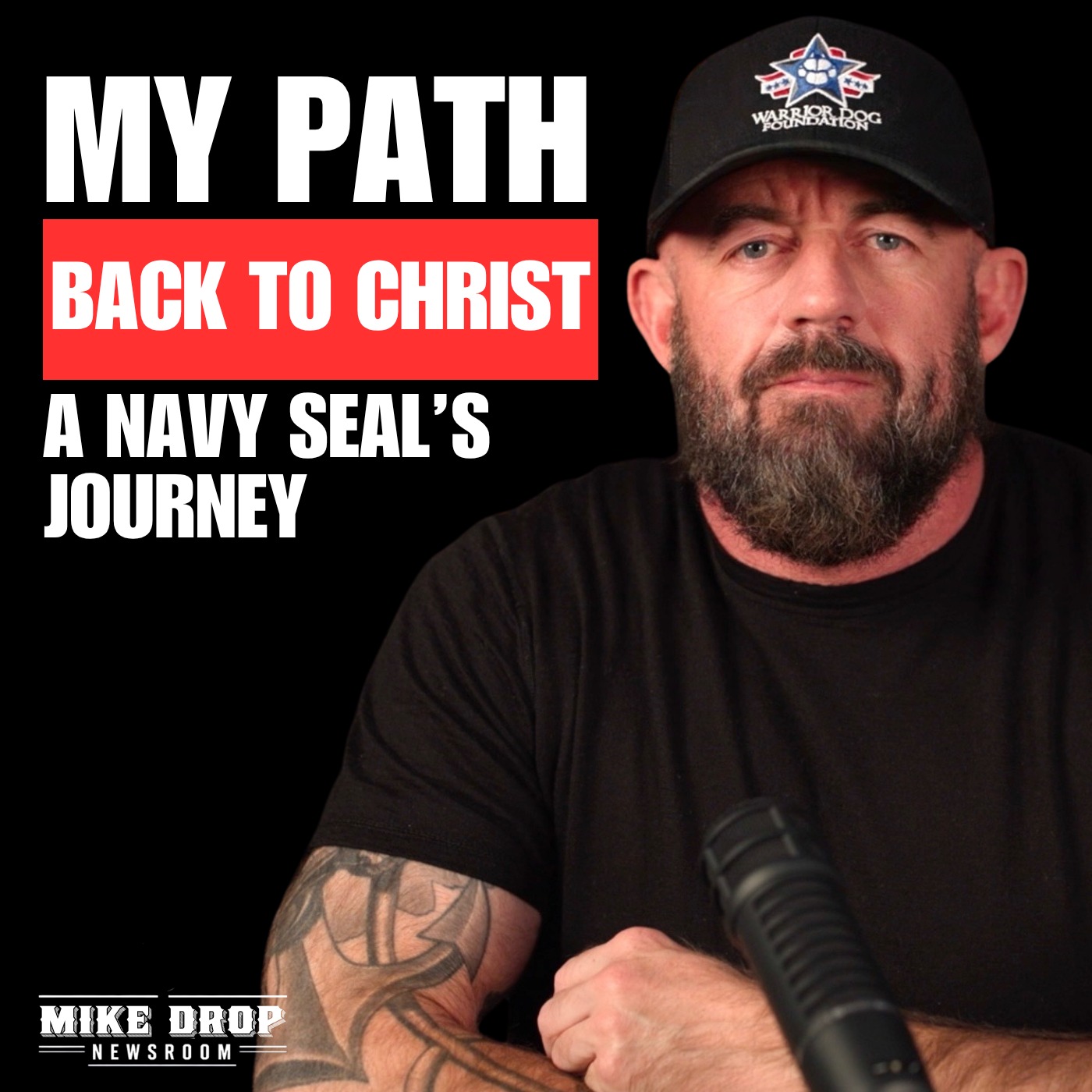
MIKE DROP NEWSROOM | 04 OCTOBER 2026
A long one for Sunday. There's no Wall Street Journal today, so Mike covers the New York Times and then shares the story many of you asked for: his path back to Christ.
He starts by setting the record straight. After hearing from viewers, Mike walks back his comments on the Cornell case. He says he was guilty of the same rush to judgment he warns against, and he'll wait for the facts. He also shares what viewers in France told him the coverage of the riots there is missing.
The headlines: protesters in canoes outside Chief Justice John Roberts' home in Maine. AIPAC has raised $233 million for the midterms. A report says President Trump directed $20 million in taxpayer money toward TV ads. Binance founder Changpeng Zhao's new role advising governments on crypto after his pardon, and his company's business ties to World Liberty Financial. And a Times opinion piece asking whether Democrats can win back religious voters.
Mike's take: protest all you want where officials work, but leave their homes and families alone. He thinks any PAC tied to a foreign country, whichever country it is, shouldn't have a role in U.S. elections. Taxpayer money shouldn't fund ads praising any president. And no one in office should profit from policy they control, period. He also challenges fellow Christians to judge less and show more grace.
Then the story: a Lutheran upbringing, a faith that fell apart through SEAL deployments, war and fatherhood, and decades of walking away. Then came the faithful men who appeared on the podcast, the week Charlie Kirk was killed, an unplanned Sunday at church that his kids shared without knowing it, and how he finally made peace with the question of free will.
Your turn. Should protests at officials' homes be off-limits? Should foreign-focused PACs be banned? And if you've walked away from faith or found your way back, what made the difference? Tell us in the comments, and as Mike asks, be kind to one another.
Timestamps
0:00 Happy Sunday: a long one
0:50 Mike walks back his Cornell comments
2:55 What viewers in France say the coverage is missing
5:45 Protesters outside Chief Justice Roberts' home
8:20 AIPAC money in the midterms
10:25 Should foreign-focused PACs be banned?
12:05 Taxpayer-funded ads praising Trump
14:10 A quick detour through Arts and Styles
15:00 The Binance founder's pardon
16:55 World Liberty Financial and conflicts of interest
19:35 Mike's honest questions about crypto
23:05 Can Democrats win back the faithful?
24:35 Judgment, grace and how Christians treat others
28:20 Mike's three morning books
29:35 Mike's path back to Christ
30:50 How deployments shook his faith
34:10 War, fatherhood and the free will question
36:15 Decades away from faith
37:00 The faithful men who came on the podcast
39:10 The day Charlie Kirk was shot
41:15 Walking into church
43:20 The call with his kids
47:55 How the free will question finally made sense
52:30 A story from an underground church in Iraq
56:15 A resurgence of faith
57:30 Closing prayer
Former Navy SEAL Mike Ritland reads the Wall Street Journal and the New York Times so you don't have to. No cable news spin, no recycled talking points, just the actual front pages and a straight take on what they mean for you.
On Mike Drop Newsroom, Mike picks the day's biggest headlines, compares how two of the country's largest papers cover them, and says what he thinks. That covers everything from AI and national security to the economy, foreign policy and the stories cable TV skips. He's not here to push a party line. As Mike puts it, if you want to put a label on him, he's an American who wants to see America succeed.
Every episode ends with a question for you. Tell us where you land in the comments, because Mike reads them and your answers shape what we cover next. Subscribe so you don't miss a morning.
Advertising Inquiries: https://redcircle.com/brands
Privacy & Opt-Out: https://redcircle.com/privacy
0:00 [SPEAKER_00]: mic drop newsroom where the front page gets a second opinion. [SPEAKER_00]: Happy Sunday everyone. [SPEAKER_00]: Fair warning, this is probably going to be a long one, so strap in buckle up and just realize I've had enough people ask for kind of my my path back to Christ and I do want to share that with you guys, but there's also a number of headlines that [SPEAKER_00]: I do feel our warranted. [SPEAKER_00]: There's no Wall Street Journal today. [SPEAKER_00]: It's just the New York Times. [SPEAKER_00]: And before I even share the headlines, I appreciate everybody's feedback on some of the stories I talk about, some of the kind of miscalculations or misrepresentations that both sides of the media kind of enact on what those stories are and the slants that are associated with them.
0:52 [SPEAKER_00]: So I wanted [SPEAKER_00]: take a minute to address two stories in particular, but also cover kind of the broader context of that. [SPEAKER_00]: The first one is the Cornell case. [SPEAKER_00]: I had a lot of people message in, both, I mean, comments and messages talking about the lack of [SPEAKER_00]: prosecution on the law enforcement's part based on the statement of the victim and that that's why they didn't press charges because of a changing story, et cetera. [SPEAKER_00]: Now, to be clear, you know, these are messages from people, a number of people, does necessarily mean that it's 100% accurate, but my point in all of this is that [SPEAKER_00]: I need to take my own advice and take accountability for not rushing to judgment.
1:42 [SPEAKER_00]: I mentioned that the first time I talked about the story in terms of not allowing yourself to kind of pre-judge and come to some predetermined conclusion about what a case represents or [SPEAKER_00]: or more importantly, the parties on both sides, both the, you know, the victim and the alleged accuser and, you know, the different, I guess elements of the cases to not make assumptions on it, you know, and I did that, you know, I assumed and, and by that, I assumed when I said that it sounded like the law enforcement component did not do their job or did a poor job, I shouldn't have said that.
2:25 [SPEAKER_00]: I don't know that they did that, that's what it seemed like and I am and was just as guilty as anyone else of making assumptions and rushing to judgment. [SPEAKER_00]: So I'm going to retract a bit or take a step back rather and just say it's a terrible situation. [SPEAKER_00]: I don't know any more than that other than what anybody else has heard or read. [SPEAKER_00]: and so I'm going to wait for it to pan out before I share any opinion other than the fact that it's a terrible situation across the board. [SPEAKER_00]: The second thing was just kind of from a broader spectrum of the riots in France.
3:07 [SPEAKER_00]: I had a number of people from France living there experiencing it, [SPEAKER_00]: So I appreciate the support. [SPEAKER_00]: I also appreciate the insight and they wanted to clear a few things up because the way it's represented, especially in the New York Times, but really on. [SPEAKER_00]: on all fronts of mainstream media from what I've seen is that the students, in this case, are refugees, migrants from Africa that are kind of, you know, only been there for a brief amount of time and the overwhelming majority of these violent riots are not homegrown French citizen students who are upset about, you know, the nature of the education system.
3:58 [SPEAKER_00]: you know, angle of society that that's not being accurately represented in the media here. [SPEAKER_00]: Seemed pretty frustrated on the French citizen's part about how it's being represented here. [SPEAKER_00]: So. [SPEAKER_00]: Again, thank you for the reminder from a lot of people, and I've talked about this. [SPEAKER_00]: The New York Times Wall Street Journal doesn't really matter what media source. [SPEAKER_00]: They all have their slants and angles. [SPEAKER_00]: But the way an article is written can obviously significantly shape your viewpoint, not just on what happened, but kind of the overall or broader [SPEAKER_00]: perspective on what you think about it and what the problem is or what the root cause is, et cetera.
4:44 [SPEAKER_00]: So I'll reiterate and me being a living, working example in doing these videos that the way things are represented are most times very, very slanted in a way that whoever wrote it and whatever editor and paper or media source that it's coming from. [SPEAKER_00]: It's very strategic and deliberate in how it's written to illicit certain emotions, responses and viewpoints on what that story represents. [SPEAKER_00]: So, I'm guilty, my bad, and I appreciate everybody's input. [SPEAKER_00]: That to me helps me grow as a man, a father, a human, and helps kind of hit the reset button on my understanding of these things.
5:37 [SPEAKER_00]: I will share the the religious component of my my story. [SPEAKER_00]: I think I've said component like five times now. [SPEAKER_00]: Try to clean that up because I'm sure I'll hear about it. [SPEAKER_00]: But there's no Wall Street Journal on Sunday just the New York Times. [SPEAKER_00]: So keep that in mind. [SPEAKER_00]: The main story with a picture is in his island retreat. [SPEAKER_00]: The chief justice finds himself isolated. [SPEAKER_00]: This is in port-clied main. [SPEAKER_00]: This is Chief Justice John Roberts. [SPEAKER_00]: I don't know if you guys can see that. [SPEAKER_00]: Yeah, there you go. [SPEAKER_00]: There's a picture of two people in a rowboat or in a canoe rather. [SPEAKER_00]: And they're floating off of Chief Justice Roberts' private property and protesting.
6:23 [SPEAKER_00]: And now I mentioned yesterday, I'm all about protest. [SPEAKER_00]: I think it's a necessary, [SPEAKER_00]: measure that our society, A needs to be able to do and B needs to exercise on a regular basis to get their point across and their opinions heard when voting only does so much and it's only so often and has its own challenges in terms of enacting change. [SPEAKER_00]: To me, this is one of those cases, though, where there's a difference between, or I would say, just because something is legal doesn't mean that it's right. [SPEAKER_00]: You know, again, I'm all for protesting and if you disagree with Chief Roberts' viewpoints and decisions on policy and rulings, et cetera, by all means protest it.
7:08 [SPEAKER_00]: But from my perspective, I would say, I think it makes sense and is fair to protest it outside of where he's actually doing the things that you disagree with. [SPEAKER_00]: I.E. [SPEAKER_00]: where he works, you know, that's a good place to protest. [SPEAKER_00]: I think. [SPEAKER_00]: showing up at somebody's house where they live, you know, and they're with their family. [SPEAKER_00]: That's where I would draw the line. [SPEAKER_00]: That's just my personal opinion. [SPEAKER_00]: Again, I'll kick it back to you guys in the comments. [SPEAKER_00]: Do you think that it's right and okay to protest outside people's houses? [SPEAKER_00]: I don't. [SPEAKER_00]: I think, you know, it's where you want to call it an unwritten rule or just basic human decorum.
7:49 [SPEAKER_00]: I think that, you know, that's where it makes sense to leave people alone in their private lives. [SPEAKER_00]: And wherever you take issue with, especially, you know, public officials, you know, private is maybe even a little more. [SPEAKER_00]: or I would be a little more sensitive to you and where you're protesting there, but it's beside the point we're talking about, you know, politicians and elected officials, is that I think, you know, to me it makes sense to only do that where, where they work. [SPEAKER_00]: I'll ask you guys, though, what do you think? [SPEAKER_00]: Do you think it's warranted to [SPEAKER_00]: float in a canoe off of somebody's property and hold up signs and and pester them in protest there if you do I'd love to hear that you think it's okay and why you think it's okay.
8:37 [SPEAKER_00]: The next headline for midterms apac money widens divide. [SPEAKER_00]: Well, as in five years after its entry into the U.S. political campaigns, the American Israel Public Affairs Committee is now one of the best funded players in the midterm elections. [SPEAKER_00]: It has also become one of the most polarizing. [SPEAKER_00]: A pack is raised 233 million to support its friends and attack its perceived foes. [SPEAKER_00]: Even as public sentiment has shifted sharply against its singular cause, which is American support for Israel. [SPEAKER_00]: Here's the issue I take with this is not singularly who it is and who they're aligned with. [SPEAKER_00]: Like I think a lot of people would, here's where I would draw the line in terms of PAC support.
9:20 [SPEAKER_00]: And I've talked about this with, you know, Crenshaw on my show and several other people that have been running for office. [SPEAKER_00]: You know, a lot of people are against super PACs and PACs in general, where there's millions [SPEAKER_00]: politicians. [SPEAKER_00]: And as much as I hate to see that and I think most people hate to see, you know, different ad campaigns and slander campaigns all over, you know, TV, radio, social media, you name it. [SPEAKER_00]: I mean, we're inundated with it during election cycles. [SPEAKER_00]: And that's frustrating. [SPEAKER_00]: It's irritating, et cetera. [SPEAKER_00]: But to ban that does go against the first amendment.
10:05 [SPEAKER_00]: As much as I [SPEAKER_00]: Where the first amendment is most crucial and most important is the things that you don't agree with. [SPEAKER_00]: It's easy to be okay with the things that you agree with for, as it relates to the first amendment, being okay with them being published or posted or what have you. [SPEAKER_00]: It's the things that you disagree with because that's really what protects everyone's viewpoint. [SPEAKER_00]: So, [SPEAKER_00]: However, the problem that I do have with this is one kind of key aspect which is, let's see, I just want to make sure I get the name right, American Israel Public Affairs Committee.
10:48 [SPEAKER_00]: So I want to remove Israel for a second because that's such a hotbed topic in recent months. [SPEAKER_00]: I understand why recent years rather. [SPEAKER_00]: To me it's the fact that it's any foreign country, you know, to me if you were to replace Israel with Pakistan, if it was, you know, sorry I have to read it again. [SPEAKER_00]: The American Pakistan Public Affairs Committee, I would have the same problem with it, you know, fill in that blank with any country. [SPEAKER_00]: And I do think that there should be a law against any, you know, politician or political action committee. [SPEAKER_00]: that has, you know, a reference to a foreign country's, you know, affairs.
11:31 [SPEAKER_00]: I just, to me, that seems like a pretty blatantly obvious thing that you shouldn't be allowed to do. [SPEAKER_00]: You know, our, our relationship with any foreign country shouldn't be part of a political action campaign for any U.S. politician. [SPEAKER_00]: To me, that seems pretty cut and dry. [SPEAKER_00]: Again, I'll kick it back to you guys. [SPEAKER_00]: Does anyone in the comments agree with, you know, whether it's a pack or any, any pack that has a relationship with a foreign state or government, country, et cetera, and being okay with that and think that that would fall into the first amendment thing? [SPEAKER_00]: To me, when it comes to elect electing politicians that dictate both national policy and foreign policy, I don't see a fair argument for allowing that.
12:20 [SPEAKER_00]: I'll kick it to you guys and you tell me, [SPEAKER_00]: The next one, Trump ordered public funding for praise ads, $20 million campaign. [SPEAKER_00]: President Trump's personally instructed his budget director to use taxpayer money for TV ads, praising him and his presidency. [SPEAKER_00]: Here's one of those things where I would be curious to see what these ads actually praise if it's him or just the country, because that's a huge distinction. [SPEAKER_00]: I don't want to assume that the New York Times is jumping to conclusions, but I want [SPEAKER_00]: entertain the possibility that that could be the case. [SPEAKER_00]: I would be relatively supportive of taxpayer funded ads that support the country and infuse patriotism.
13:10 [SPEAKER_00]: Even with that, though, is a point to a point where with all of the other things that require funding and the dire straits that so many aspects of our society is in, [SPEAKER_00]: I don't see that as a good use of taxpayer funding. [SPEAKER_00]: We were in a budget positive or a surplus rather in terms of our national debt and it made sense to try to infuse some patriotism, then I think you could make the argument for sure if it's ad campaigns that are praising him and his administration a thousand percent [SPEAKER_00]: If you want to use your own money to do that, not yourself out, but you know, to use tax payer funded money to me, tax payer funded money needs to be protected and run through a series of checks and balances and gatekeeping, and this is for everything, whether it's foreign aid, whether it's domestic policy and where things are budget or what things are budgeted for, you know, that's the taxpayers dollars and it shouldn't be used for anything [SPEAKER_00]: Let's see, the one, this I just kind of found funny, I guess.
14:29 [SPEAKER_00]: This is an arts and leisure, which I can't imagine any of you are going to care about. [SPEAKER_00]: But Kyle Magalaclan says he's not quirky, which if you have to tell somebody you're not quirky, you're probably quirky. [SPEAKER_00]: All right, moving on to Sunday styles. [SPEAKER_00]: Again, is there much in here that I care about? [SPEAKER_00]: No, however, I don't know the listenership. [SPEAKER_00]: I know we're most of you lean, but Tom Ford and the problem of sexy can probably file that into the list of problems that Tom Ford and I, in fact, do not share. [SPEAKER_00]: going into the finance section.
15:10 [SPEAKER_00]: Out of prison and treated like royalty, since his pardon, by President Trump, Chang-Pang-Zao, the Binance founder, has advised governments on crypto regulation. [SPEAKER_00]: There's part of this that's frustrating, part of it that's not for me. [SPEAKER_00]: You know, I always want to know your guys' viewpoints on it. [SPEAKER_00]: In this particular case, [SPEAKER_00]: ended up getting a case and criminal charges brought against him did a four-month stint in prison and then was released i.e. [SPEAKER_00]: pardon by president trump now where i would be okay with this is if some of what he was doing was all of what he was doing which is helping advise you know the u.s. government and and even global governments on [SPEAKER_00]: you know kind of the the back room or behind the curtain aspect of crypto and and how to a regulate it better regulate it and you know just helping them understand the same way you know a hacker who you know gets put in prison for a few months and then goes and works for the US government and in some sort of you know law enforcement or intelligence capacity and and uses the skill sets that landed them in jail to actually benefit for the good [SPEAKER_00]: In this case, says these days, Mr. Zow, which kind of sounds like James Bond villain, is 49, moves through the world like ahead of state, and he's worth $117 billion, so you're older than me and he's worth $117 billion, which means that not only is he older than me, he is worth $117 billion more dollars than I'm worth.
16:59 [SPEAKER_00]: To me, that's a fascinating amount of wealth to be able to accumulate on crypto, and we'll get into crypto here in a second. [SPEAKER_00]: But one of the other sentences that stuck out was by-nance forged a business relationship with world liberty financial. [SPEAKER_00]: The crypto startup founded by President Trump and his three sons, world liberty generated $799 million from Mr. Trump last year, and that is verifiable. [SPEAKER_00]: The huge problem I have and this isn't specific to Trump, this is specific to or applies to any politician, anybody who's in public office that from a conflict of interest standpoint sits in a position where they are forging and acting, instituting, and passing legislation or policy that directly benefits them.
17:51 [SPEAKER_00]: That is a huge problem. [SPEAKER_00]: I know [SPEAKER_00]: I don't know if any of you that's going to disagree with that again, I will say if there are. [SPEAKER_00]: My mind's open. [SPEAKER_00]: If you can change it, I'm willing to change it. [SPEAKER_00]: I don't see how that [SPEAKER_00]: in any capacity is okay where especially with, you know, the clarity act as an example is something that has been slow rolling through the house and our government for a while now and it kind of sets the boundaries, the guidelines, the framework for crypto policy here in the United States and you know that's an important piece of legislation to at least get passed in whatever capacity so that [SPEAKER_00]: You know, the different crypto elements of everyone here in the United States and even globally, I think, you know, have an idea of where it's going and how it can or will be utilized.
18:41 [SPEAKER_00]: But, you know, when world liberty, world liberty financial is owned by his three sons and there's a vested interest in it and they're partying a guy and then now he's coming on board to help. [SPEAKER_00]: help make them $800 million. [SPEAKER_00]: How is that not a problem? [SPEAKER_00]: That's a huge problem. [SPEAKER_00]: Couldn't be more against that. [SPEAKER_00]: You know, and here's where I would say, you know, any public office again, if you are in a position where you have the ability to influence and control policy, you should not buy its very definition be allowed to be involved in that industry.
19:28 [SPEAKER_00]: I don't know how that's not the case other than the fact that the only people who would be able to make that a rule are the people who are benefiting, just like we talked about yesterday, they're not going to do that. [SPEAKER_00]: I'm curious to get your guys to take. [SPEAKER_00]: If there's anyone in here who thinks that that's cool, please tell me why you think it's cool. [SPEAKER_00]: Now, crypto in general. [SPEAKER_00]: talked about it in a little bit, a fair bit on the show in different episodes with certain guests a little bit on these morning headline stuff. [SPEAKER_00]: But here's where I will default to the crypto experts out there. [SPEAKER_00]: I am absolutely not. [SPEAKER_00]: It's a strange currency if you even can really technically call at that.
20:10 [SPEAKER_00]: What doesn't make sense to me and what gives me pause or concern [SPEAKER_00]: You know, every other currency out there, at least that I'm aware of, is tied to an economy of some sort. [SPEAKER_00]: You know, now granted, the euro is tied to a number of economies, but obviously, you know, any, any fiat currency of the US dollar, et cetera. [SPEAKER_00]: is generally tied to an economy where you can have an understanding of, you know, you look at GDP and the health of that overall economy and you get a sense for what that currency represents. [SPEAKER_00]: With crypto, it doesn't. [SPEAKER_00]: It's digital and it's all, I don't want to say, made up, but it is kind of essentially made up or it's crafted.
20:53 [SPEAKER_00]: I mean, it's invented. [SPEAKER_00]: But it doesn't represent an economy the same way that Fiat currency does from my perspective. [SPEAKER_00]: I could be totally wrong on this. [SPEAKER_00]: I hope I'm wrong. [SPEAKER_00]: I hope somebody out there can shed some light on that and explain how it's not that way, because if it's not, that would give me some reassurance. [SPEAKER_00]: But the thing that worries me is the kind of the Ponzi scheme aspect of it, and that [SPEAKER_00]: You know, how does one really determine its value other than just the wide swath of the common view of what they think it's worth? [SPEAKER_00]: You know?
21:34 [SPEAKER_00]: I don't know really how to reconcile that, and there's so many of them at this point. [SPEAKER_00]: You know, there's a difference between utility tokens and kind of crap coins, if you will, or meme coins, you know, and there's a handful of utility tokens that I do think can or would make sense, say XRP as an exam as one example, there's a number of them just for sake of kind of argument. [SPEAKER_00]: You know, replacing the swift banking system, which is pretty archaic, ripe for fraud and happens all the time, especially in real estate, where people are being conned out of their money, because they're wiring money to somebody who gets their email and gets involved in that chain.
22:20 [SPEAKER_00]: It's faster, it's cheaper, it's more secure, at least right now. [SPEAKER_00]: So something like that, like that makes sense. [SPEAKER_00]: But again, full disclosure, I don't completely understand it to agree with which I can really sit here and wax poetic or educate any of you on the intricacies of it. [SPEAKER_00]: I would love for somebody to dumb it down for [SPEAKER_00]: for us laymen and kind of give an analogous summary of how it works and why it's good or why it's bad. [SPEAKER_00]: It's a curious thing, but back to the original story, any politician should not be able to be in a position where they're making money off of their policy.
23:03 [SPEAKER_00]: I mean, that's a pretty much textbook, you know, government 101, you don't do that. [SPEAKER_00]: How it's allowed is baffling. [SPEAKER_00]: Last thing in the times is the Sunday opinion, and it's can the Democrats win back the faithful. [SPEAKER_00]: The Senate hopeful James Talarico offers a path. [SPEAKER_00]: Now, I'm not going to get into the back and forth of Republicans versus Democrats and going after the religious vote. [SPEAKER_00]: I've always had a bit of a problem with. [SPEAKER_00]: either side going after a demographic and targeting them, whether it's based on race, religion, economic status, what have you is targeting specific blocks of voters and adjusting or buffering your policy to adhere to those groups, standards or wishes or preferences, et cetera.
24:02 [SPEAKER_00]: I just think is lame, you know, to me, you should stand up for what you believe in, and if that has anything to do with religion, great. [SPEAKER_00]: The bigger takeaway from this, though, is, you know, being here in Texas, the Taloreco ads have been incessant, you know, there's been, you know, positive ones, negative ones. [SPEAKER_00]: It's been a very divisive from a political aisle standpoint. [SPEAKER_00]: candidate. [SPEAKER_00]: And a lot of it comes down to religion. [SPEAKER_00]: I've seen signs, you know, demonizing him talking about, you know, he believes in six genders and all this other stuff. [SPEAKER_00]: But the, you know, all that stuff, I think most of you know, kind of where I stand on that, which is with, I disagree probably with, with a lot of or most of his angles on stuff.
24:48 [SPEAKER_00]: But when, when you bring the religious component in, [SPEAKER_00]: The thing that bothers me and that I want to kick to you guys again for your opinion is the judgment aspect of it. [SPEAKER_00]: As Christians, specifically Christians, I don't want to speak for Judaism, Islam, Hinduism, Taoism, Buddhism, any of the other religions out there that all [SPEAKER_00]: I respect, appreciate and certainly love to see everybody having their own path and what they believe in and if that works for them. [SPEAKER_00]: But on the Christian side in particular, it's pretty clear to not judge people, you know, is to basically use and implore the same grace and lack of judgment.
25:40 [SPEAKER_00]: that the man upstairs offers you to everyone else. [SPEAKER_00]: And I just, man, I do not see much of that. [SPEAKER_00]: I see a lot of the opposite of that where people who are kind of standing on the soap box and the fire and brimstone, you're going to hell and this is blasphemy and making all these comments is that take a step back, take a deep breath and realize that, [SPEAKER_00]: You know, your interpretation of what the Bible says and what God commands, you know, that's your interpretation and, you know, it's just kind of a mind-your-own business thing.
26:21 [SPEAKER_00]: I get that you don't like him. [SPEAKER_00]: I get that you disagree vehemently and you think that it's blasphemy, but, [SPEAKER_00]: To me, you know, my take on it is that, you know, everybody who judges anyone or everyone else on how they live their life and whether or not they're abiding by the Christian values that you abide by, you know, kind of misses the mark in my opinion. [SPEAKER_00]: It's not that I don't understand, you know, [SPEAKER_00]: frustration and even maybe anger towards some of it because you may think that it is so blasphemous that you can't stay out of it.
27:05 [SPEAKER_00]: And for those out there that do kind of fall into that category, I would ask, what do you think? [SPEAKER_00]: Do you think that by adhering to those types of principles and vocalizing them that you're [SPEAKER_00]: zone, maybe I'm totally off the mark here again. [SPEAKER_00]: I'm always open to have my mind changed. [SPEAKER_00]: I actually enjoy having my mind changed, you know, because I feel like that's growth and I want to be open to changing a perspective or saying, you know what? [SPEAKER_00]: I didn't think of it from that way and yeah, you're right. [SPEAKER_00]: I agree with you.
27:46 [SPEAKER_00]: I'm all about that, you know, and I [SPEAKER_00]: would just ask that everyone, again, in the comments section, just be kind to one another. [SPEAKER_00]: You can get your point across without being mean, I promise. [SPEAKER_00]: And I would both ask and encourage everyone to at least try to do that. [SPEAKER_00]: But the toxicity of comment sections, I think, tends to bleed over or can bleed over into everyone's day-to-day lives and I think you may end up treating those who you love in a similar fashion because you're so used to doing it if you're doing it online all the time. [SPEAKER_00]: Just be kind. [SPEAKER_00]: Last thing I want to bring up is something that I read.
28:29 [SPEAKER_00]: There's three books that I read, the first one is called Beautiful Year with Jesus, second one, the daily stoic. [SPEAKER_00]: I actually love that book, last but not least, and I do it last, because it's my favorite, Jesus calling. [SPEAKER_00]: That's part of my morning routine, when I once I get up here after all the workout and cold plunge and all that stuff. [SPEAKER_00]: But there was one, one excerpt, I guess, [SPEAKER_00]: day 277. [SPEAKER_00]: I may not even be on the right day. [SPEAKER_00]: I'm probably not, but I wish that they put the actual date on there, but that just mean that picking. [SPEAKER_00]: But the last sentence of what I read yesterday actually is, let us move forward by exuding the grace you give us.
29:15 [SPEAKER_00]: Let us move forward by exuding the grace that you give us. [SPEAKER_00]: To me, that's the perfect summary of what I was trying to just say. [SPEAKER_00]: Put way more eloquently and briefly than I obviously can put it. [SPEAKER_00]: To me, that's the thing. [SPEAKER_00]: You know, exude the grace that God gives us. [SPEAKER_00]: And I think if you use that as a backdrop and or a pretext into everything you go into, I think the world would just be way better off. [SPEAKER_00]: That's my take. [SPEAKER_00]: Now, those are the headlines. [SPEAKER_00]: Now I'm gonna get into the path back to Christ and bear with me because again, this may be a long one and it may take me a little while to get through it.
30:01 [SPEAKER_00]: But so I was raised in a Lutheran household. [SPEAKER_00]: You know, went to church quite regularly. [SPEAKER_00]: It was absolutely a believer. [SPEAKER_00]: I went through the three-year confirmation process. [SPEAKER_00]: You know, I was definitely into it and you know, it was baptized the whole, the whole kind of nine yards up, bringing lies. [SPEAKER_00]: and stuck with it. [SPEAKER_00]: I would say even kind of lean into it a little bit more. [SPEAKER_00]: I went to uh, it was the first time I'd ever been to a big kind of mega church, non-denominational, it was very different than what I was used to and kind of a traditional Lutheran upbringing. [SPEAKER_00]: Miles McPherson, as a former San Diego charger, I think, was the pastor, and was super charismatic, to a great job.
30:44 [SPEAKER_00]: And there's just totally different, you know, there's a band, people are wearing shorts, it's like, it's, it's, it's, it's, it's, it's, it's, it's, it's, it's, it's, it's, it's, it's, [SPEAKER_00]: You know, it was very strange to me, but kind of in a good way, especially at that age, you know, I'm 18 years old and living, you know, in a totally new part of the country. [SPEAKER_00]: And outside leaned into it even harder, go through, you know, all of seal training and platoon workups and all that stuff and go on my first deployment and that's where everything changed. [SPEAKER_00]: It's first time I'd ever been outside the country, it's first time I'd seen cultures who were not Christian-based cultures and treated each other very, very differently. [SPEAKER_00]: And the more that I traveled with the Navy and doing the things that we did through subsequent, you know, trips overseas, that really rattled my faith.
31:36 [SPEAKER_00]: And I [SPEAKER_00]: to a gentleman's comment a few days ago who mentioned that he was a 20-year Christian and just walked away from it because of the treatment and misery and anger and violence and just on the paraphrasing and trying to summarize his comment. [SPEAKER_00]: But, you know, the just of it is that how could any just God allow the thing is to happen happen? [SPEAKER_00]: And that's exactly where I was for a very long time. [SPEAKER_00]: You know, being in a seal platoon as a young guy, I mean, I was, you know, 19 when I showed up to seal team three and surrounded by, you know, incredible, competent, capable, dangerous experienced men who had been all over the world, had done some pretty incredible things.
32:24 [SPEAKER_00]: And, you know, traveling all over the world with these guys, you know, as almost like mentors, [SPEAKER_00]: Um, you know, it was an incredible experience, but it did shape my faith that it was not a particularly popular thing, um, you know, there were a few guys that I recall, maybe my memory serves me incorrect, or maybe just guys weren't very vocal about it, but it was, it was not a very prominent thing at that time, where I was at. [SPEAKER_00]: I'm not making excuses. [SPEAKER_00]: I'm just saying that was the reality of it. [SPEAKER_00]: But for me, the biggest impact was going to, you know, places like the Philippines and, you know, Hong Kong and just, you know, Thailand.
33:09 [SPEAKER_00]: You know, seeing all these different cultures that had nothing to do with Christianity and some of them were brutal, some of them were not. [SPEAKER_00]: You know, but the broader takeaway was that I just didn't [SPEAKER_00]: It didn't make sense that there could be this amount of kind of misery and just degradation of society and cultures where it's just there's such a disparity and happiness between the one percent and everybody else. [SPEAKER_00]: But also from a purely religious standpoint, is that it made me question, okay, these people are born here, they're brought up with these different religions. [SPEAKER_00]: Okay, they're doing the same thing.
33:51 [SPEAKER_00]: I was doing in terms of believing in what I was raised to believe. [SPEAKER_00]: Why am I right and they're wrong? [SPEAKER_00]: You know, there's 300 million people in the United States. [SPEAKER_00]: It's mostly Christian, but you know, we're mostly Christian because that's how we were raised. [SPEAKER_00]: And it just kind of further cast doubt and shadows over what I believed in and made me really question it. [SPEAKER_00]: Then going to war, I would say, further, [SPEAKER_00]: You know, made me question my beliefs and really was difficult for me to think, okay, you know, hey, we're all gods, children, why, you know, knowing that everything's going to pan out the way that it's going to pan out, why on earth would you give human beings free will, knowing what they're going to do with it?
34:41 [SPEAKER_00]: It was probably the singular biggest thing I struggled with and I just could not wrap my arms [SPEAKER_00]: seeing a whole of just the atrocity taking place, you know, in Iraq and just understanding that man that like, how, how is this okay? [SPEAKER_00]: And then I had kids and, you know, if I think for a lot of people having children kind of tends to bring them back to their faith, [SPEAKER_00]: You know, makes them experience the miracle of life and kind of re or reenergizes, you know, their faith and brings them closer to God. [SPEAKER_00]: And, you know, for me, I felt guilty and kind of ashamed that it did the opposite.
35:25 [SPEAKER_00]: And the reason that it did the opposite was that, okay, now I am a father, right? [SPEAKER_00]: It's God the Father and now I'm a father. [SPEAKER_00]: I have my own children. [SPEAKER_00]: You know, if one of my kids had a two by four with nails sticking out of it, getting ready to smack the other one, like, I'm for sure stepping in on that, zero chance I'm letting that happen. [SPEAKER_00]: So for me, that further clouded my idea of free will and us being God's children and [SPEAKER_00]: And again, why on earth would you let human beings treat each other the way that we do in so many capacities? [SPEAKER_00]: Now, I want to be fair, there's a ton of amazing people who treat each other phenomenally.
36:09 [SPEAKER_00]: I don't want to just focus on the negative. [SPEAKER_00]: But that's where I was in my life. [SPEAKER_00]: I'd lost a ton of friends, seeing a lot of evil stuff, had fought against it, had kids, and seeing like, man, I wouldn't let them, I wouldn't give them free will. [SPEAKER_00]: Why would you give us free will? [SPEAKER_00]: So just made it worse. [SPEAKER_00]: And then years and years went by. [SPEAKER_00]: So now we're talking a couple of decades of walking completely away from it. [SPEAKER_00]: Scoughing at it, making fun of it, [SPEAKER_00]: being arrogant about it, frankly, and saying like it's stupid, you know, it's like the Easter Bunny or Santa Claus, like it's ridiculous.
36:50 [SPEAKER_00]: I can't believe people believe in that. [SPEAKER_00]: I mean, those are some of the thoughts that I had in those years. [SPEAKER_00]: And then I started the podcast, and, you know, it wasn't something that I [SPEAKER_00]: You know, had this grand plan to do, it was more of a, hey, let's try it and see how it goes and it went well enough to keep doing and so I kept doing it. [SPEAKER_00]: However, one of the things I experienced in the military was meeting guys, you know, obviously the seal teams are all male, you know, so meeting men that [SPEAKER_00]: you know guys I'd never met before but the second they walk into the room there there's just something different about them and you know whether it's leadership whether it's setting the example taking accountability you name it there's just this air about them that I was like man like I would follow that dude into war thousand percent you know and you knew it immediately you know is palpable the second you you experienced kind of the the vibe and energy that they put [SPEAKER_00]: So now, you know, I'm doing the podcast and occasionally there are guests that come on that I get that same exact feeling from.
38:00 [SPEAKER_00]: There was this common denominator that I didn't pick up on at first. [SPEAKER_00]: As it happened more and more frequently, I started to make the connection and that in every single instance, not most, not almost all, every single instance. [SPEAKER_00]: Every one of those guys were deeply, deeply rooted in their faith. [SPEAKER_00]: And by that, I don't mean, they say, yeah, I'm a Christian, I believe in God. [SPEAKER_00]: I'm talking about every decision that they make is seen through the lens of their faith. [SPEAKER_00]: And that drives all of their decision-making process in every way, both personal and professional. [SPEAKER_00]: And they professed that, you know, at pretty much every turn.
38:47 [SPEAKER_00]: I just started to notice it at first and thought, huh, it's a strange coincidence. [SPEAKER_00]: But then it just kept happening and happening and happening. [SPEAKER_00]: And I don't think that that's a coincidence or a mistake. [SPEAKER_00]: And I think that those men were put in my life for that reason. [SPEAKER_00]: And it was something that again did not take place quickly. [SPEAKER_00]: It was slow. [SPEAKER_00]: But even still, [SPEAKER_00]: As I noticed it more and more, it made me curious. [SPEAKER_00]: But that was really about it. [SPEAKER_00]: It was more of a curiosity thing. [SPEAKER_00]: So much as a, hey, let me jump on this, this train and blow the whistle and go full bore. [SPEAKER_00]: Then Charlie Kirk was shot.
39:28 [SPEAKER_00]: And if you had told me, you know, prior to that happening that, you know, or it may be asked me, hey, if this happens, [SPEAKER_00]: what impact do you think it would have on you? [SPEAKER_00]: I would say minimal to none. [SPEAKER_00]: You know, not that I didn't like the guy or not that I disliked him or certainly didn't wish any harm on him, but I wasn't a huge fan of his. [SPEAKER_00]: I mean, I've seen a few of his videos and, you know, kind of agreed with some of the things he said, disagreed with some, but [SPEAKER_00]: uh... just i guess ultimately i i didn't pay a ton of attention to him so i wouldn't have thought you know that that that would have had a huge impact people die every day people are murdered every day but when that happened it had a profound impact on me that i i was not expecting uh... and and i also couldn't really rationalize it [SPEAKER_00]: You know, I was thinking about it incessantly and it was not just the fact that he was killed.
40:25 [SPEAKER_00]: It was how it was where it was when it was why, you know, there were all these things kind of swirling around in my mind that I was just like, man, I don't know why this is having such a profound impact on me, but it is. [SPEAKER_00]: At that same time, it happened on, I want to say a Tuesday or Wednesday. [SPEAKER_00]: And almost immediately, I felt this draw, this desire and this pull towards going to church that weekend. [SPEAKER_00]: I had not been in a long time. [SPEAKER_00]: I mean, years, decades, maybe, and I was just like, man, I have this. [SPEAKER_00]: unquench need to go to church this weekend and kind of see what the almost biblical responses to this and see if I the only one feeling this way is there, you know, there's some thing that I just don't, I don't know, it was impossible to really wrap my arms around I was like, man, I have to go, so I went and it was one of the closest churches here, I wasn't [SPEAKER_00]: You know, super deliberate in which one I picked.
41:32 [SPEAKER_00]: I just was like, man, I want to go to one and so when I have a few good reviews it's right down the road let me check it out. [SPEAKER_00]: And the second I walked in is this is a non-denominational I wouldn't say it's a mega church. [SPEAKER_00]: You know, it's not huge, but it's just kind of at the same set up where it's the non-denominational casual whatever. [SPEAKER_00]: The second I walked in there was a song playing and I'm not a hundred percent sure I would say I'm 99 percent sure because it was a song I'd never heard before. [SPEAKER_00]: and only heard it, you know, a few weeks later and recognized it, but I think that it was the song Oceans by Hillsong United, I think, and the second I walked in, I was completely overcome with emotion.
42:12 [SPEAKER_00]: I mean, completely overcome. [SPEAKER_00]: I mean, before I even sat down, tears were streaming down my face and I couldn't understand it. [SPEAKER_00]: part of it I think was the song because I came to listen to it later and there's there's one version of it on YouTube that's performed in Israel right on the dead sea I think during the daytime and I encourage any of you watching to to check that specific version out it's it's it's incredible every time I listen to it it'll it'll it'll listen it's just a super strong emotion just like when I walked into church that day but [SPEAKER_00]: at any rate, you know, it was a pretty normal service that actually didn't talk much about it, but it was just a very holy spirit moment for me, which I had never experienced before.
43:00 [SPEAKER_00]: I had heard people talking about experiencing that and always thinking and really wishing, like, man, I want to know what that feels like or be like, man, if I felt that before and I just don't know, no, you would absolutely know. [SPEAKER_00]: But it was that kind of moment for me where it changed me inside. [SPEAKER_00]: And it was super, super powerful, super emotional and super impactful. [SPEAKER_00]: Now, here's where it gets super interesting. [SPEAKER_00]: I've said super like 10 times now. [SPEAKER_00]: Back to my kids, growing up, we never took them to church. [SPEAKER_00]: We did baptize both of them mostly out of tradition.
43:44 [SPEAKER_00]: Um, you know, but didn't make a regular habit of going to church now one of my kids as she got older grew into her faith more and and went to church fairly regularly and and definitely was, um, you know, different despite anything that I ever did that's that's for sure. [SPEAKER_00]: My other child was very much not into it, you know, it's a non-believer, was skeptical, scoffed at it. [SPEAKER_00]: Certainly was not disrespectful or mean, but just I think we didn't talk much about it the little bit that we did, you know, I was always like, man, I just, that doesn't make sense. [SPEAKER_00]: Here's why it doesn't make sense. [SPEAKER_00]: The free will thing kind of summarizing all the things that I've already mentioned and, you know, she's like, yeah, that kind of makes sense.
44:29 [SPEAKER_00]: It doesn't really make sense to me either. [SPEAKER_00]: Here's what's crazy is that I had talked with them throughout the week a little bit. [SPEAKER_00]: They were both kind of shocked by the Charlie Kirk thing, but it was more just like, I can't believe that happened here in the United States, the graphic video, that it was just more shocked than anything. [SPEAKER_00]: So that same day, Sunday night, they're both off at college, and they face time me out of the blue. [SPEAKER_00]: And, you know, I was just like, oh, hey, you know, [SPEAKER_00]: refreshing to see you guys with what's happening and both of them had gone to church. [SPEAKER_00]: We didn't talk about it. [SPEAKER_00]: One of them hadn't been more than a couple of times in their life, the other one, again, had gone, but both of them felt that same draw, felt that same kind of just lack of understandable need to go to church that day.
45:28 [SPEAKER_00]: And we hadn't communicated that. [SPEAKER_00]: It was, you know, completely, I don't want to say by chance because I don't believe that, you know, but it was, it was all kind of happening at the same time and we weren't aware of it with one another and I told them was like, so did I. [SPEAKER_00]: They were astounded. [SPEAKER_00]: I was astounded and next thing, you know, all three of us are kind of choked up and crying and it's hard to speak. [SPEAKER_00]: You know, try to rationalize all of it really couldn't, but just such a powerful moment, and a life-changing moment for me. [SPEAKER_00]: You know, the... [SPEAKER_00]: Experiencing all of that in that week I think not I think coupled with the slow burn of of all the guests on the show and I want to thank everybody There's too many to mention but all of the amazing men that have come on the show the deeply rooted in their faith I want you to know You absolutely had a direct impact on on my returning to my faith and in such a powerful way and I think you and God for that Just just amazing, but [SPEAKER_00]: you know experiencing that with my kids in the way that it impacted them the way that it impacted me all three of us going to church without you know coordinating that whatsoever in none of us two of the three of us hadn't been in a long time it was life changing and has been ever since and and obviously as you guys know this was not very long ago right the slow burn obviously took place over last few years but the the light switch moment of
47:05 [SPEAKER_00]: and connecting with my children in that way was just barely a year ago, and it's been such a life-changing year for all of us. [SPEAKER_00]: All of us have grown into that in a way that if you had to tell me this five years ago, I had said you are on drugs, there is zero chance of that happening. [SPEAKER_00]: It's just incredible, you know, it's hard for me to even tell the story without getting choked up a little bit and kind of, I can feel the emotion coming through a little bit. [SPEAKER_00]: Take a quick pause, try to keep it together here to keep the video going, but just remarkable.
47:46 [SPEAKER_00]: Incorporated reading the Bible and scripture and daily passages into my morning routine, praying a lot, talking to Jesus throughout the day, it's changed how I treat people, it's changed my attitude towards life, towards everything, and I want to close by coming back to the free will thing that I [SPEAKER_00]: Finally, kind of came to a conclusion that made sense and this is where it all changed for me right around that same time, which is, and this is probably going to be hard for some people to hear or it may seem calisive, but where it finally clicked and made sense for me was again and being a father and it kind of came full circle, I think, for some [SPEAKER_00]: you know watching them grow up and anybody who, especially anyone who has kids and anybody who's been around, you know, kids, there's a perspective and a relativity that is interesting and funny sometimes, you know, we all, especially again the parents out there, but you know, we've all seen children who, you know, something is [SPEAKER_00]: Simple as a toy being taken from them or being sent to the room being told to take a nap You're not getting to go over a so-and-so is how it's because you did this For them and it's all relative and it makes sense because for them in their life That is the worst thing that's ever happened to them and to them it is the worst day of their life
49:27 [SPEAKER_00]: They can't imagine anything worse than that. [SPEAKER_00]: And it blows their mind that you could possibly do that to them. [SPEAKER_00]: Now, to us, as the parents, as the mother and father, it's ridiculous. [SPEAKER_00]: We realize that it's ridiculous and scoff at the fact that they're upset about what they're upset about. [SPEAKER_00]: To them, it's very real understandably to us, it's laughable. [SPEAKER_00]: why they're acting the way that they are, why it's such a big deal to them, but we understand that in the grand scheme of things, it's absolutely not. [SPEAKER_00]: And as they get older and once they progress into subsequent chapters of their life, they're going to realize how ridiculous it was and probably not even think about it.
50:17 [SPEAKER_00]: Now, where does that tie in? [SPEAKER_00]: Is that the blissful eternity [SPEAKER_00]: is that same thing to human beings, is that the scope and magnitude of what that incredible entirety of it in its experience compared to what takes place here on earth is that what takes place here on earth is laughable by comparison. [SPEAKER_00]: Now I know that's not to diminish or [SPEAKER_00]: Um, you know, with what's the word I'm looking for here, I guess just diminish, sorry, I'm running out of vocabulary here, just this is not to diminish the plates and traumas and horrible things that take place on the planet because to us they are and I'm not saying that they're not.
51:06 [SPEAKER_00]: I mean, in here and now like they are atrocious and there's so many of them, that's our perspective. [SPEAKER_00]: And I'm just saying that what made sense for me, [SPEAKER_00]: was understanding that the afterlife, eternity is impossible to wrap your mind around. [SPEAKER_00]: Just like space not having an ending essentially or not that you can't even really wrap your head around how space could go on forever. [SPEAKER_00]: Well, eternity to me is that same thing and spending it in heaven with God to me is the same thing as [SPEAKER_00]: parents witnessing or, you know, God witnessing the the travesties on earth is the same thing as parents witnessing young children's perceived travesties to them.
51:52 [SPEAKER_00]: That may seem crazy to some of you out there and that's okay. [SPEAKER_00]: But that's what made it makes sense to me and completely changed my entire life. [SPEAKER_00]: It made me have a sense of reassurance that is impossible to put into [SPEAKER_00]: Again, it's just changed my relationships, it's changed my outlook, it's changed my perspective, it's been incredible and the last year my life has been remarkable and I'm just so thankful and grateful to [SPEAKER_00]: All of the people who had an influence on that, and it's wild that Charlie Kirk would have such an impact, and I've seen so many in red, so many stories of similar things.
52:38 [SPEAKER_00]: People that didn't really even know who he was having this life-changing impact, and I'll wrap up with sharing this one story I went and spoke it up. [SPEAKER_00]: a young life or youth Christian camp, just a few weeks ago, up in Northern Michigan. [SPEAKER_00]: And I had spoken there seven years earlier when I couldn't have been farther away from my faith, probably ever. [SPEAKER_00]: And they brought me up there just to talk about special operations, canines, and just be kind of an interesting thing, I think, or I thought, [SPEAKER_00]: Now, let me look at it now, maybe there was more to it than that, but they brought me back this year. [SPEAKER_00]: Not a coincidence, I don't think.
53:21 [SPEAKER_00]: And I shared the story that I just shared with you two a certain extent. [SPEAKER_00]: There was a lot of other points that I focused on some totally different things. [SPEAKER_00]: But the path back to Christ was kind of the overarching theme. [SPEAKER_00]: When I left, I had to hurry because I was rushing to get to the airport because my flight was in a few hours and it was like a two-hour drive, but, you know, pollen for the door and this older gal chases me down, tracks me down, it says, you know, hey, do you have a minute can I share a story with you quick and I said, yeah, can you make it quick? [SPEAKER_00]: I got a catch of flight. [SPEAKER_00]: She said, I, you know, network all over the world with different missionaries and different [SPEAKER_00]: There's a friend of hers that lived in I live in Iraq, and is part of this underground organization of Christians that meets regularly in secret because they're persecuted.
54:23 [SPEAKER_00]: you know regularly they'll get caught you know and they'll have lookouts and police show up and they scatter and and you know few of them get caught and and punished tortured beaten arrested you know full-blown biblical persecution for exercising their their faith and in Christ and after Charlie died I don't know if it was the next time they matter or relatively soon and after [SPEAKER_00]: They all met a couple hundred of them. [SPEAKER_00]: And the police find out where they're at. [SPEAKER_00]: They stormed a place, and this time nobody ran. [SPEAKER_00]: They stood there calm, they didn't respond at all, and the police were kind of like, I don't know what to do now. [SPEAKER_00]: Almost like when your dog chases a deer, and the deer doesn't run, your dog gets up there, and he's like, okay, it was kind of like what happened.
55:13 [SPEAKER_00]: The moral of the story was that when she said, you know, hey, why didn't you guys run and the beauty of this is that none of them are arrested the police were kind of again, just like your dog in that case, they're just like, well, okay, I guess we'll leave then, but when she asked, you know, hey, why, like your guys, you know, careers, lives, livelihoods, families, I mean all this is on the line, why didn't you run and her friends said, [SPEAKER_00]: When we watched Charlie Kirk die, he didn't hide from his faith. [SPEAKER_00]: He didn't run from his faith. [SPEAKER_00]: He confronted people who hated him, who disagreed with him, ultimately who wanted to kill him.
55:54 [SPEAKER_00]: And we thought if he can do it, we can do it. [SPEAKER_00]: And I will say, I get chills telling that story. [SPEAKER_00]: It's hard for me to keep it together, sharing that story. [SPEAKER_00]: just such a profound impact. [SPEAKER_00]: And I've seen several people that I know since then, also, who, you know, were in the same camp that I was who have come back and in this resurgence into faith is just incredible over the last year. [SPEAKER_00]: I do think that it's probably also telling in terms of where the world is headed. [SPEAKER_00]: could be wrong, I'm not trying to fear longer, but just there's just an energy and a vibration that exists now that is just different.
56:44 [SPEAKER_00]: And it's really encouraging as as scary as it can be for me, it's super encouraging and I lean into it and just feel very reassured. [SPEAKER_00]: So, [SPEAKER_00]: That's my story, I know it's a long video, but ton of people have asked me to share that and I felt called to share it. [SPEAKER_00]: It's been a big part of my life. [SPEAKER_00]: And I hope that it helps change anyone else's life, you know, because it's been remarkable for me. [SPEAKER_00]: And I have that hope in which for anyone out there listening, who's struggling with the free will thing or [SPEAKER_00]: unsure doesn't doesn't understand it doesn't believe it I was right there I was right there I was at the polar end of the spectrum of saying not a chance it's a total crock and here I sit a completely changed man so [SPEAKER_00]: I hope you guys enjoyed that.
57:39 [SPEAKER_00]: Happy Sunday. [SPEAKER_00]: I want to finish. [SPEAKER_00]: I have to read it because I've already forgot it. [SPEAKER_00]: Let's get an old, I guess. [SPEAKER_00]: I want to finish with this one simple statement in terms of how you conduct yourself for the rest of the day, the rest of the week, the rest of your life. [SPEAKER_00]: Let us move forward by exuding the grace you give us. [SPEAKER_00]: Jesus Amen. [SPEAKER_00]: Let us move forward and exude the grace you give us. [SPEAKER_00]: Happy Sunday, everybody. [SPEAKER_00]: Love you, God bless you. [SPEAKER_00]: Have a great, great rest of your day. [SPEAKER_00]: See you next time.