

 Apple Podcasts

 Spotify

 Youtube Music
FBI Negotiator Reveals What REALLY Happened During the Boston Bomber's Capture | Ep. 315
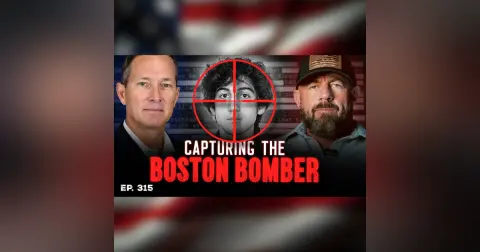
Airborne Ranger, FBI Hostage Rescue Team operator, sniper, breacher, and FBI Crisis Negotiation Unit veteran Kyle Vowinkel, author of the upcoming book Shaping Chaos, sits down with Mike Ritland to break down the night he was called in to talk to the most wanted man in America. With 400 officers on scene, a dozen flashbangs thrown into the boat, and nothing working, the call came down from the FBI director to try talking. Kyle walks through the ten minutes of dead silence, the word that finally broke it, and the hour and a half that followed.
Advertising Inquiries: https://redcircle.com/brands
Privacy & Opt-Out: https://redcircle.com/privacy
0:00 [UNKNOWN]: We're looking for a most wanted man in America. [UNKNOWN]: Imagine a perimeter with four sides pointing guns at one another. [UNKNOWN]: I've never seen them. [UNKNOWN]: They launch 40 mic mic flashbangs. [UNKNOWN]: It doesn't into the boat. [UNKNOWN]: He's been shot at. [UNKNOWN]: He's been commanded to come out. [UNKNOWN]: None of it worked. [UNKNOWN]: That was the rescue. [UNKNOWN]: Principles are speed, surprise, violence of action. [UNKNOWN]: negotiators slow things down. [UNKNOWN]: We want to talk about emotions, right? [UNKNOWN]: Words are their weapons. [UNKNOWN]: That was down from the FBI director. [UNKNOWN]: Let's try to negotiate. [UNKNOWN]: Big D calls in the radio. [UNKNOWN]: Kyle? [UNKNOWN]: You're up. [UNKNOWN]: Well, I look around. [UNKNOWN]: It's at least 400 officers. [UNKNOWN]: The helicopter overhead, pipe in and everything in defy headquarters.
0:41 [UNKNOWN]: But for a second hold of the fuck. [UNKNOWN]: This is all I got my shoulders. [UNKNOWN]: The logistics of even being able to talk to them were a challenge. [UNKNOWN]: How did you get yourself into the position to be able to do it? [UNKNOWN]: And what is the first thing you said to them? [UNKNOWN]: So... [UNKNOWN]: Ladies and gentlemen, as always, it's both an honor and a pleasure to welcome my next guest to the podcast. [UNKNOWN]: He was an airborne ranger, FBI hostage rescue team operator, sniper, and breacher, FBI crisis negotiation unit. [UNKNOWN]: All the other of the upcoming book, Shaping Chaos, ladies and gentlemen, welcome to the stage, Kyle Vowinkle.
1:21 [UNKNOWN]: Thank you so much, Mike, truly it on our privilege to be sitting here with all the history of guests that you've had in the show and having me, I truly appreciate it, especially being an Army guy, having a steel bring my board. [UNKNOWN]: Thank you for that. [UNKNOWN]: Yeah, absolutely. [UNKNOWN]: I love some of the notes that I came across in researching for the episode of kind of the back and forth between you and seals with HRT and all that stuff, so I'm really looking forward to getting into that. [UNKNOWN]: And thank you again for coming. [UNKNOWN]: I've been [UNKNOWN]: Excited about this interview for a long time and just really jumping at the bit to get into it What's the last full book that you've read? [UNKNOWN]: A last full book, my actually son recommended, was thinking fast and slow and talking about the mental processes, you know, we all leap to quick decisions like decision making processes either slow or fast and, you know, if I actually quick, what's too close to, you know, for me to answer, that's quick thinking you don't even need to process it.
2:19 [UNKNOWN]: Whereas thinking slow, if I ask you 25 times 2 plus 7 minus 4 divided by 2, [UNKNOWN]: I'd most people I can't do that in my head, that requires that slow thinking, where you don't really take the time to kind of analyze and think through the problem. [UNKNOWN]: And so it was really good. [UNKNOWN]: force in you to think sometimes when you're thinking fast and you really should be thinking slow because you know there's some other brain teasers I'll get you when you think too quickly and you should take your time worth those especially the more important decisions. [UNKNOWN]: Yeah I'm curious of me with that was there a takeaway in terms of how you decide when to think slow because I mean the fast thing obviously two plus two most people would just blur that out but doesn't go through like a metric or decision-making process went to force yourself [UNKNOWN]: Well, we're all cognitiveizers, right?
3:08 [UNKNOWN]: We all are wired back through, you know, in the end of the holidays to kind of, [UNKNOWN]: filter out like the non-threats and to focus on a threat that's coming and everything else is kind of an ancillary, not that important. [UNKNOWN]: So it's really kind of hardwired from our beginning days to filter out because we have so many stimulus in an impulse that's coming in from eyes, ears, taste, you know, sound. [UNKNOWN]: And so our minds are wired to filter all that out. [UNKNOWN]: So what [UNKNOWN]: The challenge is to recognize, hey, this should be a fast, I mean, this should be a slow decision, not a fast decision, because we sometimes jump too quickly to make that decision. [UNKNOWN]: So as soon as my son, he's an army officer now, and he's super intelligent.
3:53 [UNKNOWN]: Like, I don't know where he got, he didn't get it from me. [UNKNOWN]: And he and I talked about books back and forth and he recommended that. [UNKNOWN]: And I asked him, I said, do you think your dad is doing too much fast thinking [UNKNOWN]: That's fascinating. [UNKNOWN]: What's the book calling in? [UNKNOWN]: Thinking fast and slow. [UNKNOWN]: Yeah, so you already forgot. [UNKNOWN]: I'm thinking too slow already. [UNKNOWN]: Do you have a favorite quote? [UNKNOWN]: One of my favorite quotes is General Eisenhower. [UNKNOWN]: He said planning is indispensable, but plans are useless. [UNKNOWN]: And it really goes to... [UNKNOWN]: the high consequence operations that you and I, all the other veterans worked in, like you have to plan, you have to prepare, however, once, as Mike Tyson said, once that first punch hits you, the plan is gonna adapt and change.
4:44 [UNKNOWN]: But you have to do that prep work to do that mental exercise. [UNKNOWN]: Hey, if A, B, or C happens, I'm gonna do this. [UNKNOWN]: So even though when the actual plan is executed and D and E happen, D and E happen, you didn't plan for, you're still used to improvising and adapting and overcoming. [UNKNOWN]: Yeah, that's fascinating, I mean, he's got many, many great quotes and of course from that generation where there are a ton of them and you know the greatest generation thing we talk about it with a lot of guests on the show like I sometimes would ask if time travel were possible, you know, where and when would you go and so many people say I'd go back to World War II and just such a such a unique generation that's, you know, it's awesome.
5:27 [UNKNOWN]: Well, to think about, I'm thought about this too, get it ready for the show, like being in Iraq and Afghanistan, numerous deployments, you know, we went out outside the wire and that's crazy and risky. [UNKNOWN]: However, at the end of our six, 10, whatever, 12 hour mission, we come back to the fob, right? [UNKNOWN]: We got hot, chow, waiting for us. [UNKNOWN]: We're in AC, hooches, we run a bed, we got internet, we can call home once a week to mom and kids. [UNKNOWN]: Think about World War II. [UNKNOWN]: And none of that in your gear sucked right compared to the great cold weather stuff we have now like talking about the greatest generation I couldn't agree more of those guys didn't get to call home or in the toughest conditions every day and kept fighting out against such a you know the world war and a fierce adversary that was incredible men women [UNKNOWN]: I mean, you know, especially think about, I mean, they all were, but yeah, I assume you've seen saving private Ryan and band of brothers.
6:27 [UNKNOWN]: There's one scene in band of brothers where major winners is breaking ice in an ammo can to wet his razor to shave in the field. [UNKNOWN]: Right. [UNKNOWN]: You know, and it's just like, man, I mean, just in we're, you know, pissed because the internet's down and you can't call home or whatever, you know, but also you think about [UNKNOWN]: started the war, you know, that went over there in 1941, you know, and spent four years over there and and died come home, it's just remarkable, the difference in what those troops had to endure, not that ours don't endure a lot, but it's just mad. [UNKNOWN]: such an inspiring generation for sure and I'd encourage everyone just last thing I've been to Omaha Beach don't you have really no I have but I'd recommend every American at some point should go there and look at those cliffs yeah look what the Rangers had to scale up you know in the face of [UNKNOWN]: fire, you know, withering fire on that beach and the audacity, the bravery, the heroism is just it's overwhelming like, you know, you feel this sense of awe looking at and imagine what happened, yeah, back in order to.
7:38 [UNKNOWN]: It's incredible for sure. [UNKNOWN]: What was your favorite thing to do growing up? [UNKNOWN]: One of my favorite things to do growing up was plain army. [UNKNOWN]: Yeah, which sounds crazy. [UNKNOWN]: Nobody plays army, but growing up in the 80s, like Red Dawn, Mubu's Outen, and Rambo, and me and my brother and six or seven other friends, we actually went to those Vietnam era surplus stores, we've got camisies and down to the, you know, belts and canteens, and we'd actually burn corks and, you know, painted faces. [UNKNOWN]: So imagine like, [UNKNOWN]: Today, like seven or eight kids walking on the middle of street full camos, we'd have toy guns, but we spray paint it in black, so they look real. [UNKNOWN]: Yeah. [UNKNOWN]: So we're walking on the middle of street two blocks for our house to the can and to go play army.
8:22 [UNKNOWN]: Like today, we wouldn't have made it a block and we'd be, you know, you'd be arrested. [UNKNOWN]: We're shot. [UNKNOWN]: Yeah. [UNKNOWN]: Yeah, that's wild. [UNKNOWN]: Yeah, so we used to go down the army. [UNKNOWN]: I don't know. [UNKNOWN]: I just love that kind of being outdoors, I really enjoyed. [UNKNOWN]: a little bit of hiking and, you know, kind of during the elements and being part of a small team. [UNKNOWN]: And what I'm more interesting stories is that we were down this rose canyon by our house and a Amtrak train goes by and we don't think anything, but we're just kind of sitting by the side of the train and then we go back after a couple hours playing army and we go back and my brother checked the newspaper the next week. [UNKNOWN]: And in the newspaper, it said, on the wrong track, Amtrak trained almost held up in Rose Canyon.
9:05 [UNKNOWN]: San Diego police were dispatched, but no trace the girl a band could be found. [UNKNOWN]: Well, you guys did a good job playing army, I guess. [UNKNOWN]: Yeah, even though we weren't trying to hold up a train, obviously, we weren't pointing our guns at the conductor in England, but he obviously just saw us just kind of stand on the side of the tracks there and perceived the threat, and unfortunately, but yeah, I think they thought these, you know, internet and kids were guerrilla fighters training in the canyon. [UNKNOWN]: What year was that? [UNKNOWN]: like 1984, like I actually'll send you a clip of the article. [UNKNOWN]: Yeah, that's a little bit of it. [UNKNOWN]: I'd rather have it show it. [UNKNOWN]: I didn't see if you want to make it. [UNKNOWN]: It's up. [UNKNOWN]: No, it's just funny. [UNKNOWN]: I mean, even then, again, you think about that happening today, and it would be a national news story.
9:46 [UNKNOWN]: Oh, yeah. [UNKNOWN]: I mean, every mainstream outlet would be there, it would be drones overhead, it'd be crazy. [UNKNOWN]: I used, we used to do that same kind of stuff, not quite to that degree, but, [UNKNOWN]: There was a surplus store in the town that I grew up in that we would write our bikes to all the time. [UNKNOWN]: And occasionally it would like to save up and buy an MRE or you know, get a poncho liner or whatever. [UNKNOWN]: Like I always love doing that kind of stuff. [UNKNOWN]: But so you're originally from San Diego. [UNKNOWN]: I talked to me a little bit about beyond kind of what you've already mentioned growing up there at that time sports played siblings, you know, your parents, what they did in influences. [UNKNOWN]: My father, the Navy brought him to San Diego. [UNKNOWN]: He was a naval aviator.
10:27 [UNKNOWN]: He catapulted off the USS Benington, aircraft carrier in the South China Sea over a hundred times in Vietnam. [UNKNOWN]: And so he has experience in conflict, and then he resided in San Diego, but my mom, and so I wasn't born for any of that, but he stayed in the reserves after that. [UNKNOWN]: And San Diego is a super patriotic town. [UNKNOWN]: You should be the home of Top Gun. [UNKNOWN]: So fighter town you just say was right there in Myanmar, and I went to the University of City High School, it's right next to it. [UNKNOWN]: So we would hear the Top Gun Jets, [UNKNOWN]: once or twice a week, like roar over head. [UNKNOWN]: And it was just like a adrenaline filling. [UNKNOWN]: My dad called it the sound of freedom. [UNKNOWN]: Yeah. [UNKNOWN]: We love it. [UNKNOWN]: So I grew up in most patriotic kind of idyllic place and magical.
11:11 [UNKNOWN]: My dad was, you know, kind of Republican and my mom's a Democrat. [UNKNOWN]: My dad had a gun cabinet inside the house to his kind of interesting, like a display case. [UNKNOWN]: Like you go in the gun store, just like a glass. [UNKNOWN]: thing with shotgun rifle and pistol and my mom would give the handgun control and my dad would give to the NRA. [UNKNOWN]: I saw the checks, you know, return, thank you from NRA and handgun control. [UNKNOWN]: And I actually brought up to my own dad. [UNKNOWN]: I said, why don't you guys just burn 20s in front of one other? [UNKNOWN]: Because you're giving to cathering costs. [UNKNOWN]: So it's a bourbon San Diego, [UNKNOWN]: doing more outdoorsy stuff, and we love to ski.
11:55 [UNKNOWN]: I had one older brother, he was two and a half years older than me, and he was interested in going to West Point. [UNKNOWN]: But I was kind of a belliest kid. [UNKNOWN]: My parents deserved a more, a better kid. [UNKNOWN]: I didn't listen to my mom. [UNKNOWN]: I really fought a lot with her, ran away from home. [UNKNOWN]: We blew up a pumpkin in the street one year at Halloween. [UNKNOWN]: That was first time in handcuffs. [UNKNOWN]: Really? [UNKNOWN]: Yeah, man. [UNKNOWN]: I trusted you for that, huh? [UNKNOWN]: Well, he detained me and then he took me back to my dad's house. [UNKNOWN]: And again, this would not happen today. [UNKNOWN]: Uncoffing me and releasing me to the customer, I dad. [UNKNOWN]: So we didn't really ever process me. [UNKNOWN]: So I wasn't officially arrested, because I think he knew my dad.
12:35 [UNKNOWN]: And so we kind of let me off the hook. [UNKNOWN]: And of course, my parents were rightfully extremely pissed. [UNKNOWN]: And so I, I don't know why I had such a rebellious streak. [UNKNOWN]: I was just kind of a non-conformist. [UNKNOWN]: growing up and then my brother got accepted to West Point and he went and I had no idea what I was going to do with my path and went and visited him during his plea years first year and I saw the academy like gorgeous really place. [UNKNOWN]: You got to go on the fall and you're on the winter at sucks but the fall is gorgeous with the leaves and the football game and they parachute didn't you know football game the black knights would jump out and it's just really spectacular [UNKNOWN]: And it made me, obviously, with my dad and the Navy, then look at my brother and the Army.
13:23 [UNKNOWN]: I didn't really want to be in a ship for six months, but I wanted to be part of that tribe, part of the military community, right? [UNKNOWN]: Part of something larger than myself. [UNKNOWN]: Is that really drew me and grown up that patriotic town? [UNKNOWN]: I, you know, read the history too, growing up, like I felt it, almost an obligation. [UNKNOWN]: Our founding fathers, what they went through right, gave up everything, risk-deving to start this country and all those, you know, people at Arlington scattered across, centers, across the United States, those people gave that life so we could live, and we need every generation to serve and put on uniform as well. [UNKNOWN]: So I felt it's also my duty to serve and I wanted to serve.
14:04 [UNKNOWN]: So that's how I got interested in West Point. [UNKNOWN]: Yes, I was on maybe 12 or 13 packed a little bag, probably like a sandwich and like, you know one change of clothes, no real good plan just because I was arguing with my mom about like bed times and play times because this is back when, you know, you had your bike and you just ride around and I wouldn't see my parents for hours and hours just got to be home by, you know, eight o'clock for at the latest, you know, [UNKNOWN]: And so, very independent growing up, it's a different time period these days and I think that almost had maybe too much independence that I thought I was definitely overconfident and kind of cocky and my neighbors saw me and called my dad and he picked me up and said, what are you doing, kid?
14:56 [UNKNOWN]: Get in the car! [UNKNOWN]: Yeah, yeah, such a different time nowadays for sure. [UNKNOWN]: All right, so, [UNKNOWN]: The experience you had at the at West Point shaped your desire to come in or had a big impact and you applied to West Point is that correct? [UNKNOWN]: Yes, visit my brother was that kind of turning moment and how foolish was this? [UNKNOWN]: I didn't apply it any other college, maybe. [UNKNOWN]: How dumb. [UNKNOWN]: Well, you could argue it's the burn-the-boat mentality, you know, it's the race to look at it, I guess, but yeah, it was all in. [UNKNOWN]: Yeah, and yeah, Clyde and thankfully got in got a Congressman Congressal nomination there from Bill Lowry and our district and uh, [UNKNOWN]: Yeah, thankfully started class in 1993, and that first year was really tough.
15:46 [UNKNOWN]: I foolishly, I didn't take calculus, my senior year of high school, because I'm going to join, want to enjoy my senior year of high school, and I knew that going in, I'm going to be behind the power curve with calculus. [UNKNOWN]: And boy, it was like, I was crushed, you know, like a D. [UNKNOWN]: going into the final. [UNKNOWN]: And if you fail a class at West Point, you only have two weeks of summer. [UNKNOWN]: And guess what? [UNKNOWN]: If you fail a class, you lose your two weeks of summer if they even keep you. [UNKNOWN]: They can't just kick you out, but normally you can get one chance to go to summer school. [UNKNOWN]: So I'm going into a D with the finals. [UNKNOWN]: We had an Army Navy rally in our biggest game in the years. [UNKNOWN]: Army Navy in the superintendent, three-star general in charge. [UNKNOWN]: He said, I don't want you guys doing a Beat Navy jock strap rally.
16:26 [UNKNOWN]: because he'd heard about we're planning on my class. [UNKNOWN]: So 200 of us didn't listen to Superintendant. [UNKNOWN]: And we went out at midnight, unlike the Thursday, a Vietnamese week. [UNKNOWN]: And of course, I got caught, wrestled to the ground. [UNKNOWN]: What's your name and company? [UNKNOWN]: Vomacal E1. [UNKNOWN]: Because if you come in an honor violation, right, you'll actually just seal the kick out. [UNKNOWN]: And I got 60 hours of disciplinary tours. [UNKNOWN]: And you're going to like walk five a weekend, so that's 12 weekends. [UNKNOWN]: But I was restricted. [UNKNOWN]: couldn't go off post so that first semester I came close to Quentin and that's brutal. [UNKNOWN]: Ultimately you made it through through the academy you get your commission telling about your early days of army career wise.
17:11 [UNKNOWN]: Well, at West Point, I met a fellow cadets dad who was a FBI agent and it really interested me the FBI and I compared contrast it like how the bureau ran ranges because he took us a farm range and a driver's training range and there's a lot more autonomy, right, the army's training for 18 year olds. [UNKNOWN]: The average FIA agents, 20, 30 years old coming in. [UNKNOWN]: So a lot more autonomy and independence, and also the Army career for officers, as you know, you don't get to do fun jobs for that long. [UNKNOWN]: You know, five, six years, you're lucky, and then you're doing staff jobs. [UNKNOWN]: Whereas the FBI, you could be an agent for 20 years. [UNKNOWN]: So that really appealed to me. [UNKNOWN]: So I chose military police as my branch.
17:53 [UNKNOWN]: Didn't really love it. [UNKNOWN]: But I got to go to Rager School in airborne school. [UNKNOWN]: While I was in, and then applied to the Bureau, as soon as I could. [UNKNOWN]: Yeah, I assume you did the minimum time then in the Army, the application process to the FBI, there were some hurdles and hiccups there. [UNKNOWN]: How did you navigate getting out of the Army applying for the FBI and doing that transition out? [UNKNOWN]: I know this was in the 90s, but it's still pretty tumultuous time for foremost people and [UNKNOWN]: no fault of your own hiccups administratively within the FBI.
18:33 [UNKNOWN]: Can you tell us about that? [UNKNOWN]: Yeah, so I was stationed at Fordhood and I applied through the San Antonio F.I. [UNKNOWN]: Field Office. [UNKNOWN]: And I went to night school as a lieutenant to get my master's degree in criminal justice. [UNKNOWN]: And I was successful officer right and I'd good OERs, evaluation reports. [UNKNOWN]: And so I applied and I thought I'd be considered a decent applicant. [UNKNOWN]: And I got a letter back saying, sorry, Mr. Volkl, your background does not meet the needs of the FBI. [UNKNOWN]: You're not being, you're not proceeding through the application process. [UNKNOWN]: I was stunned because really for almost five years I've been working towards that goal. [UNKNOWN]: And I thought, wow, what can I do differently?
19:14 [UNKNOWN]: What more do I need? [UNKNOWN]: So I waited for my next half day off, some fry afternoon I drove two and a half hours the San Antonio met with the applicant coordinator, the female agent and charge of the process. [UNKNOWN]: And I said, how can I make myself more competitive? [UNKNOWN]: Right, I didn't go in there. [UNKNOWN]: Hey, I'm a kick ass, you know, why am I not fired? [UNKNOWN]: Or, you know, what's the problem with the bureau? [UNKNOWN]: I put it on me, how can I make myself more competitive? [UNKNOWN]: And I think I helped, obviously, and how she received it too. [UNKNOWN]: So she'll all look into it, so she went through her files. [UNKNOWN]: And this is back in the paper days. [UNKNOWN]: She says, oh, here's your application of Kyle. [UNKNOWN]: It was put in the least competitive file. [UNKNOWN]: It should have been put in the most competitive file.
20:00 [UNKNOWN]: I think so. [UNKNOWN]: I don't. [UNKNOWN]: Because I guess how would how would you know that by looking at him and she can scan your application that fast? [UNKNOWN]: How would you know that it should have been put in a different pile. [UNKNOWN]: Do you know where? [UNKNOWN]: Well, that can those days. [UNKNOWN]: There's no scanning. [UNKNOWN]: It was all paper. [UNKNOWN]: She had just stacks of paper on her desk, and she went through them. [UNKNOWN]: And I think she was telling the truth, but I don't know for sure. [UNKNOWN]: Yeah, that's an interesting. [UNKNOWN]: But had I not, right, challenged that. [UNKNOWN]: Yeah. [UNKNOWN]: And that's what I think somebody common stories of guests that you have, right? [UNKNOWN]: Is that? [UNKNOWN]: perseverance, not taking no for the first answer, but respectfully challenging those inputs before you accept the verdict. [UNKNOWN]: Yeah, I think the respectfully thing is the most important aspect, you know, because having grit and tenacity, if you're obnoxious about it, generally isn't going to help any, you know, in many cases, I think it makes it worse.
20:51 [UNKNOWN]: Absolutely. [UNKNOWN]: Um, is that something that you feel like, [UNKNOWN]: was something learned as a child that you kind of saw your parents set that same kind of example and it rubbed off on you. [UNKNOWN]: Exactly. [UNKNOWN]: My dad, he was so nice to people. [UNKNOWN]: There was a homeless guy in the university city and I remember my dad would occasionally give him jobs. [UNKNOWN]: Hey, here's $20, you can clean up the, or you can mow our lawn in the back, and he was so nice to this guy, and he was homeless by my dad treating him with respect, treating him with dignity, he would give him food, and it really, by dad, you should say, hey, Kyle, it's nice to me important. [UNKNOWN]: It's more important to me, nice to my dad.
21:34 [UNKNOWN]: Yeah, my dad treated everybody, so I absolutely emulated, I've tried to emulate my father, whether it's the janitor or the nurse, or, you know, some of me swoop in the floor, you know, to me they're doing a job or expect my appreciate them. [UNKNOWN]: And it's genuine, it's not, you know, in the condescending tone. [UNKNOWN]: And I think she very easily, [UNKNOWN]: San Antonio office. [UNKNOWN]: I think she very easily could have left it in the least competitive had I come across like a jerk, and I never would have, and I wouldn't have made all proven anything because it was hard to work for her to go back and change the, you know, they'd add official letter, you know, sent to me, you know, she had to do some work to correct that. [UNKNOWN]: You know, there's that added how you treat people that can do nothing for you, it says a lot.
22:17 [UNKNOWN]: To me, even phrasing it that way is kind of arrogant though because I think everybody can do something for for anyone or everyone, you know, to assume that because somebody's a janitor or that they're homeless that they can do nothing for you, I think that's kind of part of the problem almost, you know. [UNKNOWN]: But [UNKNOWN]: What a great lesson. [UNKNOWN]: All right, so you managed to get into the most competitive pile and ultimately you're on boarded by the FBI. [UNKNOWN]: I'd love to hear about your first duty station. [UNKNOWN]: Had a number of FBI guys, if there's anything worth mentioning, I guess, of going through the training pipeline in any stories you want to share, I'd love to hear them. [UNKNOWN]: But also definitely want to hear about your first day on the job and expectation versus reality, [UNKNOWN]: Well, Aquanico, right the FBI Academy, is there Aquanico, it's very much a gentleman's course because the bureau has invested significant amount and you are ready with the background, the polygraph and it's like a year and a half long process, so it's not trying to weed you out.
23:17 [UNKNOWN]: A lot like Ranger School. [UNKNOWN]: Yeah, very simple Ranger School, they're encouraging you. [UNKNOWN]: The RIs were so friendly to me. [UNKNOWN]: No, so there's nothing, you know, there's a couple of funny anecdotes that, you know, the Bank of Hogan is the Bank there and Hogan's Alley, which is the mock city where we do a lot of training. [UNKNOWN]: It's the most rob bank in America all day every day. [UNKNOWN]: Yeah, all day, every day it gets robbed, and so on this, it's, you know, it's a, you know, [UNKNOWN]: It was humbling there, too, because on my first sat down with the day one of the auditorium with our 50 agents in my new agent class, and we introduced ourselves. [UNKNOWN]: And I was the class clown in high school, so I do like to make people laugh, even though I'm not successful at it always.
24:01 [UNKNOWN]: I'm making a attempt. [UNKNOWN]: So I... [UNKNOWN]: This is in 1998. [UNKNOWN]: So I remember it, X files was kind of big then in the 90s. [UNKNOWN]: And they ask them, when they introduce themselves, the new agents to the new assistant director or the current assistant director of the FBI training division. [UNKNOWN]: And everybody gets up, I'm, you know, John, I got my PhD and, you know, I joined the Bureau to serve my country and that's a standard response. [UNKNOWN]: And I'm Kyle, I joined because I wanted to work with Molly and Skolder. [UNKNOWN]: But it is dead silence. [UNKNOWN]: I mean, you could hear a pin drop. [UNKNOWN]: Nobody chuckles because everybody's so nervous being that first day and wants to press the boss. [UNKNOWN]: And I look around and I'm waiting for the chuckle of their smile.
24:44 [UNKNOWN]: Nobody laughed. [UNKNOWN]: So I thought, I thought, maybe I made a mistake. [UNKNOWN]: Like, maybe the Bureau is, [UNKNOWN]: filled with two series of people that I'm not going to fit to that's that's a trip man so no no I mean did anybody say anything afterwards. [UNKNOWN]: Oh yeah my counselor pulled me aside. [UNKNOWN]: Yeah. [UNKNOWN]: We don't joke here. [UNKNOWN]: No he said Kyle that type of humor is not appreciated in FBI. [UNKNOWN]: So when he said that I thought, man, I called my dad and brought it up. [UNKNOWN]: But I got to keep my mouth shut. [UNKNOWN]: That's a recurring problem in my life. [UNKNOWN]: I hope my mouth when I shouldn't. [UNKNOWN]: Yeah. [UNKNOWN]: Yeah, I've seen several notes in here, but we're going to do it. [UNKNOWN]: But once you made it through training, where did you go first and what was it like, finally on the job as an FBI agent?
25:24 [UNKNOWN]: Because that was, you know, if you think about, [UNKNOWN]: From the time you made the decision that's what I want to do until day one in a field office. [UNKNOWN]: I mean, that's years, right? [UNKNOWN]: Absolutely. [UNKNOWN]: Yeah, from 1995 until, yeah, 99. [UNKNOWN]: So yeah, at least five years. [UNKNOWN]: Yeah. [UNKNOWN]: Yeah, what where did you go? [UNKNOWN]: What was your assignment and what was it like? [UNKNOWN]: So at week six of Quantico is when you get your assignment, and we say in the bureau that your assignment is a blind monkey, blindfolded monkey, throwing the dart at the wall with the physics field offices. [UNKNOWN]: You can get the side physics field offices. [UNKNOWN]: And because I put like San Diego number one and LA was maybe 10.
26:07 [UNKNOWN]: And so you get whatever the needs of the bureau are, which is fine. [UNKNOWN]: So I got LA, which is other excited to be Southern California, and I got assigned to counter intelligence. [UNKNOWN]: I got assigned to Colombian gangs and I was super excited, right? [UNKNOWN]: Doing criminal work, going to bust down doors, catch, get dope, guns, gangsters, get bad guys off the street. [UNKNOWN]: So I was super hyped and really focused on that Colombian angle. [UNKNOWN]: And then I get to LA, my first day, the boss pulls me aside, you know, you wear a suit always reporting day one, you know office, serve excited to work, you know, Colombian gangs. [UNKNOWN]: But, Michael, you know, I work in Colombian gangs, you're working counterintelligence. [UNKNOWN]: I could barely spell counter intelligence.
26:48 [UNKNOWN]: I don't know, what's there? [UNKNOWN]: Yeah, you've been changed. [UNKNOWN]: So I hadn't even been there an hour in the new office and they switched me. [UNKNOWN]: And I was really kind of reluctant to work. [UNKNOWN]: Because counter intelligence, it's a very long-term, slow-moving cases, and requires [UNKNOWN]: it's not a quick like we're going to arrest the guy put him cops and you'll see me jail in six months like counter tells you he's going to take years especially pre 911 it's way left sexy i think too then right absolutely yeah and so i was kind of down and out for a couple days that i realized hey i'm the new guy in this job [UNKNOWN]: And you guys always got to kind of do whatever they're told and do the best I can in this job.
27:31 [UNKNOWN]: And then what I'd like to about the bureau is you've do something for four or five years and you do a good job. [UNKNOWN]: And then you can transfer to other jobs. [UNKNOWN]: So I thought I'm going to put my heart and soul. [UNKNOWN]: I'm going to give it a given my all. [UNKNOWN]: And first year I started to like it the second year. [UNKNOWN]: I loved it. [UNKNOWN]: And it really [UNKNOWN]: I got to do some cool stuff. [UNKNOWN]: I've got to do some covert break-ins, you know, to buildings, establishments, and to vehicles, and, you know, recruit four and assets. [UNKNOWN]: Like, that's really high level and packed full stuff, which, I don't, I don't, I don't go to too much detail, obviously, because there's some of the nature of those things, but I love that C.I. [UNKNOWN]: work in L.A. and I did that.
28:12 [UNKNOWN]: And I also tried out for L.A. SWAT team. [UNKNOWN]: the FVS watching their Los Angeles is one of the enhanced teams, I'm not sure if the previously had the, I know you had FVS walk guy on here before we have nine enhanced teams out of this 56 fuel offices, LA being one of them, just means they get more training time, more resources, more funding. [UNKNOWN]: That was a brilliant try out by thankfully made the team with some great folks. [UNKNOWN]: So it was a perfect blend of I got to do tactical stuff basically one week a month on the SWAT team and then they're the three weeks I was chasing spies. [UNKNOWN]: So the the enhanced SWAT experience even within the LA field office is still a technically a collateral duty.
28:53 [UNKNOWN]: It's not a whole time thing. [UNKNOWN]: Exactly. [UNKNOWN]: Do you know if it's still that way? [UNKNOWN]: Yes, it's still that way. [UNKNOWN]: So, I assume then that in terms of the FBI as an organization HRT is the only full-time degree. [UNKNOWN]: Right, yeah. [UNKNOWN]: That's still, yeah, I mean, it's an amazing experience and I can see the the draw to that perfect balance of [UNKNOWN]: geeking out on the counterintel side, but also getting the door kick or angle. [UNKNOWN]: I know you can't talk too much about the ins and outs of the counterintelligence work. [UNKNOWN]: Can you generalize like what almost genre of adversary you were going against? [UNKNOWN]: So in Southern California, right, there's a lot of research and institutions and universities doing advanced defense projects.
29:40 [UNKNOWN]: So there's a lot of foreign adversaries coming to collect on that. [UNKNOWN]: There's a lot of bases there, two Air Force bases I worked with Air Force OSI and the agency and got to travel a bit. [UNKNOWN]: So I'm going to say work, China, Russia, cases, and try to prevent them right from stealing our secrets. [UNKNOWN]: And what I love the most was being proactive, because so often in law enforcement, you're reactive. [UNKNOWN]: The guy Rob Zabank and then were respond. [UNKNOWN]: Whereas in the CI world, we can craft this scenario. [UNKNOWN]: to have two people meet at this place in time, which seems random, but it was all planned and set up by us to have this, you know, meeting, which will hopefully lead to a second meeting, which will hopefully lead to a relationship, which will hopefully lead to recruitment.
30:28 [UNKNOWN]: So I really enjoyed it. [UNKNOWN]: It's like a mental chess game, but a really long-term chess game because, like, one good recruitment, [UNKNOWN]: And see, I could change the balance of a war, right? [UNKNOWN]: If you got one that high level up. [UNKNOWN]: Yeah, yeah, for sure. [UNKNOWN]: Do you feel like there's a movie or TV series that most accurately depicts that kind of work from your experience? [UNKNOWN]: I don't watch too much of the FBI or C.A.H. [UNKNOWN]: shows because the unrealism pains me. [UNKNOWN]: I'm also none. [UNKNOWN]: My wife hates me because she'll sometimes watch him. [UNKNOWN]: I can't bite my tongue. [UNKNOWN]: You know, I'll speak out. [UNKNOWN]: I can't think well actually one movie I loved even though it wasn't that realistic with silence and lambs because they would never pull a new agent like Larry Starling out of the academy to work those cases but it is true work what the behavioral analysis unit does.
31:23 [UNKNOWN]: And so that actually has an HRT reference in there when I go on after Buffalo Bill. [UNKNOWN]: Bill. [UNKNOWN]: Yeah. [UNKNOWN]: Man, that's fascinating. [UNKNOWN]: I am curious and at that. [UNKNOWN]: window of your career as the on the L. A. H. R. T. L. I. Swatt ever swat unit. [UNKNOWN]: Sorry. [UNKNOWN]: Um, did you do any real world operations with them? [UNKNOWN]: Oh, absolutely. [UNKNOWN]: Yeah. [UNKNOWN]: L. I. Swatt is one of the busiest teams in the nation. [UNKNOWN]: So. [UNKNOWN]: I think that national tackle asset, HRT, right, as the tackle reserve. [UNKNOWN]: So they received the highest priority missions, but they can't fly ever or be everywhere. [UNKNOWN]: So the fuel losses would do those high risk missions in their AR, AR responsibility.
32:06 [UNKNOWN]: So we had lots of missions in LA, probably 25 or 30 hits a year. [UNKNOWN]: We'd got to drug dealers, we went up to cop killers, and we had some very serious, [UNKNOWN]: high-risk missions and some great guys that was a very, actually, who's run by a former HRT team leader, the great thing about the field SWAT and HRT is the field SWAT is a feeder program. [UNKNOWN]: for HRT, so most everyone that tries out for HRT has been on the field SWAT, and it's a good exposure for them, and also for HRT, then and reach back, and then HRT also sends experience, guys who maybe want to go back after five, 10 years on the team, I'm going to go back to L.A. and run the team.
32:47 [UNKNOWN]: Well, there's your senior team leader for the L.A. team, as a former HRT guy. [UNKNOWN]: So now that experience is going back to the field, oh, that's good. [UNKNOWN]: And that was the case in L.A., a guy named Doug Cain, [UNKNOWN]: was the team leader and actually I went to him because I was so excited right I want to go on SWAT I want to be an HTTP was my goal and my first got the office in LA you have to have 12 months as a regular agent before even try out for the SWAT team which makes sense. [UNKNOWN]: I had like 11 months and two weeks, and then the tri-out for L.A. Swat was like next Saturday. [UNKNOWN]: So I went to Doug and I said, hey, I'm two weeks shy and I got a decent background. [UNKNOWN]: Can I try out and he goes, Kyle, I'll see you in a year, oh man.
33:28 [UNKNOWN]: But that's fine. [UNKNOWN]: That's the standard. [UNKNOWN]: Yeah. [UNKNOWN]: And he upheld it. [UNKNOWN]: No waivers. [UNKNOWN]: So I saw him in the next year. [UNKNOWN]: Yeah. [UNKNOWN]: I guess hats off to to hold in the line. [UNKNOWN]: Yeah. [UNKNOWN]: Just for my clarification, that is exclusive to FBI's LA field office SWAT and has no correlation with LA city law enforcement SWAT. [UNKNOWN]: Correct. [UNKNOWN]: It's an FBI unit. [UNKNOWN]: Although, so the LA city has deep attuned. [UNKNOWN]: That's their swapping. [UNKNOWN]: We worked and trained with them. [UNKNOWN]: The sheriff's department has it, SCB, special force and bureau. [UNKNOWN]: That's their tackling unit. [UNKNOWN]: So we regularly trained with those to because on when we have those multiple hits, you know, maybe hit in 25 drug dealers, we'd have to.
34:11 [UNKNOWN]: you know, rely on them and vice versa. [UNKNOWN]: Oh, so there's times we guys actually operated together. [UNKNOWN]: Really. [UNKNOWN]: Yes. [UNKNOWN]: Oh, that's cool. [UNKNOWN]: And we're trained together. [UNKNOWN]: Yeah. [UNKNOWN]: How would you characterize the caliber of your average operator there versus you guys? [UNKNOWN]: Would you say it was pretty pretty comparable or was there a dispersion? [UNKNOWN]: Well, I mean, like Deepletone and SCB, there were some top notch guys. [UNKNOWN]: Yeah. [UNKNOWN]: No, there was a very high caliber. [UNKNOWN]: And those guys had long jeopardy too. [UNKNOWN]: I want to say average, I could be off a little bit, had like 15 years on deep enough, right? [UNKNOWN]: Well, so they were very senior, very mature tons of things. [UNKNOWN]: Seasoned guys, so yeah, excellent. [UNKNOWN]: They just, it's just like in any state and local, right, they don't have sometimes the budget or resources that the Bureau can bring to bear.
34:55 [UNKNOWN]: But good quality, fantastic quality people, right? [UNKNOWN]: Do any of the FBI LA SWAT operations that you conducted stand out as being kind of the most memorable that you think of often? [UNKNOWN]: Oh, one of my favorite ones probably not for good reason was we did a Trojan horse Oh, really inside the back of a like a FedEx like UPS Then and we're waiting for this guy to show up and you know we're supposed to I don't know the timeline but maybe supposed to be there at 10 a.m. and we're there you know 9 a.m. and we're early down the street and of course 10 goes by 11 goes by noon Like we're in this heated truck and you can't turn on the AC because we wanted the car to be off for like [UNKNOWN]: and full kit, right, baking, and you know what, it's like, first of all, just wearing that kit and you can't make noise, because we make noise than the people here here, something going on that truck, and then, you know, a couple who had gas to, you know, people fart and burp and his guy's doing.
35:53 [UNKNOWN]: I was pretty miserable in the, in the truck, but my favorite mission may have been our most unique in LA, we went to Las Vegas. [UNKNOWN]: If you're, no, I want to ask you if you've been at Cheetahs, but you've heard of Cheetahs. [UNKNOWN]: Yeah. [UNKNOWN]: I haven't been there. [UNKNOWN]: I'll tell you. [UNKNOWN]: Okay. [UNKNOWN]: The gentleman's strip club, the, the books, the accountant, has, was doing some criminal activity. [UNKNOWN]: And so the FBI had a search warrant to go search the books at Cheetahs, but in order to do that, right, we got to go and basically take charge of the place. [UNKNOWN]: We thought, well, what is the least, you know, crowded time of strip club?
36:34 [UNKNOWN]: We looked at the numbers. [UNKNOWN]: It's like Tuesday at noon. [UNKNOWN]: Right, at least for Jesus. [UNKNOWN]: So we did a couple dry runs. [UNKNOWN]: Probably one of my favorite dry runs ever. [UNKNOWN]: We don't got paid to go to strip club to do a runcon. [UNKNOWN]: Of the establishment to get a fuel for the layout of course. [UNKNOWN]: Did they give any petty cash to walk around with? [UNKNOWN]: we were not given that a cash to donate to the women's furthering education or whatever. [UNKNOWN]: Yeah, that's good. [UNKNOWN]: But I remember it was kind of interesting. [UNKNOWN]: The balancers were kind of kind of a little rude, because we're in plain clothes, right? [UNKNOWN]: Coming in to do the add-van, the recon, and [UNKNOWN]: You could just tell or kind of mock show, you know, kind of fold themselves dude, it's like whatever, because we're gonna come back and guess what, you will respect our authority because we didn't badge ourselves, right?
37:21 [UNKNOWN]: We did identify ourselves all in the recon. [UNKNOWN]: Then we came back the next day and full kit and while you just seen these paper tigers, just wilt and wither and whatever you want, whatever you want, you know, just, yeah. [UNKNOWN]: We'll team this in front of our eyes and then we bust in the cheetahs that new dude don't full FBI kid You know get down get hands up and there's naked ladies dance and the guys pulling up their pants. [UNKNOWN]: Yeah, they're seeing out of a movie Yeah, so it wasn't a high risk, you know event at all, but it was just very unique go and do it a strip club and new Infiltractable gear. [UNKNOWN]: That's wild man We're learning operations in that [UNKNOWN]: and that unit that you conducted where things kind of went sideways and you got lit up and had to return fire and that kind of thing or was it pretty benign.
38:05 [UNKNOWN]: uh... there weren't many i didn't get involved in the fire fights uh... on the other way had some but none of that i was uh... and how long were you in that l.a. field off uh... was there six years six years uh... once you wrapped that up was there a okay now you've done some time you've paid your dues now you have a little more leeway as to where you go after that and and where did you go [UNKNOWN]: Well, I wanted to try it for HRT, and so we have submitted application, and then, you know, it's no guarantee they take you, because they interview your coworkers, the boss, especially in charge, is a guy or a girl a good agent, right, person foremost. [UNKNOWN]: And I have two guys, two friends on the LA SWAT team, John and Mike, just two studs, one former comeback controller, and the other one is a banker, a badass ass banker I've ever met, and [UNKNOWN]: Ruckin, full of stuff, hiking the stairs, and just grilling workouts, but preparing ourselves.
39:05 [UNKNOWN]: So with three of us went, we were accepted to try out. [UNKNOWN]: And I went back, and I was not selected. [UNKNOWN]: One, can you say maybe you can't? [UNKNOWN]: How many FBI, HRT agents or officers there are? [UNKNOWN]: Ballpark, even? [UNKNOWN]: Eggballpark 75, 80ish. [UNKNOWN]: OK, pretty, pretty small in the unit. [UNKNOWN]: Yeah, the authorization, I probably shouldn't say it, is higher, but one thing I love about me and it is even though they can take more, a lot of to, a lot of to, you know, funded to take more agents, they don't lower the standard. [UNKNOWN]: Yeah, that's great. [UNKNOWN]: They don't ever take people just to take people, you have to meet the standard. [UNKNOWN]: Yeah. [UNKNOWN]: Obviously, it's grueling, but can you speak to what the FBI HRT selection is like?
39:51 [UNKNOWN]: It's a ballbuster. [UNKNOWN]: I compared it maybe a month of Ranger School condensed it two weeks. [UNKNOWN]: Because at Ranger School, right, you rotated through leadership positions, and you had physically grueling events. [UNKNOWN]: But you could kind of turn off a little bit if you weren't in a leadership position. [UNKNOWN]: You still had to rock the 60 pounds above the hill and so on the perform, but you're not being his value at his closely because you're not in that leadership role. [UNKNOWN]: Whereas at HRT, your value went on everything and judgment especially. [UNKNOWN]: Right, because we would do 15, 16 mile rock, and then the end of it would be in a rest scenario. [UNKNOWN]: So now you're going to dump your kit, transition to the law enforcement mode, and now try to conduct and arrest with a potentially non-compliant subject, and now you have to think about the FV-high arrest procedures, policies, plans, deadly force policy, and that's a lot when you're exhausted, and you've been doing this for 20 hours a day.
40:47 [UNKNOWN]: Your sleep is interrupted. [UNKNOWN]: Like we're in cops the first week out in tents and next to one of my good buddies, Chockeys, former seal and they threw a flashbang that right between us to wake us up. [UNKNOWN]: Like we were finally done at midnight. [UNKNOWN]: We hit the rack. [UNKNOWN]: Like 1am, 2am's a flashbang. [UNKNOWN]: We'll get up and they go show us the tele-tubbies. [UNKNOWN]: I think we're the tele-tubbies and they show us a five-minute clip and they say, okay, you need to write an investigative 302, it's like a document of an interview, based off what you saw. [UNKNOWN]: So now it's like two in the morning, your head can't even think straight. [UNKNOWN]: Now you're trying to remember what stupid cartoon you just watched. [UNKNOWN]: But they're just trying to keep you awake, right?
41:28 [UNKNOWN]: They intentionally interrupt the sleep pattern and see how you perform under that intense pressure. [UNKNOWN]: So it's like two or three, [UNKNOWN]: I've heard the seals come out compared to how weak, right? [UNKNOWN]: I've just, I've just, I've just, I've actually never, I've really advanced, and then, compared on on top of that, was those judgment and shooting and shooting events, as well. [UNKNOWN]: So, it was the whole person's being evaluated, right? [UNKNOWN]: Wow. [UNKNOWN]: Is it broken down into phases or sections or is it just two weeks selection and it's all encompassing? [UNKNOWN]: So, it's two weeks selection, [UNKNOWN]: You know, about a month, they go through their evaluation, go through headquarters, get their final approval, and then the commander calls you, and then it's a, you know, nine month OTC course.
42:18 [UNKNOWN]: Okay. [UNKNOWN]: And it's like after that, then you actually make the team. [UNKNOWN]: Okay. [UNKNOWN]: Is the OTC course as a Trishon heavy as the selection? [UNKNOWN]: Not as, but it does a trick if you don't make the standard, you're cut as well. [UNKNOWN]: Yeah. [UNKNOWN]: It's a selection that leads out the most. [UNKNOWN]: It's, you know, and these are, right, all former, not all, [UNKNOWN]: A lot of former military try out almost all former swat, so if they already know it's a grueling process, so out of the maybe 40 that show up, they're already kind of the best of the best in the bureau, maybe 20 will finish. [UNKNOWN]: And some of it's bad luck, as you know, you guys twist angles, stuff happens. [UNKNOWN]: So maybe half finish and then maybe half of that will get selected so you're at most a good year looking at 25% chance.
43:01 [UNKNOWN]: I mean that's a good year. [UNKNOWN]: Sometimes they've [UNKNOWN]: Did they do selection just once a year? [UNKNOWN]: Generally. [UNKNOWN]: Generally, yeah. [UNKNOWN]: Did they communicate to you why you didn't make it? [UNKNOWN]: Not officially. [UNKNOWN]: How about on a fish? [UNKNOWN]: Yeah. [UNKNOWN]: So you get a call if you make it. [UNKNOWN]: And this is one of my most, probably personally devastating days in LA, John and Mike, my buddies got the call. [UNKNOWN]: And they immediately called me Kyle, did you get the call? [UNKNOWN]: I said, nope. [UNKNOWN]: What call? [UNKNOWN]: Yeah. [UNKNOWN]: Well, we all knew the commander calls you to be making a call. [UNKNOWN]: So it's way it should be, right? [UNKNOWN]: The commander calls to come back to training. [UNKNOWN]: And I waited, you know, at the end of the day, and I didn't get the call by five o'clock, so I knew I hadn't made it.
43:45 [UNKNOWN]: just was personally devastated, because I had given it my all. [UNKNOWN]: I can, this is when I go now for many years, as well, try to make it your team. [UNKNOWN]: And I knew physically I'd perform pretty well, and I shooting-wise I did pretty well. [UNKNOWN]: I thought in the rest scenarios I did well, and there's, again, your tests that I'll, all the phobias to, you'll love, I'll tell you one phobia test, because this sure one of the seals developed this. [UNKNOWN]: It's in the pool, blacked out goggles, and you're in a... [UNKNOWN]: Circular ring of, you know, where do the pool lane dividers is, right? [UNKNOWN]: Where do the things call the lane? [UNKNOWN]: Oh, lane. [UNKNOWN]: The, like when you're swimming laps, you know, the lane line.
44:27 [UNKNOWN]: Lane lines, yeah. [UNKNOWN]: So they take off the lane lines and they circle the whole group with that lane lines. [UNKNOWN]: And then they make that tighter and tighter and tighter. [UNKNOWN]: And you have, right, your blocked out, you obviously, and you're wearing fatigues and I think boots. [UNKNOWN]: But no, no, no, no of vesterning. [UNKNOWN]: And then you got to try and water. [UNKNOWN]: for an undetermined period of time. [UNKNOWN]: And you know what happens in guys because closer and closer water, people aren't getting hit, people aren't elbowed, people pushing down, other people. [UNKNOWN]: I just wanted a few times, I saw like, guys genuinely freak out in the water. [UNKNOWN]: You know, they'll be hives. [UNKNOWN]: Yeah, when you can't see what's going on, and anyway, that, [UNKNOWN]: I was surprised to see other people's reactions in the water, I guess, that really, and I took a couple minor hates but nothing too serious thankfully.
45:17 [UNKNOWN]: But anyways, that weeds people opt to, same with the hate foe we are, the roster foe. [UNKNOWN]: Yeah. [UNKNOWN]: I would say either a former seal or maybe a pair of rescue probably contributed that to this whole process. [UNKNOWN]: So did they, I know that you said unofficially, did you get wind of why they didn't select it? [UNKNOWN]: Yeah, so I talked to a, you know, two or three of kind of friends around on the team, but it's very, right, close hold. [UNKNOWN]: So it's like prying deeply to try to understand what happened. [UNKNOWN]: And basically, one guy told me, well, Kyle, you talked back. [UNKNOWN]: I said, what are you talking about? [UNKNOWN]: Well, on the opposite course, we did several opposite courses.
45:58 [UNKNOWN]: And former Buds instructor Chris was the, [UNKNOWN]: operator in charge of that selection. [UNKNOWN]: It's the weaver. [UNKNOWN]: You know, it has the weaver, of course. [UNKNOWN]: And I go over it. [UNKNOWN]: This is a during the H of two selection of course. [UNKNOWN]: I go over it and he says, at the end of it, he said, you missed a log. [UNKNOWN]: And you work pennies right? [UNKNOWN]: You're not identified by name blue five. [UNKNOWN]: You missed a log. [UNKNOWN]: And I'm so tired and I thought, how do you miss a log on the weaver? [UNKNOWN]: Like you'd have to have like a six foot wing span or be Michael Jordan to skip a log, because you just, you can't. [UNKNOWN]: And so I said, what logs did I miss? [UNKNOWN]: And he looks at me right because I questioned him. [UNKNOWN]: He said, I said, repeat the obstacle blue five.
46:40 [UNKNOWN]: You missed a log. [UNKNOWN]: So I opened my mouth, I had a question instructor. [UNKNOWN]: I shouldn't have done it. [UNKNOWN]: And so that was one. [UNKNOWN]: example of me saying something I probably definitely shouldn't have said and then the second one is much worse. [UNKNOWN]: They're in a shooting competition. [UNKNOWN]: I pride it myself on my shooting. [UNKNOWN]: I shot competitively sponsored by Glock and finished top 15 in US nationals so I was very confident on the range and again spent hundreds of thousands of rounds to be good at shooting and when we came to the final I made with the finals a shooting contest. [UNKNOWN]: against another shooter, a steel plate match, and I missed one of the plates he made it, and I was just so mad at myself, because that was my forte, right?
47:23 [UNKNOWN]: This is where I was hopefully going to excel and do the best out. [UNKNOWN]: And I was so frustrated myself and you're going to be so tired, you're so cranky, you're beat, and so we're loadin' mags, and I thought it was just us, loadin' mags, the selectees, and it was Bobby. [UNKNOWN]: He's a nice guy like him, and I said, Bobby, I'll bet you a paycheck, I'll beat you next time. [UNKNOWN]: Right, kind of half serious, but half joking, but still ever some little chippy. [UNKNOWN]: Then I'm gonna do it, yeah, definitely some chipping us to it. [UNKNOWN]: And he took it while he'd said, yeah, next time you may beat me, you're not gonna remember what he said, but he didn't take it poorly, even though he could have, I was stupid thing for me to say. [UNKNOWN]: And around the corner was an HFT operator, and he heard that, what the hell?
48:04 [UNKNOWN]: Blue five is betting selectees, paychecks, that he can beat him in shooting matches. [UNKNOWN]: So that wouldn't like wildfire, really. [UNKNOWN]: Because they thought this guy's on an attitude, he's got an ego, but then it's really interesting, they can not invite you back. [UNKNOWN]: If there's any serious doubt, you don't even get to come back. [UNKNOWN]: So I heard there was, you know, debate is there always debate about people who are in compatibility. [UNKNOWN]: And at a couple we will say, hey, he's not, he's not, you know, he's not really like that. [UNKNOWN]: He is competitive, but not overly competitive. [UNKNOWN]: And so H or T standard is, there's any question, just how they got to come back. [UNKNOWN]: So I got the call, and didn't get the call, but I was told, hey, if you want to come back, you can come back.
48:49 [UNKNOWN]: So now they're really testing you, right? [UNKNOWN]: Is this guy willing to endure another year of preparation and toll on the body and the family? [UNKNOWN]: Does he want it that badly? [UNKNOWN]: And I did. [UNKNOWN]: And I came back, thankfully, and I slipped through the cracks a second time. [UNKNOWN]: I'm actually surprised the two instances that you mentioned, I understand the first one. [UNKNOWN]: I don't know that having been a buzz instructor and put guys through the O course, we have a weaver imagine it's the exact or correct to it, putting myself in an instructor shoes if a student said that. [UNKNOWN]: I can see the, what did I say? [UNKNOWN]: I can see that response. [UNKNOWN]: I don't know that I would [UNKNOWN]: deselect somebody for that. [UNKNOWN]: The second thing I honestly see no issue with, that's just maybe it's a totally different and total difference in culture between FBI and the SEAL teams, but we would talk smack like that all the time and bet what I mean all kinds of stuff that [UNKNOWN]: you know next time I bet I'll be you know the hell you will you know like to me that was a very common practice and even if you know like a third phase instructor heard two-third phase guys going back back and forth that way like obviously can't speak for for all seal instructors but if if I overheard that like that would make me smile and be like yeah you guys should be talking smack and being super competitive I want to see that [UNKNOWN]: Maybe it's just a total difference in culture, but I think they didn't want to see it from a selectee.
50:14 [UNKNOWN]: Once you're on the team, it's different. [UNKNOWN]: Yeah, I mean, again, it just, like, buds versus SQT versus, you know, your probation period at a sealed team, even in buds if I saw that. [UNKNOWN]: I would want to see that, you know, that's just me. [UNKNOWN]: Well, I wish you were there, so I'm having a good day. [UNKNOWN]: Today's episode is sponsored by Jevity. [UNKNOWN]: Why are you so tired all the time? [UNKNOWN]: Why do you feel run down? [UNKNOWN]: Why doesn't your body feel like it used to? [UNKNOWN]: When feeling tired becomes your normal, you deserve a closer look. [UNKNOWN]: Jevity is a longevity membership, advanced bloodwork twice a year, a personalized plan, and a medical care team that guides you through it all. [UNKNOWN]: Most people get a lab report and and everything looks normal.
50:56 [UNKNOWN]: Jevity gives you what comes after, a team that explains what your results mean for you in a plan you can actually follow. [UNKNOWN]: We just did our first draw, Jevity makes getting it done simple. [UNKNOWN]: They can come to you at home or your office or you can go to a local lab, or in and out in under 10 minutes, no fuss, no hassle, just one quick blood draw. [UNKNOWN]: Now we're waiting on results and are looking forward to sitting down with the Jevity Care Team to see what they find and what to do next. [UNKNOWN]: Jevity complements your regular care, your doctor handles the checkup, Jevity handles the follow-through between visits. [UNKNOWN]: 88% of members see health marker improvement between their first and second round of bloodwork.
51:38 [UNKNOWN]: It's about 4 bucks a day in HSA FSA eligible, so put that balance to work before it expires December 31st. [UNKNOWN]: More life starts here. [UNKNOWN]: Get started at gogevity.com slash mic drop and use code mic drop for 20% off your membership. [UNKNOWN]: That's G-O-G-E-V-I-T-I dot com slash mic drop for 20% off today. [UNKNOWN]: So the second time through you made it was there, I guess, from your perspective, a huge or any difference between the first time and second time in terms of your performance and et cetera. [UNKNOWN]: I don't think physically it does well, really, because I was so beat down, I invested a lot of time in energy, and like I, the HRT loves their dips.
52:27 [UNKNOWN]: Like we did dips every day, they had the dip bars, they would transfer it by truck, out to every event. [UNKNOWN]: It's like three or four times a day, you're doing three sets of dips to exhaustion, every day. [UNKNOWN]: so like they just crushed the elbows so much like I had it was ice in my elbows like three four times a day getting ready because I didn't want to have you know the [UNKNOWN]: I wanted to be able to perform on the dips. [UNKNOWN]: So I was much easier knowing what was coming. [UNKNOWN]: It was also much harder knowing what was coming. [UNKNOWN]: Because when you don't exactly know what's coming, it's almost easier right. [UNKNOWN]: But now I've been through that pain and that misery. [UNKNOWN]: You know, you know, that pain train, which you know, going through how we could, again, like, that sucks.
53:12 [UNKNOWN]: Did you go through the very next selection? [UNKNOWN]: I waited one year because yeah, they didn't have they only had one that year so I waited one year and did it. [UNKNOWN]: Yeah, okay. [UNKNOWN]: How old were you in both of those? [UNKNOWN]: Good questions. [UNKNOWN]: This would be 2001-2002. [UNKNOWN]: So that puts where I did 30. [UNKNOWN]: I mean, that's certainly towards the tail end of age wise wanting to put yourself through those types of selections for sure. [UNKNOWN]: I mean, buds has a 28 is the, you need an age wave or in there are guys that go through in their thirties, but it's pretty rare. [UNKNOWN]: I can see why that would beat up on you so hard. [UNKNOWN]: I am curious. [UNKNOWN]: I mean, that, [UNKNOWN]: The first one I assumed was just before 9-11.
53:56 [UNKNOWN]: Did the second one, was it any different or was your mentality any different in terms of wanting to go there? [UNKNOWN]: Why you wanted to go there? [UNKNOWN]: What you wanted to do within the Bureau now having experienced 9-11? [UNKNOWN]: Yeah, that changed the entire FBI and really the whole country. [UNKNOWN]: And one thing I do remember is we were there for the second selection, and one of the cadres, and it's no feedback, right? [UNKNOWN]: They don't tell you good job or bad job. [UNKNOWN]: But I think he, I get really, really shitty weather. [UNKNOWN]: Right, and every was just down the, and the do, down in the doldrums. [UNKNOWN]: And he brought us in to show us a video of the planes and the towers.
54:40 [UNKNOWN]: Well, that was so powerful. [UNKNOWN]: Yeah. [UNKNOWN]: You went through both the selections while you were at the LA field office. [UNKNOWN]: Yes. [UNKNOWN]: Okay. [UNKNOWN]: So once you got selected that you go, there is no more field office you're going through the HRT pipeline. [UNKNOWN]: Right. [UNKNOWN]: Yeah, you actually, well, you're on a conditional move, it's a bureau moves you, but they don't, until you're, I think it's maybe three or four months so you have to get through certain benchmarks and then you're, because they don't want to invest, because guys don't make it right all the way through sometimes. [UNKNOWN]: So, yeah, move to Virginia and then made it through the OTC, which I loved, that was so much fun. [UNKNOWN]: It was really into an intense, but you know, we got to dive training, and we got to go to Key West, drive in Moab, Utah, you know, off-road, did Dig Pro, helicopter-deving D, you know, millions of CQB runs and rounds, and I loved the training, it was super fun, actually.
55:33 [UNKNOWN]: Do you recall how many guys started the OTC course and actually finished? [UNKNOWN]: Yeah, we had eight and finished the server, you know, it was lost one. [UNKNOWN]: Yeah, such a low number, you think, and that's probably an average number, so less than 10 new HRT agents, do you call them agents? [UNKNOWN]: Yeah, that's the way agents. [UNKNOWN]: Less than 10F HRT agents added to the HRT teams per year. [UNKNOWN]: That's a pretty elite group. [UNKNOWN]: Yeah, if they've tried some years to do two selections, although it's such a drain on the team too, because one thing which is really unique which I love is, [UNKNOWN]: Except operations, obviously operations always take precedence. [UNKNOWN]: But during selection, the team shuts down, like there's no other training, and it's operator, like every operator, expected to be there.
56:20 [UNKNOWN]: Oh, wow. [UNKNOWN]: So there's not a separate cadre that just does selections. [UNKNOWN]: No. [UNKNOWN]: But we have a training cadre that's responsible, the operators expected to show up, be there, be evaluators. [UNKNOWN]: So that way, you are there. [UNKNOWN]: And you don't go through all the events with the guys, but you're watching, and we'll go through the events. [UNKNOWN]: So you know who's going to be joining the team. [UNKNOWN]: Exactly, and then you're invested, that's why I liked it so much, and then you're personally invested. [UNKNOWN]: Like, hey, I saw this guy for most of the two weeks, and wow. [UNKNOWN]: You make it through OTC 2002-2003. [UNKNOWN]: How long were you active as an HRT guy? [UNKNOWN]: I tell 2011, I think. [UNKNOWN]: All right, so you make it through OTC first day on the job as an HRT guy.
57:03 [UNKNOWN]: Walk us through what's going through your mind and how that first day on the job as an HRT bad ass goes. [UNKNOWN]: Well, you're either a solter or a sniper and I wanted to be an assaulter. [UNKNOWN]: I kind of knew myself, I'm not that patient, and I heard them joke and like the assaulters would be at the CP Eatin' Oreos, while the snipers are out sucking up in the cold for 24 hours and I thought, I want to beat in the Oreos, and of course I got assigned to sniper. [UNKNOWN]: So they sent us to the HRG snipers, go to Marine Corps, Scout Cypress School, right there at Quantico. [UNKNOWN]: It says, I'm really good in construction there.
57:44 [UNKNOWN]: So I wasn't thrilled about being a sniper, but similar to being a sign to counter-intelligence I said, I'm going to put my heart and soul into it, give it my best shot. [UNKNOWN]: And that was in 2004, and then got word that we're going to start. [UNKNOWN]: integrating, we're going to try a full-blown embedding HRT operators with J-Sock. [UNKNOWN]: And like senior agent, kind of Greg, he was also West Point grad, and he was tabbed also. [UNKNOWN]: So we're the first two selected to go on that deployment. [UNKNOWN]: And so we're both [UNKNOWN]: We knew we were kind of forge a new ground because at highest levels, like the, you know, after I'd have a director and general crystal, they thought, hey, the Bureau can bring investigative mindset to the target to help with sensitive site exploitation.
58:39 [UNKNOWN]: And the Bureau agents, and that's why we're all agents first before our HRT operators, you're an investigator first. [UNKNOWN]: We help prosecute and dismantle networks in the states. [UNKNOWN]: So the thought process, we could help prosecute and investigate those and help the military, and also be a conduit to any FBI investigations back home. [UNKNOWN]: So I'm one of the top-liked it, but on the ground level, especially J-Sock, it's like, you got to prove yourself, you got to show a value, and if there's any doubt, we're not going to take you. [UNKNOWN]: So I'm around first when you flew in, [UNKNOWN]: to Mosul, I was my first corkscrew experience. [UNKNOWN]: And that, you know, the people don't know corkscrew, you know, the C130 starts doing a deep dive to lower altitude, to go into that airfield.
59:27 [UNKNOWN]: And at first time I heard a flag going out, I thought, wow, this is, [UNKNOWN]: I knew I knew it was real but like holy crap like this is no shit Indian country and territory And we'd also sight seen the the Nick bird be heading video. [UNKNOWN]: Oh, yeah, which is a horrendous And I remember we talking with some of the j-suck guys before I did they said hey, they've never had saved one round for yourself [UNKNOWN]: And I never seriously ever considered suicide, but on that deployment, after seeing what they did to him and the brutal torturous death. [UNKNOWN]: You know, I made a decision, I'm not gonna be.
1:00:08 [UNKNOWN]: I'm gonna go down fighting, but I'm gonna save one round for myself. [UNKNOWN]: And that's not an easy decision to make, but I didn't, I wanted to, again, God forbid I'm gonna fight with every ounce of breath until that last round, but once that's out and extinguished, and I have no other chance that I know I'm gonna be captured, and I sure should consider that last round. [UNKNOWN]: So it couldn't be used as propaganda. [UNKNOWN]: for the enemy. [UNKNOWN]: But that was kind of the thought process like going in like this is the most wild Indian country there is. [UNKNOWN]: And in the bureau within the US, we're kind of spoiled, right? [UNKNOWN]: We own the terrain. [UNKNOWN]: When we do a perimeter, yes, we have the HRT folks on the inside, we'll have local police or local agents coming the outside.
1:00:48 [UNKNOWN]: We never had to worry about. [UNKNOWN]: people coming in, we never had to worry about, you know, technical, driving by and spraying us with 50 cal, we're getting more or more, right, any one of, you know, thousand things that happened, I racked in Afghanistan. [UNKNOWN]: So that was definitely, I opening, even though we trained military operations in urban terrain. [UNKNOWN]: to prepare us for that. [UNKNOWN]: We did some train ups with J-Saka's. [UNKNOWN]: That's a great thing about H-R-G. We have those embedded relationships with blue and with green, so we went down there and trained with both those units. [UNKNOWN]: So it wasn't foreign to us to work with those units, but being embedded for full rotation was brand new territories, and we're going to eat sleep, live with them for the entire time. [UNKNOWN]: And some of the J-Saka folks, right?
1:01:29 [UNKNOWN]: They'd never [UNKNOWN]: embedded with us like what the effort they do and so there's a lot of skepticism understandably so to our even presence like what's going on here so we had to slowly kind of build bridges and forge relationships and for the first two weeks actually three weeks we didn't we didn't go on target we were just on the back end try to support and try to persuade like hey if we can go on target we can help you investigateably and we can hold our own [UNKNOWN]: I know you don't need another shooter, but we're pretty good shots, and we are attack the proficient, though we're not in a room place in either shooters, but this is the value add, and we have the safest tool, mobile, automated fingerprint ID system, that we carry extra 30 pounds, you know, wait, which I loved.
1:02:21 [UNKNOWN]: And that would, on target, I could think of for you and within a couple of minutes, run through an entire bureau database of, you know, 20,000 fingerprints for unidentified terrorists, bomb makers, any latent prints from objects in the states are globally that the FBI had collected. [UNKNOWN]: So then I could instantly tell that Task Force Commander. [UNKNOWN]: Hey, this military age male and target, he's connected to a, you know, Libya bombing or the Kenyan bombing, you know, killed 200 Americans. [UNKNOWN]: Yeah. [UNKNOWN]: So that tool was finally the kind of key that opened the door a little bit. [UNKNOWN]: And that three weeks of just building bridges and trying to show competence and, you know, they put us through some train evolutions, which I still understand to kind of prove our merit.
1:03:04 [UNKNOWN]: Because, you know, in Jay Sock, everyone's like a ticket. [UNKNOWN]: you know, to ride, to go on the missions and every seat, every inch of space is incredibly valuable. [UNKNOWN]: So they were sacrificing something else to take us on board. [UNKNOWN]: So that [UNKNOWN]: Got it, I took it as a personal achievement that we finally got to go to prove our value and it worked out, you know, fantastic. [UNKNOWN]: We provided we did some battlefield interrogation, bit on target and he and I are both pretty good, you know, listening information, helping identify other, you know, people in the neighborhood. [UNKNOWN]: That was one of the big victories that I led, you know, the task force to another target to his. [UNKNOWN]: you know, the captain, the next higher up leadership. [UNKNOWN]: So we kind of really proved ourselves through our bit and they value added on target.
1:03:49 [UNKNOWN]: So we got invited each and every mission thereafter. [UNKNOWN]: Man, that's awesome. [UNKNOWN]: The very first mission that you went on them with what was that I like. [UNKNOWN]: Yeah, the very first one was a daytime and in Mosul and in 05 was not a good time, not the never good time and I wrecked and it was a daytime mission, which is, you know, the daytime or the the most perilous, I remember we got out and, you know, we got our GRGs on our wrists and me and my HRG partner, we're an embed, but [UNKNOWN]: We're not really integrated like in the movement formation. [UNKNOWN]: They're aware of where they're, and then where he looked at me, he said, Kyle, no matter what, we've got to stick together. [UNKNOWN]: All right, we can't get separated. [UNKNOWN]: And we're going through rubble.
1:04:29 [UNKNOWN]: And we're going down the street, and all of a sudden, I hear rounds crack overhead, and, you know, first time in a racket and shot at, and we, you know, duck behind some, [UNKNOWN]: concrete and, you know, with a 360, just hellacious environment that is. [UNKNOWN]: And I'm like, looking around like every single angle could be a bad guy waiting to shoot us, or it could be an ID waiting there. [UNKNOWN]: So that was the first, like, eye opening like every single step you take or every single direction you go could be your last, but I also realized if you dwell on that too much, [UNKNOWN]: right it will overpower you can control your emotions and that fear will eat you up and make you you know paralyzed with fear so you have to just what i learned is accepted like [UNKNOWN]: When it's my time, my time, if I take one to the noggin, that's fine, I accepted that, prepared the will and the family.
1:05:27 [UNKNOWN]: But that's how I dealt with that first time I received. [UNKNOWN]: Do you feel like in subsequent missions, you've got more use to that and more comfortable and able to just focus on what you were doing and not really think about that? [UNKNOWN]: Absolutely. [UNKNOWN]: Yeah, with time, with repetition, [UNKNOWN]: Integration of the, you know, J. Sock element, right, built more trust each and every mission. [UNKNOWN]: And now they're asked to say, [UNKNOWN]: You know, do this, help me clear here, help me do this. [UNKNOWN]: So the bonds were getting stronger and stronger with them. [UNKNOWN]: So we no longer outsiders. [UNKNOWN]: We were able to break down the barriers. [UNKNOWN]: And again, we forged this kind of new template for FBI embed operations.
1:06:11 [UNKNOWN]: But because of them too, they were finally accepting, or I think they saw that value. [UNKNOWN]: And that, you know, we weren't there to investigate them, right? [UNKNOWN]: We're not there. [UNKNOWN]: We don't care about [UNKNOWN]: I mean, we kind of have air so on civilities, but we're not there to investigate them, right? [UNKNOWN]: We're there for connectivity back to the states, for FBI cases, and truly there to help and support them. [UNKNOWN]: And we left our egos at the door, so in the U.S., right, to introduce the top dog, civilian law enforcement. [UNKNOWN]: But we're there. [UNKNOWN]: We operate at there as they're guest, and we were very cognizant of that and very respectful of that. [UNKNOWN]: So I think that egos, [UNKNOWN]: I get so important and I think that's maybe one of the reasons they took to you that you go putting the mission over me and that's one of the things I took away from that fail in the first selection is you know it's not about me it's about the team.
1:06:58 [UNKNOWN]: I got to put the team first and the teams objectives over my own. [UNKNOWN]: Yeah that's such a good lesson. [UNKNOWN]: How long were you in Mosul for that first trip? [UNKNOWN]: It was a 90 or 100 day deployment. [UNKNOWN]: Can you say a blue or green or you were with or [UNKNOWN]: Well, there it was actually two seven five. [UNKNOWN]: Okay. [UNKNOWN]: Was that first one? [UNKNOWN]: And we had some embeds with green note within that. [UNKNOWN]: Yeah. [UNKNOWN]: Okay. [UNKNOWN]: So they were attached. [UNKNOWN]: So there was some green guys within that. [UNKNOWN]: Yeah. [UNKNOWN]: We're most or all of the missions that you went on basically HVT or high value target type raids exactly. [UNKNOWN]: Yeah. [UNKNOWN]: Did any of them go totally sideways where you guys basically got shot off target and had to had to bail?
1:07:39 [UNKNOWN]: No, then we got shot off [UNKNOWN]: You know, RPGs shot at us and squirters, you know, run it out escape from the perimeter then you got to worry about them outside, but one of the things I love right and it's tough to describe this is someone except with our backgrounds or understandances that knowledge of that air power overhead and that you got [UNKNOWN]: like the baddest weaponry above and I can remember here in the 105 shoot one time like that was like the greatest feeling like you know I identified the house and the you know the Jake Jackson calling it in but I'm just kind of watching and seeing that 105 shoot and demolish just makes it up as proud to be American and you know it takes away a lot of the fear too because you know you got the bad ass ass men around you and that air cover that air [UNKNOWN]: such a kind of game-changing difference, at least to me that removes a lot of that fear like whenever we never had to lose a fight because of that air, we always had thankfully air powerouts and I think I would be in that, at the top, you know, yeah, I mean, there's I mean, most of the time and conventional forces, but even within the different tiers of special operations, you know, there's plenty of times where either you have zero or it's, well, we may be able to spare one, but it's going to be 40 minutes, you know, kind of [UNKNOWN]: That difference in your confidence level and comfortability doing what you're tasked to do when you know that You have basically unlimited assets that are Artists just swirling overhead waiting for you to say hey, right here's the grid coordinate take care of it Yeah, I mean there is no better feeling in the world.
1:09:23 [UNKNOWN]: I imagine it makes you wish you had some of that back state side Oh god, yes Which I would never want to live in a society where we're calling an airstrikes on our own people, but [UNKNOWN]: But yeah, that level of comfort ability is, is priceless for sure. [UNKNOWN]: On that deployment, did you guys have any dogs with you? [UNKNOWN]: I'll act to play it. [UNKNOWN]: We. [UNKNOWN]: did not. [UNKNOWN]: It was the next to blunt with it. [UNKNOWN]: I'm a body. [UNKNOWN]: Yeah, okay. [UNKNOWN]: I am curious in the Mosul trip, all high value target raids, you're bringing this FBI investigative capability of fingerprint analysis and such. [UNKNOWN]: Were there any personnel on targets that you came across that really kind of shocked you that this guy is here on target because of his links to a certain [UNKNOWN]: There was no surprise on target, one of the most interesting hits was towards the end Abu Taha.
1:10:17 [UNKNOWN]: He was like the second or third in charge of Al Qaeda there in Iraq, so he was a super HBT. [UNKNOWN]: And it was like a daytime, you know, paying on like his girlfriend's cell or something. [UNKNOWN]: And I'm there because no, I'm like 11 o'clock 11 a.m. you're sleeping. [UNKNOWN]: And we know we got the alert and so we're getting geared up and everybody's super excited. [UNKNOWN]: But it also that's a daytime raid. [UNKNOWN]: And so that one, I remember we were all super pumped. [UNKNOWN]: But the... [UNKNOWN]: anxiety level was definitely higher because he was such an HVT and just like many of the HVT he said he'd never be taking a live and so we're all worried about the S vest on him and his family members or the girlfriends of the people that are target so that was a definitely memorable mission but and I remember talking to him on target once we cleared it and when he PID you know personally identified [UNKNOWN]: and said he's obu finally took him could I had to get a son basically I said hey your son and your girlfriend told me your obu talk I know your obu talk and he finally says that so when they supplement the that's just the gold mine right so i'm gonna tell the graph horse commander and that jackpot call when you got a super i'd treat you like that was a great feeling that was i was a collective [UNKNOWN]: Massive Intel achievement task force achievement getting him and then pulling him back Yeah, I'm running the green guys you need to take a photo with him With a flag buddy mine That's awesome All right so you spent ninety hundred days I guess before I ask about deploying back
1:11:58 [UNKNOWN]: Having spent, you know, a number of years with the LA field office slot, now you're on HRT, highest level of FBI, kind of CQB, type clearance training. [UNKNOWN]: What was your impression of Jay Sox, level of capability and competency, room clearing-wise when you first witnessed it, compared to what you were used to? [UNKNOWN]: Well, it's just a little bit slightly different in the fact that right law enforcement we're accountable for each memory around and we would normally be slow and deliberate except in a hostage rescue right and it was a hostage in the house and we're obviously taking more risk in order to effectuate or to neutralize the threat before anything happens at hostage and I Jayce like is wonderful that they don't have to worry so much about [UNKNOWN]: kind of civilian excess or around being fired and, you know, the rest of the target is, it's not as concerning, right, as could you not view a citizens there.
1:12:58 [UNKNOWN]: These are people who are in an adversaries house. [UNKNOWN]: So it's a little bit different mindset, right, going in as far as the capabilities, like I've worked with GSG9, British SAS and Exchange that went to Australia and went to [UNKNOWN]: The top tier folks, we're all essentially cut from the same cloth. [UNKNOWN]: It's really not that much difference. [UNKNOWN]: Like, extremely competent capable guys that are compatible with others and that, you know, bust their ass to be the best they can. [UNKNOWN]: So I didn't notice that much of a difference. [UNKNOWN]: They average each or each guy is a little bit older and more mature than the younger J-Sock.
1:13:41 [UNKNOWN]: Soldier, but those senior guys in J. Sock, you know, right with us. [UNKNOWN]: So it was very good and easy to learn with the senior like Sergeant Major's, you know, in a trip Sergeant Major, because we were roughly the same age. [UNKNOWN]: And it was great because rank was in material us, meaning like we had no rank, right? [UNKNOWN]: We're just their an advisor, supporter, and we provide input, but we had no command authority, which I love. [UNKNOWN]: We just [UNKNOWN]: that relieve a lot of response with the J. Sock leaders had that we didn't have to have. [UNKNOWN]: Yeah, that's awesome. [UNKNOWN]: Never get something in the mail or a call and think how do these people even have my information? [UNKNOWN]: Somebody sold it legally.
1:14:23 [UNKNOWN]: That's a whole industry of them. [UNKNOWN]: Data brokers, people search sites, they buy up your address, your phone numbers, who you're related to, and they turn around and sell it to whoever pays. [UNKNOWN]: Thousands of them are operating right now. [UNKNOWN]: And for a lot of you guys watching this, it hits different. [UNKNOWN]: If you ever held a clearance, if you're a cop, a firefighter, your information has been through more databases than you can possibly count. [UNKNOWN]: Go ahead and Google yourself and see just how easy it is to find information about you, your kids, your elderly parents. [UNKNOWN]: So in Cogny, helps get your personal data removed off 420 of those sites. [UNKNOWN]: You sign up, you authorize them, they handle the removal process for you. [UNKNOWN]: And they keep at it because here's what people don't realize.
1:15:06 [UNKNOWN]: The stuff gets relisted, comes back. [UNKNOWN]: In Cogny, shuts a door, most people don't even know is sitting open. [UNKNOWN]: And they do it without you having to search an email and sift through thousands of listings. [UNKNOWN]: Protecting your family isn't just physical security anymore. [UNKNOWN]: Privacy is protection in the digital age. [UNKNOWN]: Use code microitland at incogney.com slash microitland 60% off an annual plan. [UNKNOWN]: So you come home from the Mosul deployment three months plus. [UNKNOWN]: How long were you home before you had to redeploy and went to Ramadi? [UNKNOWN]: It was a year, so in that year I assumed back to doing all the domestic sniper support of HRT and did you do many national level missions at that point or in that window.
1:15:55 [UNKNOWN]: We had a Puerto Rico race as a pretty big one, a philipetra Rio, so it was like a Puerto Rican step-artist. [UNKNOWN]: And he's gotten a gunfight with HRT actually like 20 years ago and for 20 years of prior to this. [UNKNOWN]: So around 2000, I know I'm off on my timeline and he's arrested, shot a guy in the cheek, lost the agent losses I side, I think. [UNKNOWN]: And then because he robbed a bank, like $7 million well, it's far too bank. [UNKNOWN]: And then he got an ankle monitor on, weighting trial, cuts off the ankle [UNKNOWN]: Right, he's he's like a local folklore anti government and so they find him the bureau does 20 years later And I was a sniper and we were deployed down again And we found his kind of house included in the woods and that he had tremendous local support Right, so we were we were since really worried about actually the environment here because Puerto Rico is obviously a territory But a lot of people there not big fans of the FBI or big government.
1:16:59 [UNKNOWN]: Yeah [UNKNOWN]: So we deployed down there to arrest him, and the first, I was on the second shift of snipers, but the first shift goes out, and they're set, and it wasn't my seal buddy Chuck. [UNKNOWN]: He said, that wasn't the worst movements of his life, really. [UNKNOWN]: Because in 90-pound rocks, and they're going to have their first sniper infill up and down mountains, and you know, talking about waitament vines, these are like waitament roots. [UNKNOWN]: like super thick roots up and down and in every house oh there's not a lot of house is very rural but every house could be potentially a threat so you got to carefully be moving through that stealthfully and he just said it sucked balls so they're finally in position and they're overwatching the house and then they see him so now we've got a confirmation there which is great and his wife is inside we see someone else inside [UNKNOWN]: But then he goes out like walking around and one of the snipers thinks that he observes their infill route.
1:18:04 [UNKNOWN]: So now it calls that in and the boss [UNKNOWN]: viewed it as a compromise. [UNKNOWN]: So we ordered the emergency assault. [UNKNOWN]: So he'll just come in and drop the team off. [UNKNOWN]: They go by vehicle and ride with the front porch and a firefight breaks out. [UNKNOWN]: He starts shooting through the windows and our breacher got hit underneath his vest two or three times and this is why I have such a high [UNKNOWN]: You know, or why we select the caliber of people that introduce the lacks. [UNKNOWN]: They just see people do things like this, like Whitt, one of my best friends. [UNKNOWN]: He stood in front of the window so that two of the guys could come up and take the wounded breacher off the porch so he's standing in a line of fire.
1:18:50 [UNKNOWN]: He starts shooting it for Libertou. [UNKNOWN]: They drag him off the porch because he's immobile, you know, from the gotts shots. [UNKNOWN]: And there are minutes in first aid, so there's maybe a 20 minute fire right there on the porch back and forth with him. [UNKNOWN]: And then he pushes out his wife, right, which thankfully we had good trigger discipline, like again, talk about a shot, anyone of us could have [UNKNOWN]: easily done and been justified in taking because he just opened the door pressure. [UNKNOWN]: I didn't warn us at all, but we safely extract her and now. [UNKNOWN]: I'm on glass now and it's just a sweltering heat, right?
1:19:33 [UNKNOWN]: So bad, you know, the sweats coming down, you know, trying to stay in glass, I'm sure you've been having a rifle many, many hours, and then trying to see and stay focused especially after, you know, rounds exchange, very difficult. [UNKNOWN]: Like it was in that moment, I told myself, I'm not cut out to be a sniper. [UNKNOWN]: Oh, really. [UNKNOWN]: Yeah. [UNKNOWN]: I'm blanking the sweat away and looking through the window, and I see a couple of shadows, and four pounds of less than trigger pressure, and I was taking a shot, and could potentially end it, but potentially not. [UNKNOWN]: I wasn't 100% sure if we thought it was just him in the wife, but each and every shot we were accountable for.
1:20:19 [UNKNOWN]: And it was just the, and I hate to say my own self. [UNKNOWN]: uh... pitty in it like the situation being a sniper is such a difficult position for hours on at on end and that was just to me like the final straw uh... but we wait another couple hours and then we decide to see if we finally got a robot and this is back in like you know two thousand seven so robots weren't what they're big u.s right every team's got a robot in their multiple robots now uh... and so we put a robot in there and he actually was shot shot he's down on the ground [UNKNOWN]: The robot flips him over and the rigor Morris had set in, so when the robot flips him over his hands up and the H or T humor, which I loved, somebody goes in the radio, looks like he has a question, because his hands up, the rigor Morris, so maybe shot through the refrigerator by the refrigerator earlier on.
1:21:15 [UNKNOWN]: What did it end up being just him and his wife in there? [UNKNOWN]: Yes, wow. [UNKNOWN]: In for a lack of better terms as some street thug, I mean, it seems like he was a good person. [UNKNOWN]: Not that well-trained. [UNKNOWN]: Yeah, a pretty competent pain in the ass from a firefight standpoint, just one dude. [UNKNOWN]: Yep. [UNKNOWN]: Man. [UNKNOWN]: So with that being such a turning point, did you have the ability to not be a sniper anymore and go as an assaulter from that honor? [UNKNOWN]: So there's three teams, and I went to the other team, the red unit, and I had buddies over there from LA, John, and Mike, and I said, hey, I'd love to come over and meet a soldier, but you can only get once a year when that OTC class comes in, and only if both units agree.
1:21:58 [UNKNOWN]: So I went to Red and said, hey, I'm not, I know I'm not cut out to be a sniper, and I, the team deserves better snipers, more, more patient than me, and I'd rather, I'm just wired to be an assaulter. [UNKNOWN]: And so yeah, both the chiefs agreed, so after that next year, I switched the assaulter and I could eat Oreos and the CB. [UNKNOWN]: So you have that one operation in Puerto Rico and then you have the ability to switch to to become an assaulter now and now you find yourself deploying again to Iraq but now to Ramadi. [UNKNOWN]: I assume that switching over to the assaulter changed your role there or did it not, did you end up doing the same kind of thing or how did that deployment go?
1:22:39 [UNKNOWN]: Oh, so very similar, we're attached to actually the Navy Task Force, Blue Task Force, but underneath it was a Ranger Platoon. [UNKNOWN]: So for that, Ramadi won, I was with Ranger Platoon. [UNKNOWN]: We had K-9s for that, and yeah, uh... [UNKNOWN]: Well, I'm in Howard, he was the boss there for that, and I was with wit, and I'd same guy was absorbing the fire, just as they sand in the window, when he was covering for the guys who were moving them off the porch. [UNKNOWN]: So just like Captain America, I talk about him in the book, because he's such a stud, and just loved the guy, like true, like epitome of stoic leader, doesn't [UNKNOWN]: do.
1:23:28 [UNKNOWN]: So it was he and I and that deployment was kind of crazy too. [UNKNOWN]: We went to Felicia for a couple of missions and we had a remain over night mission which is one of the spookier mission this too. [UNKNOWN]: We go take over a house. [UNKNOWN]: Right, which is always think about like in the States if somebody came to your house like a law enforcer or Army unit took over your house It's hard to imagine. [UNKNOWN]: Yeah, it's just you know beyond Describing so we're there because we wanted to we knew these guys were Trading guns and explosives at this market and so the commander planned a daytime hit we'd bring the overnight and then go Hit the market which basically like a cross intersection and [UNKNOWN]: a Howard called it Operation and Brass Balls.
1:24:18 [UNKNOWN]: it was so gutsy. [UNKNOWN]: So we remained overnight and that was, to me just like a hard mission to stay awake and alert because I basically was talking to the family of the dad all night trying to query about neighbors and make sure no one is going to come and check on them and make sure none of the neighbors were okay to sympathizers or anything. [UNKNOWN]: So not that anyone got much sleep that night. [UNKNOWN]: But then 10 a.m. rolls out and we start moving up to the [UNKNOWN]: intersection and it rounds break out and they spotted us immediately and returned fire and thankfully took care of those two guys and then got out of there pretty quickly so that was a bad area.
1:25:00 [UNKNOWN]: So is that to ascertain then that you guys didn't finish the mission and get who you were going after or what you did? [UNKNOWN]: for what was the objective? [UNKNOWN]: Well, the objectives is the kill capture, and we believe we killed the guy we were. [UNKNOWN]: Oh, okay. [UNKNOWN]: But we didn't actually get to the intersection with so hot. [UNKNOWN]: Oh, okay. [UNKNOWN]: So you're in Felicia for a couple of months and then Romani for the remainder? [UNKNOWN]: Well, we just went to a couple of missions at Felicia. [UNKNOWN]: We'll drove, so we were stationed in Romani but then drove to Felicia for two missions, I believe. [UNKNOWN]: From your experience in perspective, did you notice a huge difference? [UNKNOWN]: hotness of target-wise between Follusion and Romadi.
1:25:41 [UNKNOWN]: Thankfully, when we went to Follusion, thankfully, we had no incidents or no incations. [UNKNOWN]: So thankfully, and maybe we just lucked out those two nights with our routes and the targets that were on, so thankfully, we had no. [UNKNOWN]: Yeah. [UNKNOWN]: Yeah. [UNKNOWN]: So then you're back in Romadi for the remainder of it? [UNKNOWN]: Yes. [UNKNOWN]: Was it all similar types of missions that you had done in Mosul, and the ones that you didn't Follusion? [UNKNOWN]: Yeah, we did one kind of cool mission up the fridies. [UNKNOWN]: Rivers kind of cool riverboat. [UNKNOWN]: They hadn't done one of those in a while, and I think they really just wanted to utilize that asset, like it had been in country for like a year. [UNKNOWN]: And nobody'd used the ZOX and the guy didn't live along the river.
1:26:22 [UNKNOWN]: So that was like a really unique mission that stands out to me [UNKNOWN]: Not often you're, you know, in a foreign country, especially Iraq and going on the freebies river on a Zodiac and yeah, you know, it's a target, it's pretty cool. [UNKNOWN]: Oh, how did that mission go, can you tell us that story? [UNKNOWN]: Uh, yeah, I was just going down the river. [UNKNOWN]: It's, you know, I'm Earth like super dusty as, you know, almost all of our rack is. [UNKNOWN]: And even though in the Zodiac, at night, you know, still making a noise, there's always never that [UNKNOWN]: Someone's gonna come out here because that'd be a perfect place to ambush us, right? [UNKNOWN]: But they would have to know that we're coming. [UNKNOWN]: So thankfully, we didn't counter anyone on target and we dismounted and then walked the objective and it was actually an easy target.
1:27:04 [UNKNOWN]: We got the guy and got out of there. [UNKNOWN]: So there's nothing significant happened on the target. [UNKNOWN]: But then we ex-filled. [UNKNOWN]: So we did do like, you know, I say acid, that was the biggest point of it, part of it. [UNKNOWN]: Just exercise that. [UNKNOWN]: Yeah, that's going to be ex. [UNKNOWN]: With the remainder of the time there, or generally speaking, your time in [UNKNOWN]: did any kind of same question, did any of those missions go terribly wrong or kind of stand out as being super memorable? [UNKNOWN]: Well, I mean, we approach the one target and we're in the strikers, which, you know, it's like a metal coffin. [UNKNOWN]: Yeah. [UNKNOWN]: And when you're trapped in there, that's a very unsettling feeling when you're moving to target, because even though there's supposed to be RPG, protecting RPGs, remember we'll come up to one target [UNKNOWN]: overhead acid say hey we got guys moving on the roof so it makes us little nervous right because now we got people kind of seen this coming to target and then they said oh it looks like they're ironed oh RPG I'm out of looking at wit that thought well this be this just a shitty way to die you know because inside the strike you can't fight back like I've always wanted at least go down fight in chance but when you're stuck inside the strike or you have no chance in sitting duck just sitting [UNKNOWN]: But I remember that like very eerie feeling if you can't fight back that's that's a I think bad way I'm not the way that any of us really want to go out.
1:28:26 [UNKNOWN]: Yeah stuck inside of you Yeah, we're hitting an idea Yeah, what's it now, you know, right now. [UNKNOWN]: Yeah I'm pretty particular about what goes in my body. [UNKNOWN]: I read labels I'll pay more for the better version of something if somebody can tell me why it's better But here's what I realized [UNKNOWN]: I never once did that with nicotine pouches. [UNKNOWN]: You just grab whatever's on the shelf and you don't think about it. [UNKNOWN]: That's why I started using Lucy Breakers. [UNKNOWN]: I wanted something that was actually premium, not just the default thing everybody settles for. [UNKNOWN]: And Lucy put real thought into what's in it. [UNKNOWN]: Pharmaceutical grade, beta, cyclodextrin, nicotine, MCT oil, so it sits more comfortably in your mouth.
1:29:07 [UNKNOWN]: Japanese engineered flavor capsules. [UNKNOWN]: The founders came out of Harvard and Caltech and spent three years developing these. [UNKNOWN]: This is a company run by scientists, not big tobacco. [UNKNOWN]: And the breakers are where you actually notice the difference. [UNKNOWN]: They've got Lucy's bite and burst technology built right into the pouch. [UNKNOWN]: So you bite down and it releases a whole fresh layer of flavor right when you want it. [UNKNOWN]: Apple turns icy, berry gets a burst of citrus, mint gets even more minty. [UNKNOWN]: Instead of the same flavor from start to finish, you get another layer on demand. [UNKNOWN]: Once you've had one of these, a regular pouch gets kind of boring. [UNKNOWN]: For me, it's the espresso flavor, and it's almost always that 233 o'clock stretch, you know the one, where the day is not over, but you're kind of done with it.
1:29:53 [UNKNOWN]: That's when I'm reaching for one. [UNKNOWN]: They didn't just slap a logo on a generic pouch. [UNKNOWN]: They built the most premium pouch on the market. [UNKNOWN]: It's made in the USA, always 100% tobacco-free, and they've got over 100,000 customers. [UNKNOWN]: For a limited time, our customers get 20% off their first order by using code micdropatlucy.co. [UNKNOWN]: That's code micdropatlucy.co. [UNKNOWN]: After you purchase, they'll ask where you heard about them. [UNKNOWN]: Please support our show and let them know we sent you. [UNKNOWN]: And here comes the fine print, warning this product contains nicotine. [UNKNOWN]: nicotine is an addictive chemical. [UNKNOWN]: Similarly, were there any targets that you hit that you ran into guys that surprised you in terms of their links or was it all kind of business as usual?
1:30:39 [UNKNOWN]: As far as there are links, Yeah, connections to. [UNKNOWN]: We didn't find in the US connections. [UNKNOWN]: We really thought we were going to find a US phone number or like a picture of the Statue of Liberty or, you know, because we knew they were trying to target US interests. [UNKNOWN]: from al-Qaeda at Iraq, but surprisingly, we didn't find any on that other writing deployment. [UNKNOWN]: Yeah. [UNKNOWN]: You said you did have dogs on that deployment? [UNKNOWN]: Yes. [UNKNOWN]: Any cool dog stories? [UNKNOWN]: I've got a picture, I'll probably send you one of me just petting dogs, so it's just a great asset. [UNKNOWN]: As you and I were talking about to have a dog on scene, it just kind of makes you feel almost normal, because I'm a big dog lover, I know you're more than a dog lover, and having that animal that's part of the team.
1:31:25 [UNKNOWN]: And it's there with you going through it, just a great feeling, have that came on as a team member. [UNKNOWN]: It's another confidence builder, just like the over assets, having that came on there makes you feel like we have yet another tool, and I know this dog will give his life for me, and that's an amazing, you know, animal. [UNKNOWN]: Did any of them get any bites or finds or anything on that deployment? [UNKNOWN]: Yeah, there were a couple of bites and a couple of finds, and I'm sorry, I don't remember any specifics. [UNKNOWN]: Yeah. [UNKNOWN]: Yeah. [UNKNOWN]: Oh, it's all good. [UNKNOWN]: All right. [UNKNOWN]: So as you wrap that deployment up, you come home from that. [UNKNOWN]: What took place next? [UNKNOWN]: Did you redeploy again, or what did the rest of your time there looked like? [UNKNOWN]: Well, so actually, we then transitioned from three units to two units.
1:32:05 [UNKNOWN]: So that's when I went to the dive team. [UNKNOWN]: I don't even know they're all similar. [UNKNOWN]: That's where the most of the skills were at former seals on HRT. [UNKNOWN]: And the dive team, most of the guys went to phase two of Buds. [UNKNOWN]: And I was still counting on the dive team now, timing it ready for [UNKNOWN]: face to that crap like I'm comfortable in the water but I'm not fast and I'm definitely not up to seal level I'm sure but early to mid 30s now. [UNKNOWN]: Yeah I know I'm like 35 right I'm not 22 year old yeah kid with the lungs of steel so I started going to the pool I start like training I asked my you know seal buddy hey can you help me out do some pool work you know I want to practice everything because [UNKNOWN]: I still believe it'll hoop the old hoop for maximum never embarrassed the bureau because we'd sent guys I don't have a stall yeah actually I remember seeing some FBI guys more than once actually but yeah because we used to get to nearly cycle them through so they'd be dragger qualified and I don't know if we had anyone not pass because we always sent obviously squared away guys and they prepared them for what so I knew [UNKNOWN]: least by self, I'm not going to go with the first guy ever, you know, to bear us the beer or not pass.
1:33:17 [UNKNOWN]: And then, like, only like two months into it, I can't say, I didn't mess with that much time, but maybe I think my buds tentative date was like six months away. [UNKNOWN]: And then two months into my prep work. [UNKNOWN]: I got injured, and I was tagged to go to Afghanistan. [UNKNOWN]: So deployment saved me from bots. [UNKNOWN]: Yeah. [UNKNOWN]: I was sincerely happy to go. [UNKNOWN]: Yeah, I can be happy to get us down the bots. [UNKNOWN]: Yeah. [UNKNOWN]: Just face to it. [UNKNOWN]: Yeah. [UNKNOWN]: What was your task in similar to the previous two deployments in terms of going over there and doing the same types of stuff? [UNKNOWN]: Yeah, so they're all essentially a similar model and that we'd have one or two HTTP operators attached to a Tier 1 or Tier 2 asset helping with that SSC and then it was decentralized a little bit in the fact that each unit then [UNKNOWN]: would decide, hey, how is that going to employ HRT?
1:34:10 [UNKNOWN]: Like, are they going to do the bit? [UNKNOWN]: Are they going to do that mayfus? [UNKNOWN]: Are they going to clear with us? [UNKNOWN]: Are they going to, well, we've never seen the rear, but first time we sat in the rear, until we kind of proved ourselves. [UNKNOWN]: But in Afghanistan, I was a senior guy at this point. [UNKNOWN]: So I was a supervisor at GS14. [UNKNOWN]: So actually, we had nine or 10 agents in Qatar. [UNKNOWN]: So I was in charge of all the nine or 10. [UNKNOWN]: Even though only two were HRT, [UNKNOWN]: we had eight of those SWAT guys. [UNKNOWN]: So we started having SWAT guys embedded with a tier 2 and lower units. [UNKNOWN]: Because everybody started like, oh nine, like the military, just like anyone who wants an asset that's helping you out, it's kind of free. [UNKNOWN]: I didn't cost him anything just a little space on the aircraft.
1:34:52 [UNKNOWN]: So there's a lot of demand for FBI embed personnel. [UNKNOWN]: What was your biggest, what did you notice in terms of the biggest difference between two deployments in Afghanistan or in Iraq and now finding yourself in Afghanistan? [UNKNOWN]: Well, definitely the hell you're terrain and how our altitude is that sucks. [UNKNOWN]: I'm where we flew in the first one and did a mission like that day. [UNKNOWN]: You know, that night we were barely in the country like 10 hours, but they wanted to do just the key leaders to go on one mission with the old unit right during that turnover. [UNKNOWN]: And we went like 9,000 feet, and I'm ever even passing a couple guys who were taking breaks with their rocks. [UNKNOWN]: That was brutal terrain, much more difficult terrain, and I just seen how people lived in Iraq and Afghanistan.
1:35:39 [UNKNOWN]: It's just mortifying, right? [UNKNOWN]: The squalid conditions and how they accepted the rule of people over and I never understood that. [UNKNOWN]: Yeah. [UNKNOWN]: Did you feel like there was a difference in caliber of fighter in Afghanistan compared to Iraq? [UNKNOWN]: Some targets had some seasoned guys that, you know, feel like almost fought the Russians back there because they've been fighting it as you know Afghanistan for decades and decades and decades. [UNKNOWN]: All the one interesting target, you'll like this story. [UNKNOWN]: We're going to have to [UNKNOWN]: funding for, you know, their activities countered US and we go to his house and it's like two or three in the morning and we go inside and he's at his computer with his pants around his ankles.
1:36:34 [UNKNOWN]: Why would I like this? [UNKNOWN]: Well, no, I'm just saying that, you know, it's a unique, not an interesting story. [UNKNOWN]: So, we'll just say he's take care of himself and then, you know, we come in clear of the area and you know, tell him the full, full of his pants and then I'm asking him, you know, identify himself and it is him, the E-Mom. [UNKNOWN]: And I probably shouldn't have, but I couldn't help at asking, do you teach that to the people on your, at your mosque? [UNKNOWN]: Yeah. [UNKNOWN]: Did he have a response or was he just angry? [UNKNOWN]: Yeah, he did. [UNKNOWN]: I didn't respond. [UNKNOWN]: Yeah. [UNKNOWN]: And that's wild. [UNKNOWN]: Can you say what unit you were embedded with? [UNKNOWN]: Um, I want to say, well, I've, like, 373 was the task for another army, army's cooperation group.
1:37:16 [UNKNOWN]: Um, how long were you in Afghanistan on that trip? [UNKNOWN]: Same thing right in India, you know, days full to board. [UNKNOWN]: Uh, same question, were there any, any raids that went totally sideways, or that stand out as, as being memorable other than the, the jerk-offs in areas, yeah, yeah, yeah, yeah, yeah, yeah, yeah, yeah, yeah, yeah, yeah, yeah, yeah, yeah, yeah, yeah, yeah, yeah, yeah, yeah, yeah, yeah, yeah, yeah, yeah, yeah, yeah, yeah, yeah, yeah, yeah, yeah, yeah, yeah, yeah, yeah, yeah, yeah, yeah, yeah, yeah, yeah, yeah, yeah, yeah, yeah, yeah, yeah, yeah, yeah, yeah, yeah, yeah, yeah, yeah, yeah, yeah, yeah, yeah, yeah, yeah, yeah, yeah [UNKNOWN]: Not as many intense engagements in the Afghanistan targets compared to Iraq targets, but it's, you know, an ebson flows, and I'm not sure it was indicative of Afghanistan compared to Iraq per se.
1:37:58 [UNKNOWN]: So we thankfully, you know, we didn't lose anybody that deployment. [UNKNOWN]: So, yeah. [UNKNOWN]: I know the primary targets and goal or objectives in all three of those deployments were counterterrorism, type, investigation stuff, did any of your career switch over into the especially in Afghanistan, the counter and narcotic stuff of investigating, you know, opium fields or anything like that or was it all counterterrorism? [UNKNOWN]: All counterterrorism, we didn't delve into that, there were DE agents there, we didn't. [UNKNOWN]: So, there are another 90 days pretty much businesses usual coming home from that, what did the next chapter look like?
1:38:39 [UNKNOWN]: The next chapter is, wife and family not happy because I was gone like 45% of the year. [UNKNOWN]: And I've not much I loved, like, that was an incredible work, right? [UNKNOWN]: Being a tip of the spear and, you know, doing those things, you feel so alive. [UNKNOWN]: And you're making a difference, and you're with a band of brothers, which is, come or out of where you can't compare or know whether work, I mean, done can really compare [UNKNOWN]: but it was devastating toll on my family. [UNKNOWN]: You know, as we talk about, you kind of just personally accept it. [UNKNOWN]: Hey, could be my time, and that's fine, but you don't think about, you know, every night of my wife's not sleeping, most nights.
1:39:22 [UNKNOWN]: And there was a, my wife's Hawaiian, or supposed to go to Hawaii for Christmas. [UNKNOWN]: And it's like December 23rd, and we got a page for, or not page, a phone alert for a mission. [UNKNOWN]: And we're supposed to go like that day to the airport, and I said, I gotta go to work. [UNKNOWN]: She says, no, we have a family trip. [UNKNOWN]: and I say, well, the team needs me. [UNKNOWN]: She says the team needs you or you need the team. [UNKNOWN]: I said, I will. [UNKNOWN]: Because we have mission training support cycles, but there's so few guys on the team, really, especially a big mission and would require most of HRT. [UNKNOWN]: And I wanted to be there, right? [UNKNOWN]: You trained and devoted, sacrificed so much, you wanted to do those missions, and you wanted to be with your teammates.
1:40:06 [UNKNOWN]: I not let them down. [UNKNOWN]: And I said, well, go to the airport, I'm going to work. [UNKNOWN]: And that was kind of the straw that broke Camel's back. [UNKNOWN]: She said, well, this will be your last mission. [UNKNOWN]: Or your last mission with me. [UNKNOWN]: And so, as painful as it was, but it took it a toll in my body as well, I said, all right, I will switch jobs so you can not have that, you know, so much pressure on her and then I transitioned and became a negotiator, which is, yeah, wildly different. [UNKNOWN]: Yeah, for sure. [UNKNOWN]: So you did go on that trip and then just for my clarification, it was a training trip, not an operation. [UNKNOWN]: No, it wasn't operation, it was. [UNKNOWN]: Yeah, but a state-side one, or yeah, can you say what it was?
1:40:50 [UNKNOWN]: I think it was a post office. [UNKNOWN]: If I'm not confusing the years, this veteran had taken over a post office and like why I have to fill Virginia and had claimed out bombs and stuff. [UNKNOWN]: And so it was like a barricade with a man with hostages and a post office. [UNKNOWN]: And that was, yeah, around there in O9, O10. [UNKNOWN]: So I still did another like year, [UNKNOWN]: but I was the final like, I knew I had to get out after that, I was like the key moment. [UNKNOWN]: So for her, that was acceptable of you saying, okay, I'm going to go do this, but after that, I will switch and that kind of smooth things over enough. [UNKNOWN]: Yeah, bought me a year to find the other job because that's really hard.
1:41:31 [UNKNOWN]: At HRT, no one goes there to achieve rank or to progress in the bureau. [UNKNOWN]: It's really your HRT is such a small component and you are really outside 99% of mainstream bureau. [UNKNOWN]: So it's really career kind of the opposite of enhancing, right? [UNKNOWN]: Yeah. [UNKNOWN]: But that's okay. [UNKNOWN]: I know one does it. [UNKNOWN]: So it's actually hard to get a job out of that. [UNKNOWN]: It depends really what you do, because now you're going to compete to go in another job outside of the Bureau and the rest of the Bureau doesn't care what you did in nature. [UNKNOWN]: Yeah. [UNKNOWN]: Yeah. [UNKNOWN]: It reminds me of when before the Navy had the SO as a rate, special operator, as a rate, [UNKNOWN]: one of maybe a dozen or a little over a dozen regular navy rates, and so when you're trying to promote your competing against other Intel specialists, you know, cooks, operations, specialists, personnel, and whatever, and you look like a bag of ass comparative, they do give you some [UNKNOWN]: I don't know, for lack of better terms, handy caps or they give you kind of, uh, I don't even know what they call it.
1:42:34 [UNKNOWN]: But, you know, a little bit of a compensation points-wise because you, you know, don't work in that field, but it's still such a weird thing, you know, and similarly, like, nobody would join the seal teams and then decide like, oh, and I go be in the regular Navy now. [UNKNOWN]: It's like, no, you don't. [UNKNOWN]: Right. [UNKNOWN]: That's how it goes. [UNKNOWN]: Nobody does that. [UNKNOWN]: You know, so you'd rather just get out of the Navy entirely instead of staying, but obviously, [UNKNOWN]: I'm curious, and I assume that it's the case, but being an HRT guy and being such an elite group, like when you go to other FBI offices or whatever, you kind of look dead is like the rock stars a little bit of other agents looking at what, like, kind of like all those, the HRT guys are like, are you kind of a super star of that way?
1:43:17 [UNKNOWN]: Well, then the beer, we have to know who you are. [UNKNOWN]: It is definitely a [UNKNOWN]: They will hold you to higher status, but we would always try to keep the egos in check. [UNKNOWN]: And that was one of the most things I'm pressing about the green guys is not the blue guys, the green guy. [UNKNOWN]: Yeah. [UNKNOWN]: You can say it. [UNKNOWN]: Yeah. [UNKNOWN]: It's no secret. [UNKNOWN]: Yeah. [UNKNOWN]: Because the green guys in the east drive, because our DNA to use DNA was forged from Delta guys helping us create the selection and everything and that quite professional. [UNKNOWN]: ethos and just trying to blend in and not stand out. [UNKNOWN]: So we would sincerely not try to stand up what we would, especially, and I'm one of the smaller guys, most guys are bigger, but not all of them, but you still would stand out, right?
1:43:59 [UNKNOWN]: That looking, you know, dudes, when you come up to feel a lot of us. [UNKNOWN]: So word would get around to you, oh, we have a big op coming up at each or he's coming. [UNKNOWN]: So there was definitely, uh, [UNKNOWN]: There's some professional envy too, like a negative envy too sometimes when maybe a guy that dried out for ATRT didn't make it and now he's a special agent in charge or he's in management and they office and he's not a fan of ATRT because he didn't get picked. [UNKNOWN]: Yeah. [UNKNOWN]: But that was rare, but that did happen every once in a while too. [UNKNOWN]: Yeah. [UNKNOWN]: Yeah. [UNKNOWN]: You said you're married obviously and you had kids at the time. [UNKNOWN]: Can you say how old your kids were at the time? [UNKNOWN]: So I have three boys. [UNKNOWN]: I only make boys apparently born in O1, O3 and then 15.
1:44:39 [UNKNOWN]: So why the separation there? [UNKNOWN]: So in terms of career pivots, 100% understand the position you're in, and that's a tough kind of ultimatum, but I think knowing a lot of guys in similar military relationship or marriage situations, making the same decision, it's a very understandable and not an easy one, though. [UNKNOWN]: Was there a part of you that struggled with it or was it a very easy like, okay, ultimately my family is more important, I'll go do this and that's the right thing to do. [UNKNOWN]: I definitely struggled, but also the toll on my body had been extensive, so at that point that, again, six or seven surgeries at that point.
1:45:27 [UNKNOWN]: I can't put a soul down her, but she was pushing an extremely hard for it. [UNKNOWN]: I'm thinking of all the factors and how many birthday parties, you know, I've missed it by sons and I remember calling home from an Afghanistan and my dad was there with my boys and it's a Christmas morning. [UNKNOWN]: And I call, wishing Merry Christmas that I can hear my kids laugh and I can hear the utensils clanging the backgrounds or cutting Christmas turkey open. [UNKNOWN]: I couldn't even finish the call of my dad. [UNKNOWN]: I started crying. [UNKNOWN]: I said, I'm sorry, dad. [UNKNOWN]: Wish everyone a Merry Christmas.
1:46:09 [UNKNOWN]: Couldn't even talk, you know, two minutes of my dad and Christmas day. [UNKNOWN]: I felt so bad and I knew I had missed so many of those special moments with the family. [UNKNOWN]: Yeah. [UNKNOWN]: That could never be replicated. [UNKNOWN]: So it was definitely she didn't. [UNKNOWN]: She didn't. [UNKNOWN]: I mean, she did say this will be the last mission, but she did give me another year and a half two years. [UNKNOWN]: But I wasn't working it as we talked about. [UNKNOWN]: It's not that easy. [UNKNOWN]: because I wanted to still try to do crisis response, but not have the physical toll or the, in a risk level that was so difficult on my wife. [UNKNOWN]: Yeah. [UNKNOWN]: And it was actually a buddy of mine on HOT said, hey, you thought about me and a negotiator. [UNKNOWN]: I thought, no, I hadn't.
1:46:50 [UNKNOWN]: But that's a great idea, because now you're still involved in the crisis response, but you're not deploying overseas and you're not risking your life, really hardly nowhere near as the same level. [UNKNOWN]: And you're still involved, though. [UNKNOWN]: You're still advising on some commanders, they're still working with HRT. [UNKNOWN]: And so I talked to the CNU Unit Chief, Christ of the Negotiation Unit. [UNKNOWN]: It's also the national asset for negotiators, right there at Quantico. [UNKNOWN]: And he said, yeah, we'd love to have a former HRT guy come over, because [UNKNOWN]: Traditionally that there's tension between negotiators and tactical, right? [UNKNOWN]: Negotiators have a certain way of thinking and so to statical, right? [UNKNOWN]: On a positive rescue, the principles of our speeds, fries, violence of action.
1:47:34 [UNKNOWN]: Negotiators slow things down. [UNKNOWN]: We want to talk about emotions, right? [UNKNOWN]: Words are their weapons. [UNKNOWN]: So the goal is the same to preserve life, you know, survive Utah's is the ATRT model Latin for disabled lives. [UNKNOWN]: Still applies to both units, but they tackle the problem and totally different approaches. [UNKNOWN]: Wow, that's fascinating. [UNKNOWN]: Yeah, the dichotomy makes sense, but I can see where it would butt heads and yeah, it makes a ton of sense to have a former HRT guy now now due to negotiations. [UNKNOWN]: What is the is the training for a hostage negotiator? [UNKNOWN]: What does that look like that pipeline wise and kind of how long it takes and all that?
1:48:16 [UNKNOWN]: So the normal pipeline, just like SWAT, is that there's field negotiation teams and negotiators who are similar to part-time. [UNKNOWN]: for four or five, 10 years sometimes, in the field, they'll go through, there's a initial 40-hour course, then there's a later on 80-hour course, and then nearly years of kind of fuel reps. [UNKNOWN]: But thankfully, because of my location there, and I'd work with negotiators at H or T, and back in LA, if two, a little bit, and I went to the training, so I'd been trained as a negotiator, but not to the two-week course yet. [UNKNOWN]: and so kind of got a trial run with a negotiation unit and I did decently well in two-week course and then the boss said okay we'll take you and then it's like a kind of a year on the job training more more so for me because I was definitely a junior negotiator compared to the other guys got 25-30 years.
1:49:12 [UNKNOWN]: like some of the legends in the New York Association community got advanced by kind of mentor and like Mark Thundercloud. [UNKNOWN]: These guys, so it was tactfully proficient as you and I are, they're, you know, that way, negotiation. [UNKNOWN]: And they were just instrumental to kind of my development taking me under their wing. [UNKNOWN]: And then we also sent people a metropolitan police London, New York Association school, so I got to go there. [UNKNOWN]: I was really cool as well. [UNKNOWN]: So that first year was just kind of like fire hose, [UNKNOWN]: I imagine it can't be reduced to like here's the number one thing that you keep in mind as an negotiator, but I'll ask anyway, like is there something that jumps out that kind of sets the foundation for what you start a conversation with or kind of the overall goals or any way to kind of reduce it to something simple?
1:50:03 [UNKNOWN]: If I recently do one thing, it's self-regulation, which does mirror what you do on HRT, controlling your emotions, your ego, and your actions. [UNKNOWN]: Because as an negotiator, you're trying to connect with the other person. [UNKNOWN]: your emotions are off the chart, or if your ego is in the way, right, it's not about me, especially in negotiating and it's about the other person. [UNKNOWN]: So you've got to displace that ego. [UNKNOWN]: So in that regard, it's a very kind of similar to an HLT operator in that mindset. [UNKNOWN]: You've got to put your mindset, your ego on the side. [UNKNOWN]: Yeah. [UNKNOWN]: I would imagine that going through all of that training and then follow on years of experience, real world operation was that that would help your marriage and relationship with your kids, no?
1:50:49 [UNKNOWN]: Absolutely, and just my wife was in the FBI though. [UNKNOWN]: Oh, really? [UNKNOWN]: So she knows your tricks. [UNKNOWN]: So she would literally say, stop trying to pull a negotiation tricks on me. [UNKNOWN]: Although my son at the time, my middle son, he was 10. [UNKNOWN]: And so a year later, he's 11, when I'd been into a negotiator for a year now. [UNKNOWN]: So now I'm at least at the fully team arc. [UNKNOWN]: And I got the fully trained mark. [UNKNOWN]: And he said to me, the dinner table, Dad, you speak to us differently. [UNKNOWN]: Now, if you became a negotiator. [UNKNOWN]: Was that in a positive way or negative way? [UNKNOWN]: Well, I didn't know it. [UNKNOWN]: I said, shut up, kid. [UNKNOWN]: No, I didn't say it. [UNKNOWN]: But I was truly startled because I thought, wow, this 11 year old was so in tune to where the dad was communicating to him and his brother at that time.
1:51:34 [UNKNOWN]: And so I did ask him. [UNKNOWN]: I said, is that, you know, battered goods on. [UNKNOWN]: And he said, it's generally better. [UNKNOWN]: You speak more positively now. [UNKNOWN]: So let's see how things are learned as a negotiator. [UNKNOWN]: It's so easy, especially at work, you say, don't miss the deadline. [UNKNOWN]: So what I just do, I said a negative to you, kind of kind of setting every mind, you have something that you got to do, whereas if I frame it positively, hey, thanks Mike for getting the paper into moral, by three, I appreciate that. [UNKNOWN]: It's the same message, but I've said it positively. [UNKNOWN]: And so you can say the same thing as a parent as a colleague as a supervisor to your team and your family, you can say things positive. [UNKNOWN]: It takes more effort to twist it because we think we're all wired to say the negative because easier and it kind of feels better to say that negative.
1:52:18 [UNKNOWN]: Like, get that in on time. [UNKNOWN]: Yeah. [UNKNOWN]: Would you put that same sentence? [UNKNOWN]: If you were to phrase it, hey, I would love and appreciate it if you got the paper in by three. [UNKNOWN]: Where would you put that as a positive and negative or somewhere in the middle? [UNKNOWN]: Well, if the deadline is three, I'm going to assume they're going to do it. [UNKNOWN]: I'm going to, hey, thanks, Mike, for getting into my three tomorrow. [UNKNOWN]: I appreciate that. [UNKNOWN]: Okay. [UNKNOWN]: So I'm assuming the positive outcome. [UNKNOWN]: Because I, the other thing with positive framing that I learned is, you state the desired outcome. [UNKNOWN]: Don't state that, non-desired outcome, and actually was landing bassum. [UNKNOWN]: He was a Olympic shooter, gold medalist. [UNKNOWN]: He came to the FBI, spoke to us, farmers and directors, and he said his dad taught him to shoot.
1:53:02 [UNKNOWN]: for the Olympics and is, you know, press the trigger straight to the rear. [UNKNOWN]: And sometimes you jerk it as we all do. [UNKNOWN]: And his dad would never say, don't jerk the trigger. [UNKNOWN]: Right, that's unnegative. [UNKNOWN]: When he did jerk the trigger, his dad would just say, Lenny pushed the press the trigger straight to the rear. [UNKNOWN]: So we always reinforced the positive desired action. [UNKNOWN]: Oh, it's fascinating. [UNKNOWN]: Yeah, it's really, it's just language, but it's, it's so powerful if you can phrase subconscious that receives it, right? [UNKNOWN]: Exactly. [UNKNOWN]: Yeah, um, did you ever encounter, I mean, obviously training is different, maybe that they probably do it on purpose, did you ever encounter in a real world negotiations where they knew what you were doing and kind of called you on it?
1:53:44 [UNKNOWN]: Like as an example, hey, I appreciate you. [UNKNOWN]: getting this deadline in by three tomorrow, and the responses, I'm not going to do that, or I didn't say I was going to do it like to do ever encounter people that kind of understood what you were trying to accomplish and called you on it or combat it with it. [UNKNOWN]: Not in a real world mission, but in training. [UNKNOWN]: Yeah. [UNKNOWN]: Because we trained for that scenario, because the tools that we use, they are genuine authentic tools to connect with people. [UNKNOWN]: So it's really hard if someone is doing it right. [UNKNOWN]: to call him on it because it it's natural feels right right it feels right but it it and that's not manipulation because it's I don't I don't I don't believe in manipulation but it's persuasion right and it's easy to find line maybe yeah it's a fine line but [UNKNOWN]: the way you say something right can have such an impact and it's the same message so that's what really that focus on the words uh really that's first time I really thought so much about every word especially negotiation what you say or don't say yeah the intentionality behind your communication is is everything you know I mean I have certainly learned that [UNKNOWN]: probably some of it in interviewing people for almost nine years now and I think it's changed you know how I talked to my kids and friends and family and whatever for sure it has but man it's such a fascinating path so but a year of drinking through the fire hose what was your first real-world hostage negotiation and how did it pan out?
1:55:17 [UNKNOWN]: Well, the first one that I got was with my partner, Lance was Michael Scott Moore. [UNKNOWN]: He was kidnapped by Somali pirates. [UNKNOWN]: He wanted to go to Somalia to write a book on piracy. [UNKNOWN]: And he got his wish. [UNKNOWN]: Unfortunately, he was kidnapped. [UNKNOWN]: And it was [UNKNOWN]: Five days later, it roughly, that Justin Buchanan was rescued by dev group guys. [UNKNOWN]: So within five days, the pirates, you know, friends, the neighbor clan that was killed rightfully so for taking her, because she was ill, that was the kind of final trigger to launch that rescue mission.
1:56:03 [UNKNOWN]: So as my first case, and Vance, and I much senior partner, so I was the junior agent, and we worked together with New York and FIA headquarters, and the mom, Marlis, was out in Los Angeles, and she was total rock. [UNKNOWN]: She was awesome. [UNKNOWN]: Like having to imagine I'm your son, kidnapped in Somalia, and I'd have a no experience. [UNKNOWN]: And what the FIA does is we come and try to support that family in every way we can. [UNKNOWN]: So it is really still up to the family, right? [UNKNOWN]: The government doesn't pay rancums. [UNKNOWN]: And we didn't, but we support her. [UNKNOWN]: So that was my first negotiation. [UNKNOWN]: We applied out to meet with Marlis, and it was all initial correspondence with letters, and then people would call her claiming to represent the pirates, right?
1:56:47 [UNKNOWN]: Oh, we have Michael. [UNKNOWN]: And that was my first time on the phone. [UNKNOWN]: Marlis was on the phone. [UNKNOWN]: So I'm talking next to her, work coachener. [UNKNOWN]: And these people would make these claims. [UNKNOWN]: Like, we have Michael, okay, put Michael on the phone. [UNKNOWN]: Oh, you don't get to speak to Michael. [UNKNOWN]: Well, no, you have to mic on the phone to prove the of access to them. [UNKNOWN]: So we had all these intermediaries calling, and I was first time I realized like, oh my god, they've been so all at least, the all these competing factions basically trying to make money and extract that from the mother. [UNKNOWN]: And we have to identify what is that single channel? [UNKNOWN]: That's the appropriate or extensive right channel that's going to hopefully result in this release. [UNKNOWN]: Yeah. [UNKNOWN]: How did that come to conclusion?
1:57:28 [UNKNOWN]: 977 days. [UNKNOWN]: So two and a half years, and his captivity was brutal. [UNKNOWN]: Like it was on the Nahum three, which was a time when he's shipping vessel. [UNKNOWN]: He'd killed the captain, kept him in the freezer, as long as the crew and they kept all the, some all the pirate hostages there on the ship. [UNKNOWN]: And actually, you'll enjoy this. [UNKNOWN]: We did go to some DOD folks. [UNKNOWN]: And there were some great ideas to [UNKNOWN]: off the edge of the vessel. [UNKNOWN]: We had overhead satellites watching. [UNKNOWN]: And every day around three-ish, he'd fish. [UNKNOWN]: I think it was a starboard, maybe an important side, doesn't matter.
1:58:10 [UNKNOWN]: But that was his routine. [UNKNOWN]: So now we have a routine. [UNKNOWN]: And it was some DOD planners who suggested, hey, what if we came up from below on the water, flashed from a flag, what do you think you do, Kyle? [UNKNOWN]: and they asked when he'd be comfortable with water. [UNKNOWN]: I said, absolutely. [UNKNOWN]: He's a California server. [UNKNOWN]: So they stopped that conversation and they came up with the plan and given them all of the credit. [UNKNOWN]: We, at least from our side, wrote it up full approval. [UNKNOWN]: They wrote it through their chain of command. [UNKNOWN]: It goes to the National Security Council. [UNKNOWN]: Like, it's going up high. [UNKNOWN]: Like, this is potentially going to work. [UNKNOWN]: I, everyone's super excited, marvelous.
1:58:51 [UNKNOWN]: Also, kind of, even though it's not her approval for a plan, we just socialize it to marvelous as well. [UNKNOWN]: Do you think Michael will do this and jump, yes. [UNKNOWN]: I do, and everything's looking good. [UNKNOWN]: We actually find a way to, [UNKNOWN]: Seaguerly get him a message. [UNKNOWN]: If he sees a flag, we won't need to jump. [UNKNOWN]: How did you get him the message, can you say? [UNKNOWN]: There were some channels that, you know, through sources of sources, that we thought we could get a coded message in German. [UNKNOWN]: Basically, it was written on a piece of paper that was inside. [UNKNOWN]: I think as we said him glasses, his glasses broke and we got him glasses and I forget where we hid the paper somewhere in that glass's case that we didn't think that they would find.
1:59:42 [UNKNOWN]: I think maybe we wrapped the paper like around the lens on the side, I could be mistaken, but so he wouldn't see an initial inspection that he would see when he put on my glasses. [UNKNOWN]: We hoped. [UNKNOWN]: that said that. [UNKNOWN]: So we were super excited because now we got the message to him we thought and everybody's proven it. [UNKNOWN]: Do you know when these daring rescue plans some bureaucrat somewhere, yeah, all of us enjoy shining down, but everybody's on board. [UNKNOWN]: This is before the hostage recovery fusion cell, before his lay centralized like, we are working the bureau as we're in kind of peace-milled DOD, putting this up through the respective channels. [UNKNOWN]: And then I think we're like a week or two away from potential approval and he jumps off himself and in this gap attempt.
2:00:30 [UNKNOWN]: We are crushed because the pirates, well first I'd be swimmers for like a couple hours but he's miles off the coast and he doesn't know where to really go and he goes back. [UNKNOWN]: Imagine what's going through your mind like you're living in this [UNKNOWN]: And now you jump top, try to escape, and now you swim me back to it, because you got to, like, that stuff on the mind. [UNKNOWN]: If I did it, they beat him severely. [UNKNOWN]: They handcuffed him and he never got to fish again on the side. [UNKNOWN]: So the brilliant DOD plan, which I so would have loved to sing half and never got to happen. [UNKNOWN]: Did you get the message to him?
2:01:11 [UNKNOWN]: I don't recall. [UNKNOWN]: It's a great question. [UNKNOWN]: I wonder if that would have if he did see that if that actually is what made him do it. [UNKNOWN]: Man, that's heartbreaking. [UNKNOWN]: Is there any blame to be put on the bureaucracy of how long it took to get approved for that to have maybe happened because of that? [UNKNOWN]: That's a great question. [UNKNOWN]: We didn't feel like there was [UNKNOWN]: I mean, even though it was a priority to do it, that's going to be a podis level approval. [UNKNOWN]: And short of the accident circumstance, like just be cannon, like being definitely ill, we didn't have that with him.
2:01:53 [UNKNOWN]: So in the hindsight, it's easier me to say this. [UNKNOWN]: I wish it was quicker, but I don't, it could, those things do take a while, but I wish we could have the chance to try. [UNKNOWN]: Yeah, I mean, it's such a cool plan. [UNKNOWN]: I mean, it's right. [UNKNOWN]: And again, like something out of a movie. [UNKNOWN]: That is an interesting kind of checklist or let Miss Test if you want to call it that. [UNKNOWN]: Because her health was dire that they decided to launch a rescue operation, do you know why not just do it anyway, given as long as he had been held hostage? [UNKNOWN]: Well, at least with Buchanan, I remember was President Obama, he said that the only reason [UNKNOWN]: risk you know the men's lives to do that was because of her they thought she was potentially you know she was severely ill without the proper medical care she would probably perish so with him we never had even though we knew he was malnourished not being really treated well we didn't have any pending you know life-threatening circumstance yeah [UNKNOWN]: I mean, I do understand that.
2:02:55 [UNKNOWN]: I can appreciate a commander's intent of not wanting to risk more American lives to save one. [UNKNOWN]: It is a little dicey, and I can see kind of both sides, but, you know, I kind of appreciate that level of accountability, I guess. [UNKNOWN]: You said it was 977 days. [UNKNOWN]: I mean, how? [UNKNOWN]: So is that basically when that was taking place, that is your full-time job is doing that or are you having to do other things? [UNKNOWN]: Other cases too. [UNKNOWN]: So basically have maybe seven to ten cases at any one time. [UNKNOWN]: So kind of like a detective working different investigations. [UNKNOWN]: That was, that was one of my, that took a lot of time. [UNKNOWN]: For sure.
2:03:35 [UNKNOWN]: So how did that end? [UNKNOWN]: So, eventually, I'll back up because there was a, again, several people tried to help because it was such a challenging case, right, because the pirate factions who were fighting and they had shifting the legences and they didn't trust one another. [UNKNOWN]: So, it was a really complicated network which we're trying to find, who is the trusted route that kept changing and the answer was so high. [UNKNOWN]: New York was the investigative lead right with a negotiation lead on it, and they found an individual former veteran who was willing to try to go into Somalia, Galkaio, and negotiate his release.
2:04:20 [UNKNOWN]: We were not big fans of this seeing you just because even though he's a veteran and I will share he was a Please former seal That he wasn't trained to be negotiator, and I admire his Courage and bravery and willingness to try to do something [UNKNOWN]: But we get notified on whatever day it was that he's there and got Kyle at the hotel, meaning with the pilot representative, and he's pulled his gun out to a little team guy. [UNKNOWN]: Yeah, so again, intent was great. [UNKNOWN]: Except, right, we would never sense them in there without a verbal agreement at least. [UNKNOWN]: And even though it's a verbal agreement, it's still better than no agreement.
2:05:03 [UNKNOWN]: Right, we would say, hey, I'm going to come to this hotel room, for an example. [UNKNOWN]: I'm going to have a million dollars at a nearby location. [UNKNOWN]: If you bring Michael, or will you bring Michael there? [UNKNOWN]: Then Michael's a hostage. [UNKNOWN]: Then I'll bring that, I'll have the million dollars transfer there, and then we'll do an exchange. [UNKNOWN]: And that's a release. [UNKNOWN]: Do you agree to those terms? [UNKNOWN]: Yes or no? [UNKNOWN]: and then you at least get a verbal agreement and you rush out the details. [UNKNOWN]: So he went in with no agreement, just handed his pistol and he puts a gun to the guy's head and says, bring Michael to me her now. [UNKNOWN]: So how ice cold is this pirate? [UNKNOWN]: He says, my people aren't gonna bring Michael to you with a gun to my head.
2:05:45 [UNKNOWN]: I got some balls to pirate. [UNKNOWN]: And we, again, New York and FIA headquarters now we're in emergency communications. [UNKNOWN]: We recommended, again, out of there. [UNKNOWN]: Like, this is going south and it's only going to get gently, much worse. [UNKNOWN]: So, through the New York channels, they got comms of them, recommended gets out of there. [UNKNOWN]: He does leave the hotel room. [UNKNOWN]: And what does the pirate do? [UNKNOWN]: He calls his buddies with technicals. [UNKNOWN]: And says, I want you to find this guy and kill him. [UNKNOWN]: So now the technicals are looking for him, and he's fleeing to the airport, thankfully he made it out alive, but it was a disaster and he made that completely on his own.
2:06:29 [UNKNOWN]: With some New York FBI prodding, I don't even know, it was not entirely on his own, but it was done without our involvement or [UNKNOWN]: We did that. [UNKNOWN]: Yeah. [UNKNOWN]: Wow. [UNKNOWN]: What happened to him afterwards, do you know, was he- Well, he escaped, thankfully, without any incident, but by the, you know, Harris teeth, because they were, they were gunned for him. [UNKNOWN]: I suppose repercussion or consequence wise, because there was some other involvement from other FBI factions, maybe it wasn't, or do you know it was he fired or reprimanded it all or.
2:07:10 [UNKNOWN]: Oh, the New York agents, uh, we all headquarters said, hey, no more, to go shading on your own, like you got to use CNU, because we had some professional disagreements, I'll say, and I understand our position, they understood our position. [UNKNOWN]: We didn't always agree on the mechanism, all the way, all wanted to get Michael out of there. [UNKNOWN]: So basically headquarters, [UNKNOWN]: said, come together. [UNKNOWN]: Stop this crap. [UNKNOWN]: Yeah, we did. [UNKNOWN]: And how did the ultimate end up? [UNKNOWN]: So thankfully, well, we had to re-establish communications like that. [UNKNOWN]: Channel is fractured and broken. [UNKNOWN]: We actually bob clams are this private negotiator in using California also.
2:07:51 [UNKNOWN]: We thought, because we used Marles for two years as the voice, because we wanted, as it was true, we'd like to use negotiator on [UNKNOWN]: And if you put someone else on, then it appears a professional discussion for, but after two years, we said, well, I'll try some, because with two years, we're not successful with marvelous. [UNKNOWN]: Even though we're all supporting her with literally hundreds of people are supporting marvelous. [UNKNOWN]: So she wasn't alone in the US almost, fully back in her. [UNKNOWN]: Then we brought in Clamser. [UNKNOWN]: And for whatever reason, the pirates then dropped down that last six months to $5 million to $2 million to $1.6. [UNKNOWN]: And so I think it was a timing thing with the pirates finally being like they're losing money every day right they have to pay their guards have to pay the supplies I got to move them around so we don't find them So I think it was there just exhausted and paying so much money and he did a good job and with us right supporting him also we talked before we call established objectives [UNKNOWN]: But Clams are going to go through the deal, and then we found a pilot to fly the money in, drop the money off, and this is all part of the agreement, and then he's going to release to the airfield and then put him on mail air, and flow him to Germany, and we got him out there.
2:09:02 [UNKNOWN]: So they ended up actually getting 1.6 million. [UNKNOWN]: Yeah, the mom paid 1.6 million dollars. [UNKNOWN]: The mom did. [UNKNOWN]: She got, I should say, a sponsorship [UNKNOWN]: maybe I don't 1.4 million from because he'd worked for Derr Spiegel, and a couple other, he was a journalist, a couple other magazines that's ponyed up in sponsored. [UNKNOWN]: Wow. [UNKNOWN]: So I think I mean, still a lot, I think she paid whatever 200K out of her own pocket. [UNKNOWN]: But she was, you know, modest woman, she didn't have that kind of money. [UNKNOWN]: Wow. [UNKNOWN]: So the, I mean, the kind of coin data we don't negotiate with terrorists isn't exactly accurate.
2:09:43 [UNKNOWN]: Well, right, we didn't, right, the US government didn't. [UNKNOWN]: They, yeah, she did, but we were supporting her. [UNKNOWN]: Right, yeah. [UNKNOWN]: Did you have any follow-up with him? [UNKNOWN]: Did you see, like, I mean, after that amount of time, I mean, as he made a substantial recovery, as he was. [UNKNOWN]: Yeah, he's written a book, The Desert and the Sea, and that takes a massive psychological toll on you. [UNKNOWN]: Yeah, I've seen him since, and his mother, because I spent a lot of time with Marlese, she was a fantastic woman. [UNKNOWN]: She was the rock at a case, but yeah, [UNKNOWN]: He's doing much better now, considering what he went through. [UNKNOWN]: Yeah, that's incredible. [UNKNOWN]: I mean, 977 days? [UNKNOWN]: Sure.
2:10:24 [UNKNOWN]: Geez. [UNKNOWN]: Wow. [UNKNOWN]: So that was your kind of first big introduction to it. [UNKNOWN]: Yeah. [UNKNOWN]: And this is 2011 he said. [UNKNOWN]: Ah, 12. [UNKNOWN]: I think yeah 2012 2013 not to look at the exact date he was. [UNKNOWN]: I was the first big case like because we had smaller cases Maybe once a month someone in Mexico or US citizen was kidnapped so we had a lot of those [UNKNOWN]: I don't see smaller profile cases, but maybe cases who didn't have leads or the family didn't want us supporting them, sometimes we'd have, it was drug related, they said no, I don't want government involvement, so we'd technically have the case, but if the family doesn't want us to, we're not really doing much except for kind of monitoring.
2:11:05 [UNKNOWN]: So those were my first cases, and overseas London Mexico. [UNKNOWN]: But your first real hands-on one. [UNKNOWN]: As an FBI hostage negotiator, once you actually get on the phone with somebody, what's the first thing you say to them? [UNKNOWN]: First thing... [UNKNOWN]: Hopefully, it depends on the very first communication, right? [UNKNOWN]: You want to establish a secure, safe, consistent way to communicate, but you need to prove you want to make sure you're talking to the right person. [UNKNOWN]: And you would say, as this Kyle, although generally would like the family right to negotiate. [UNKNOWN]: And so for the Marlis, we'd say hi to the Marlis.
2:11:46 [UNKNOWN]: How do I know that you can release Michael, right? [UNKNOWN]: Put the onus on them. [UNKNOWN]: to prove that they have the access and authority to control the release. [UNKNOWN]: Especially in that case, right, with the competing factions and pirates, it's very important. [UNKNOWN]: Other cases, maybe not so much, if we know it's a barricaded subject with a man or the spouse there, we know he's got her. [UNKNOWN]: We wouldn't have to have that proof, for example. [UNKNOWN]: But in that case, I was one of the first things we said. [UNKNOWN]: Yeah, that makes sense. [UNKNOWN]: So the next big case, I assume then, is the Boston bomber. [UNKNOWN]: Yes. [UNKNOWN]: As a hostage negotiator or a negotiator period, I can't think of a bigger case, maybe in US history than something like that.
2:12:33 [UNKNOWN]: I remember even though it happened in Boston, I was here in Texas at the time, it was the same week that [UNKNOWN]: Or when the bombing happened, it was the same week that my first book came out and so all of my media week stuff and the release and the 60 minutes episode and all that stuff got completely jumbled around and they had me come out and talk about, you know, dogs at the marathon and how that could have, you know, changed something that just completely, you know, turn the apple card upside down for me. [UNKNOWN]: But I also remember being glued to the television. [UNKNOWN]: watching everything play out in Boston and sing essentially the entire city and a lot of the region completely shut down because of that.
2:13:20 [UNKNOWN]: The movie, I think it's called Patriot Day with Mark Wahlberg. [UNKNOWN]: I'd be curious to see what you think about that. [UNKNOWN]: We'll get into that. [UNKNOWN]: How did you get involved in that and from kind of start to finish, I'd love for you to tell [UNKNOWN]: April 13th, I believe, when the bombs go off that afternoon and like everyone else I was glued to the television on Tuesday. [UNKNOWN]: We set up a small unit H or T up there and then I was still back at Quantico because we had no idea who they were right, not until Thursday. [UNKNOWN]: are the photos released.
2:14:01 [UNKNOWN]: So Thursday, 5pm, especially the charges of press conference, releases the photos. [UNKNOWN]: And then the family members go on the media, like the aunt, uncle, talk about it, and that is wrestling coach talks about them. [UNKNOWN]: And that for any more, and actually in that night, [UNKNOWN]: This is a fascinating part of when they know that they're outed, right, when their pictures are out there. [UNKNOWN]: They, unfortunately, seek additional weaponry. [UNKNOWN]: They kill MIT police officer Sean Collier trying to take his weapon. [UNKNOWN]: And then they carjack this MIT student. [UNKNOWN]: He's in a three or four month old Mercedes SUV. [UNKNOWN]: And then they stopped to get gas.
2:14:42 [UNKNOWN]: And he escapes, runs their gas station. [UNKNOWN]: And how smart is this cat? [UNKNOWN]: He calls 911. [UNKNOWN]: He knows the 12-digit Alphanumeric code to his GPS transponder. [UNKNOWN]: Who knows that? [UNKNOWN]: I don't know my life's just like for five years that I've on my car. [UNKNOWN]: This dude knows the 12-digit like his mind blowing. [UNKNOWN]: But so it's MIT for you, I go. [UNKNOWN]: So they track that to Watertown. [UNKNOWN]: That's when Big Firefight happens with a watertime police. [UNKNOWN]: They throw more IEDs. [UNKNOWN]: And it's that morning, Friday morning, [UNKNOWN]: My boss calls me, and he says, Kyle, can you get to the airport like A-SAP? [UNKNOWN]: That's like maybe 7, 30 in the morning.
2:15:25 [UNKNOWN]: He says, the flight's leaving at 8. [UNKNOWN]: And I look at my GPS. [UNKNOWN]: I said, it's going to be real close. [UNKNOWN]: He said, hurry. [UNKNOWN]: They're not waiting on you. [UNKNOWN]: So I run code. [UNKNOWN]: And we have to go back, always. [UNKNOWN]: You know, 3-day bag, backpacks on the backseat. [UNKNOWN]: So I fly to the airport, got to the bag, and it's the bureau aircraft. [UNKNOWN]: And I'm later there, pulling up the, [UNKNOWN]: closing the door and I'm yelling from the parking lot because you can see it from where you and I said stop stop One more one more, you know, they're not waiting. [UNKNOWN]: I mean, I'm I'm not important. [UNKNOWN]: I guess the point Yeah, my boss tasks need to go shader, but after all that we could violence Like nobody thought there was a chance of a negotiated Resolution [UNKNOWN]: right because they shot out with the police, the throwing bombs, no way it's going to end with the negotiator.
2:16:10 [UNKNOWN]: But I was sent up there and, hey, that's my job. [UNKNOWN]: Like everyone else, I'm going to get my all. [UNKNOWN]: So I get their Friday morning. [UNKNOWN]: I go to the command post, they're in water town. [UNKNOWN]: And this is the day that the governor locks down the state, shelter and place, order issued. [UNKNOWN]: Which think about that, it's, I still look back. [UNKNOWN]: of a civil liberties perspective, think if you're ordered to say in your house. [UNKNOWN]: That's massive. [UNKNOWN]: And then, police are going door to door, fully tacked out, point in what, you know, I'm forers at you, saying can we search your house? [UNKNOWN]: that's a lot to consider and a lot going on. [UNKNOWN]: Yeah, and I don't have the answers for it, but it made me just a little uneasy for those residents, because it's really consent search, but I also get it.
2:16:50 [UNKNOWN]: We're looking for a, you know, the most wanted man in America, because after that firefight, the younger brother, Driven, the SCV, he escaped and actually had hit it and struck and killed his older brother. [UNKNOWN]: but we don't know what he knew at that point. [UNKNOWN]: And then he had fled somewhere into water town with Op, but we didn't know. [UNKNOWN]: So I went out, I got to the command post, and I'm not looking around, and it's the FB, I command post. [UNKNOWN]: There's like nobody there. [UNKNOWN]: I thought, where is everything? [UNKNOWN]: Like, this should be the head of leadership, except around there's like one tech guy there, setting all the stuff up, and he said, oh, everyone's back at the field office. [UNKNOWN]: But meanwhile, every other agency matches state police, boss and PD, even though it's diving in PD's jurisdiction, right? [UNKNOWN]: They're well outside the jurisdiction now.
2:17:32 [UNKNOWN]: They're gonna command posts, and like, 25 other command posts. [UNKNOWN]: It's, I've been in a lot of circuses, but that was the craziest circus I've ever seen, like a thousand, [UNKNOWN]: PD and even like I saw a guy in the state department department of state like Tech year like what is department of state doing here in Boston for the terrorist bombing and why you kid it up? [UNKNOWN]: Yeah, but everyone's trying to help and wanted help and I watched the clips the previous evening of the ant and the uncle and this wrestling coach on the media and so we were talking amongst our team, the crisis negotiation unit and we talked and I said hey I'll call the wrestling coach because I'd also wrestle in high school.
2:18:13 [UNKNOWN]: So I found his number and said, Hey, I'm, you know, Kyle Volga of Agent, I love to chat with you about, you know, I saw you on CNN last night. [UNKNOWN]: So we talked for about an hour. [UNKNOWN]: I got some details from him. [UNKNOWN]: They told me his nickname and that he was like the team captain, like the kids liked him. [UNKNOWN]: He was actually pretty well. [UNKNOWN]: You know, it's not, you know, elected team captain, kids like in school. [UNKNOWN]: So it was the older brother it was. [UNKNOWN]: kind of radicalizing him, but I still thought there's no chance this is going to result in me talking to the guy, but it's still preparing nonetheless. [UNKNOWN]: And then 6pm, all right, I talked to the wrestling coach in the morning, I said, hey, it comes tonight like 7pm and maybe we'll craft a media message from you out to the bomber. [UNKNOWN]: And I said, hey, bring in like a polo with your wrestling, [UNKNOWN]: logo, some will identify him, and we'll try to connect a positive message from you of his past, and you can invoke the positive memories you have, and the upstanding memories you have of him to try to persuade him to come in, because we're just saying an influence strategy to this point.
2:19:13 [UNKNOWN]: We don't think he's [UNKNOWN]: where we know he's out and about, though we want to try to persuade him to come in if possible. [UNKNOWN]: And leverage someone we can trust. [UNKNOWN]: And the only person we can think of is trust is the wrestling coach, because he's kind of a mentor to him. [UNKNOWN]: So anyway, six p.m. the Shelton Place orders lifted, David Hennemarie goes to his backyard, sees blood on his boat, he looks in, or sees the blood on his boat, kind of sees someone maybe inside there, and he calls 911, and then hundreds of law enforcement responds. [UNKNOWN]: and one officer perceives a threat, opens fire, there's sympathetic fire, hundreds of rounds of shot.
2:19:55 [UNKNOWN]: And I heard that the word there are some all like quarter mile away. [UNKNOWN]: And I heard that, I hadn't heard that since, you know, Mosul, and everybody, like, this is a lot in a US residential area. [UNKNOWN]: A lot of rounds in a short, pretty time. [UNKNOWN]: And I thought, oh good, it's over, at least, boy, I hope no civilians were hurt, right? [UNKNOWN]: Because that was a barrage. [UNKNOWN]: There's cell phone clips, videos, people captured it, still out there now. [UNKNOWN]: So, [UNKNOWN]: I thought, okay, it's over. [UNKNOWN]: That's good. [UNKNOWN]: Thank God. [UNKNOWN]: We can go home. [UNKNOWN]: But then I see the HRT, like S3, sprinting from the command post because she had arrived a second unit, and then he's running over to the team. [UNKNOWN]: And I, we go run when you don't have to run.
2:20:36 [UNKNOWN]: Yeah. [UNKNOWN]: I don't run even when I have to. [UNKNOWN]: Exactly. [UNKNOWN]: And I run over there and he's briefing him. [UNKNOWN]: He says, hey, a big D, I'll call the team leader. [UNKNOWN]: It's getting the briefing from the S3. [UNKNOWN]: Take your United guys and go take over this circus, basically, because there's no real good command and control. [UNKNOWN]: And D goes, got it. [UNKNOWN]: And I said, hey, D can I happen with you? [UNKNOWN]: And I'm going to go share this time, right? [UNKNOWN]: Even I've been with guy eight and a half years on HRT and no one was on the same team. [UNKNOWN]: He says no Kyle, I don't think we're going to need and to go shader. [UNKNOWN]: I gently push back because this is our policy to bring into go shader, but also there's already been our Allen's fired.
2:21:20 [UNKNOWN]: So I understood his initial reluctance. [UNKNOWN]: But also that man is better to have me there, just in case than not have me there. [UNKNOWN]: So I said, hey, Dean, let me just hop in with you. [UNKNOWN]: And again, I'm not going to get the way, you know, [UNKNOWN]: You know, be a problem, he said, all right, all right, hop in the last vehicle. [UNKNOWN]: All right, thanks. [UNKNOWN]: So I got run, I tell my negotiation buddy's Vance and Mark. [UNKNOWN]: Hey, I'm hop in the last vehicle, try to tail us if you can. [UNKNOWN]: So we drive this site and there's so much traffic, so many police vehicles that we got to get out like the last half mile, that too far. [UNKNOWN]: So we're climbing over fences now. [UNKNOWN]: My two partners have come up with me, but they're, let's say, healthy negotiators. [UNKNOWN]: healthy dudes.
2:22:01 [UNKNOWN]: They couldn't scale the fences. [UNKNOWN]: It was like a six foot fence with like no foot holes and they couldn't get over. [UNKNOWN]: So I was able to obviously stay with H or T and H or T weights from no one. [UNKNOWN]: So I said, help me to later on the objectives. [UNKNOWN]: Now I'm alone with, this is my teammate. [UNKNOWN]: So it's not a big deal. [UNKNOWN]: And we get there and Big D does a masterful job of instilling order into the chaos. [UNKNOWN]: Cause imagine a perimeter with four sides, pointing guns at one another. [UNKNOWN]: I've never seen that before. [UNKNOWN]: Yeah, it's not the kind of ambush you want to be a part of, that's for sure. [UNKNOWN]: Yeah. [UNKNOWN]: So he fixes the perimeter. [UNKNOWN]: He puts obviously HOT guys on the inner perimeter, pushes everything else back, spreads the word, had the burrows here, HOT, he's got it.
2:22:46 [UNKNOWN]: And but did it very professionally like talk about a sensitive situation, but doing it with command, but not being a jerk about it like, I don't, I know I wouldn't have done a good job as he did. [UNKNOWN]: Like it was really impressive just to watch him do that because this is like Boston's home, right? [UNKNOWN]: We're outside or some DC, but he did a great job and so they launched 40 mic mic flashbangs, a dozen into the boat, and you know how that was a million count of power, 180 decibels. [UNKNOWN]: Yeah, in such a tight space. [UNKNOWN]: Yeah, yeah, brutal. [UNKNOWN]: Zero response. [UNKNOWN]: So he's been shot at. [UNKNOWN]: He's been commanded to come out, flash bangs, none of it worked.
2:23:28 [UNKNOWN]: But I'm just going to stand there, right now. [UNKNOWN]: I'm not thinking much of anything at this point, right about our involvement. [UNKNOWN]: And it comes down from the FBI director. [UNKNOWN]: Let's try to negotiate. [UNKNOWN]: Big D calls in the radio, Kyle, you're up. [UNKNOWN]: What's going through your mind at that point? [UNKNOWN]: Well, I look around, it's at least 400 officers. [UNKNOWN]: Helicopter overhead, pipe in and everything, defy ahead quarters. [UNKNOWN]: We'd pass the CNN crew down the street, and I don't have my two teammates. [UNKNOWN]: I see a new negotiator teammates. [UNKNOWN]: I thought for a second, holdy fuck. [UNKNOWN]: Right, this is all I got my shoulders.
2:24:11 [UNKNOWN]: And I really had to pause for like five seconds to a couple of deep breaths and say, hey, I've been trained to do this. [UNKNOWN]: I've been shot at numerous times. [UNKNOWN]: Like, he may have bombs and guns in there, but fuck it. [UNKNOWN]: We're going to shoot me. [UNKNOWN]: We're going to kill him if he... [UNKNOWN]: He made detonate something and get us all, but it doesn't matter. [UNKNOWN]: I've been in worse situations. [UNKNOWN]: It's time to do my job. [UNKNOWN]: I had a boss named Shelly was awesome. [UNKNOWN]: He just said, remember, when it's time to do the job, it's time to do the job. [UNKNOWN]: And I just kind of told myself that, it's time to do the job. [UNKNOWN]: So I really just kind of shut off. [UNKNOWN]: All the extraneous noise. [UNKNOWN]: And I knew it was my job to try to connect with this terrorist ready to kill the innocent Americans.
2:24:53 [UNKNOWN]: But I had to put that judgment on the side also. [UNKNOWN]: to surrender because even though I wanted him to be killed and you could sense like late tasted in the air the palpable desire for revenge to kill him like it was again palpable that thirst to execute this guy not execute but deliver justice to him lately and he deserved that but we didn't know where there are more [UNKNOWN]: whether another terrorist cell in DC about to strike. [UNKNOWN]: We were sincerely concerned about it. [UNKNOWN]: So that was the objective, solely to gather intelligence, often.
2:25:35 [UNKNOWN]: So that was my mindset, like, we want them alive, figure out their intel. [UNKNOWN]: Yeah. [UNKNOWN]: So the logistics of even being able to talk to him were a challenge, there's a pipe involved. [UNKNOWN]: So one, how did you get yourself into the position to be able to do it? [UNKNOWN]: And what is the first thing you said to him? [UNKNOWN]: So I was on the side of the house, actually, and he's in the boat in the backyard. [UNKNOWN]: So I walked up the stairs, because I knew there had to be a second story window that kind of looked down into the boat, because I wanted to kind of have a direct line of sight into him if possible. [UNKNOWN]: And I wanted him to hear my voice naturally. [UNKNOWN]: I didn't want to use a bull horn. [UNKNOWN]: And so I just walked into a house and they'd been evacuated at this point.
2:26:17 [UNKNOWN]: And I found a second story window. [UNKNOWN]: I could kind of see the outline just dark now, but I can kind of see an outline in there and I just put my, you know, hands around my mouth like that, press it against the screen and said, my name is Kyle, and with a police, I'm here to talk with you. [UNKNOWN]: All right, I'm also been commanding him ordering him and dead silence. [UNKNOWN]: Imagine having 10 minute conversation and no one's responding. [UNKNOWN]: and the pressure in every second, right, is increasing, because everybody wants to just end it right tightly. [UNKNOWN]: That fear of headquarters is calling every two minutes, not to me, but to big D for an update.
2:26:59 [UNKNOWN]: What's the status? [UNKNOWN]: Well, you can hear, right, he's not responding. [UNKNOWN]: And I'm trying to elicit a response. [UNKNOWN]: Say, if you can hear me, you know, bang the bottom of the boat, wave the tarp. [UNKNOWN]: Let me know if you can hear the sound of my voice. [UNKNOWN]: I tried to demonstrate empathy too, so I talked about the path to influence what we learned in negotiation, frame the conversation with their perspective, demonstrate empathy. [UNKNOWN]: I said you're probably hurt, scared, confused, unsure what to do, because empathy, a lot of people think empathy is sympathy or empathy, it doesn't mean I'm condoning his actions or I agree with him at all. [UNKNOWN]: I'm just trying to recognize his perspective. [UNKNOWN]: I still love what he did, but it doesn't mean I can't say it sucks to be alone in the boat right now.
2:27:40 [UNKNOWN]: And so after ten minutes of the longest ten minutes of my life, probably he said, water, water. [UNKNOWN]: And bingo, that was magic. [UNKNOWN]: At least now I have two communications that I started talking with him. [UNKNOWN]: How long did you actually talk to him before you got him to come out? [UNKNOWN]: It was like an hour and a half. [UNKNOWN]: I don't know if. [UNKNOWN]: Obviously can't verbate a repeat that hour and a half, but can you kind of summarize the way the conversation went until ultimately you did get them out. [UNKNOWN]: Yeah, so start talking to more at this point. [UNKNOWN]: I phone rings, I had on silent.
2:28:20 [UNKNOWN]: I was buzzed. [UNKNOWN]: And I looked and it's Vance called my partner. [UNKNOWN]: And he says, hey, good job. [UNKNOWN]: I'm never to very your language. [UNKNOWN]: OK, thanks. [UNKNOWN]: I hung up. [UNKNOWN]: He calls you back. [UNKNOWN]: Hey, Kyle, maybe bring up the wrestling coach. [UNKNOWN]: OK, thanks, Vance. [UNKNOWN]: I hang up. [UNKNOWN]: The third time he calls me, hey, dumb shit. [UNKNOWN]: I'm going to be your coach on the phone. [UNKNOWN]: right so he'd finally got to seeing like or it got to the street at least and he then became a coach of my year which is a nice so he's had my partner there but I was still my African so focused I kept hanging up on him was kind of funny yeah but essentially I invoked his nickname I said I know who you are jahar I know who you are because the wrestling coach had provided that for me [UNKNOWN]: And he bolted up right his head bolted up right so that was a magic point because he he kind of felt Respected and then I knew who he was right by knew that and by knowing that nickname and He said I can't move I can't move because he's so badly shot I said you got to move and then I said I was also a wrestler I know what it's like to be alone on the map [UNKNOWN]: This is the toughest match your life.
2:29:25 [UNKNOWN]: You've got to pull yourself, drag yourself off to the edge of the boat. [UNKNOWN]: So it was like brutally slow. [UNKNOWN]: He may be going in, I can't move. [UNKNOWN]: And I just keep encouraging me. [UNKNOWN]: You've got to come on, finish the match. [UNKNOWN]: And so finally comes the edge of the boat. [UNKNOWN]: Or I should actually stop about 30 minutes in. [UNKNOWN]: I said, you've got to get off the boat. [UNKNOWN]: If you stand the boat, you're going to die in the boat. [UNKNOWN]: But if you come off the boat, you're going to get the food, water, medical care, and see those people that love you, your coach, your family, right? [UNKNOWN]: So I'm comparing and contrasting all the negatives inside the boat, death, basically, and all the positives outside the boat. [UNKNOWN]: And then Vince had a great advance, a great idea. [UNKNOWN]: He said, let's take a two minute time out, let him think about his position. [UNKNOWN]: Cause it'd be for him really started moving.
2:30:06 [UNKNOWN]: Cause we wanted time for his emotions to kind of calm down also. [UNKNOWN]: So anyways, we took a break. [UNKNOWN]: Even that highest pressure situation, we took a two minute break. [UNKNOWN]: And I came back to him, we're engaged. [UNKNOWN]: But that was a good call. [UNKNOWN]: Cause allowed me to kind of two minutes to talk on my coach. [UNKNOWN]: and a big D, and then allow him to come process a situation. [UNKNOWN]: Anyway, that's when he started the moving that was after that time out, and it comes to the edge. [UNKNOWN]: He's all the way the edge now, but he can't lift up his right leg. [UNKNOWN]: So his left leg is over the gunnel, and I haven't lifted his shirt just like overseas, so make sure he's got no IEDs on his chest. [UNKNOWN]: He doesn't. [UNKNOWN]: But I was compliant, subject. [UNKNOWN]: I already found my directions, but he's like losing consciousness, kind of falls forward. [UNKNOWN]: And now we're worried that he may fall in the boat right if he loses consciousness now we've found a lost all those Negotiated taxable gains if he falls in the boat now we're back to ground zero So big de-ass me and fancy you guys think you're selling the truth.
2:30:59 [UNKNOWN]: I said I think he is. [UNKNOWN]: I generally think you can't move that right leg over the boat so [UNKNOWN]: Big D, think about this, the FBI had earned the right to put the cuffs on him, right? [UNKNOWN]: We didn't still order into the chaos, big D had, I'd obviously need to go shoot him out with my team and now he's compliant, listen to all of us, but he let six local guys, he grabbed six tackle guys there, broke them up and said, hey, I'm going to walk up with you and you guys are going to get the put the cuffs on him. [UNKNOWN]: Yeah, that's cool. [UNKNOWN]: What a magnanimous leadership decision. [UNKNOWN]: Yeah. [UNKNOWN]: Like that was especially a city like Boston, you know, having spent some time there, there's a... [UNKNOWN]: There's a palpable pride and kind of patriotism and pride in the city, the state, the country that exists in Boston, really unlike anywhere I can think of, and especially the law enforcement there is like that old school 1960s cop, you know, kind of mentality.
2:31:58 [UNKNOWN]: So yeah, I mean, I can see how that went a really long way with those guys I imagine. [UNKNOWN]: So this entire time you're essentially just yelling at him from the second story of the house that Not even yelling just allowed voice, but it's so there's but it's all just [UNKNOWN]: your shot away like your 10 yards 10 yards from the boat and you can you can kind of hear him or yes because you're not talking that much. [UNKNOWN]: Yeah, but loud enough to where you can hear him Yeah, yeah. [UNKNOWN]: In that hour and a half conversation with him was there ever a time where you felt yourself letting emotion maybe take the the get the best of you or getting angry about [UNKNOWN]: thinking about what he had done or get you sidetracked at all or did your training really prepare you in a way that you continually fell back to it and did your job the way it was supposed to be done.
2:32:54 [UNKNOWN]: Training absolutely is what like doing a rap is like nothing can replace the rap's just to build that confidence because you can't let that creep into your mind that [UNKNOWN]: Hey, it's not my job to judge him like before I started and it's my job to connect with him. [UNKNOWN]: So, focus on that because, especially in the Go Shader, if you look at the evil that some of these people have done, you're not going to be able to connect with them. [UNKNOWN]: So, you kind of got to put that, you definitely have to put that on the side and I did that thankfully because [UNKNOWN]: He did horrific act right as a terrorist in U.S. soil into your point early.
2:33:35 [UNKNOWN]: I guess this is a very rare, a current stock in a U.S. terrorist in U.S. soil could kill people. [UNKNOWN]: Yeah, wow. [UNKNOWN]: During that hour and a half conversation did he ever give you any pushback or kind of exude any evil in the way he was communicating to you? [UNKNOWN]: No, I didn't sense that at me he was [UNKNOWN]: Yeah, I could tell he was severely wounded, beat down. [UNKNOWN]: He'd been in that boat for, I don't know, 12, at least hours, and he hadn't in food or water. [UNKNOWN]: So we were worried he was this thing and he had a fighter or he had an additional IDs or bombs on there. [UNKNOWN]: And once I heard that faint water, I kind of felt like he was almost a beaten.
2:34:20 [UNKNOWN]: man, but now how can I persuade him to come off? [UNKNOWN]: So thankfully, I was right primed and had that information, right? [UNKNOWN]: I'd done that prep work, that's what I told all people, hey, what if your job is, be prepared to do your job because how did I not done that preparation for that very unlikely event, it may be in a different outcome. [UNKNOWN]: Yeah, I mean, something as simple as connecting with his coach and getting his nickname, I imagine that, because of, yeah, because it's like the first positive thing he's heard that takes him back to his childhood, where ideologically he's in a totally different mindset. [UNKNOWN]: I imagine that that one word by itself kind of snaps him back into a different mindset. [UNKNOWN]: That's exactly what happened.
2:35:01 [UNKNOWN]: I really has head popped up as I told it was a physical response from him. [UNKNOWN]: Man, it's fascinating. [UNKNOWN]: before you could kind of quantifyably say that yes he's given up and he's coming out is when you made that distinction between the evil or the bad and the boat and the good on the outside is that what got him to actually come out. [UNKNOWN]: I think it was a combination of things because right you have to go trust with someone and the fact that [UNKNOWN]: I had demonstrated respect for him that I was also a restor, and that he'd, right, one inch of common ground can beat a mile of disagreement, and the fact that we had that one inch of common ground with the wrestling, and that I invested that little bit time talking to his coach.
2:35:45 [UNKNOWN]: And then, given that time out to reflect on it, sometimes you need to stop, right, it was a negotiator, stop talking to let people let the words sink in and let those choices, because we gave them agency, right? [UNKNOWN]: I gave them agency, meaning it's your choice. [UNKNOWN]: You stand in the boat, you're going to die in the boat. [UNKNOWN]: Come off the boat, you can always wonderful things. [UNKNOWN]: So we wanted that really, like I said, just to sink in so you'd recognize he has a choice, not really good choices, but he does have a choice. [UNKNOWN]: And I do think that was kind of one of three pivotal moments there with his nickname, the Wrestling Coach, and that time out. [UNKNOWN]: Yeah. [UNKNOWN]: Was there a single sentence that you said prior to him deciding to come out, or was it just kind of a slow burn?
2:36:26 [UNKNOWN]: It was a slow burn cause he would say I can't move, I can't move and then he'd move an inch and I'd say finish the match, try to keep trying to encourage him to come off and never once brought up anything that he'd done. [UNKNOWN]: He had some writings on there. [UNKNOWN]: He'd scribbled on the side of the boat. [UNKNOWN]: He was prepared to die. [UNKNOWN]: When you were in the house, was it just you in that room? [UNKNOWN]: Is there anybody else in the room kind of watching you? [UNKNOWN]: There was a tactical guy I watched my back, but I wasn't worried we had 400 guys. [UNKNOWN]: Yeah. [UNKNOWN]: Yeah. [UNKNOWN]: Did you find yourself in that hour and a half ever kind of?
2:37:09 [UNKNOWN]: thinking to yourself like I can't believe what I'm doing right now. [UNKNOWN]: Like the gravity of the moment did that ever catch up to you in that hour and a half. [UNKNOWN]: It was only in that first moment when I was about to step into the house when it started to hit my shoulders. [UNKNOWN]: And I really had to take like three deep breaths and get a little self, hey, I got this right, I've been through this, I can do this. [UNKNOWN]: That was the only time. [UNKNOWN]: And then, then, thankfully, training mode, operational mode kicked in. [UNKNOWN]: Yeah. [UNKNOWN]: But initially, yes, but then, once I was in the mode, it never, it's like the pre-competition butterflies in the ones you're actually, exactly. [UNKNOWN]: It's going to seem like a dumb question, I don't care, in that hour and a half, like were there ever times where you're like checking your cell phone or distracted at all or where you laser focused on everything and... Well, it was only because it buzzed, and I really, at first I thought I'm not going to check this.
2:38:00 [UNKNOWN]: I'm in the middle of arguably most important conversation going on in the United States right now. [UNKNOWN]: Yeah, for sure it is. [UNKNOWN]: Ah, but I thought, well, I'll just check it just in case it's like I was saying it was headquarters or something, and then I thought it was advanced to my partner. [UNKNOWN]: So, that was the only... [UNKNOWN]: again, I checked for that reason only and then I left it open. [UNKNOWN]: So I had that phone open then the rest of the whatever hour and I had it back and then when you took the break for example, I stepped away from the window and I talked into the phone. [UNKNOWN]: You didn't update your Facebook status, be like, check out what I'm doing right now. [UNKNOWN]: I didn't take the selfie, I mean the bomber. [UNKNOWN]: I mean, what a crazy picture that would have been, all right. [UNKNOWN]: That's very Instagramable for sure.
2:38:41 [UNKNOWN]: I might be one of the most popular pictures ever. [UNKNOWN]: I think So once Big D you said allowed the the six Boston PD guys to come from a really water town, P. It wasn't mixture. [UNKNOWN]: I want to say it was a three and three Like maybe some transit authority with [UNKNOWN]: Some Boston PD, I had to go back to my notes, it was, but hey, and he talked to me, right to say, we talked together, he said, K-Kyle, I'm gonna send guys up to Yankham off, got it, I'll talk and he said, I want you to talk them through it, got it. [UNKNOWN]: So I like socialize to the bottom, or hey, six guys are gonna come up, they're gonna help you off the boat, that's how I phrased it. [UNKNOWN]: And you see the red dots on you, all right, they've got their red laser sights on them, I said, if you make a quick movement, we're gonna shoot and kill you.
2:39:29 [UNKNOWN]: Because now this is one of the reasons I love being a negotiator, because I know what it's like to be a number one man, and I want to do everything in my power to minimize the risks to those guys. [UNKNOWN]: So I wanted to make sure he understood those consequences crystal clear, because he had numerous red dots on him. [UNKNOWN]: I said, if you don't follow my instructions, we're going to kill you. [UNKNOWN]: They're going to slowly walk up, and help you off the boat. [UNKNOWN]: You understand? [UNKNOWN]: Yes. [UNKNOWN]: Okay. [UNKNOWN]: And they went up, yanked them off, and they cubs him with Sean Collier's handcuffs. [UNKNOWN]: No doubt. [UNKNOWN]: Man, that's awesome. [UNKNOWN]: Yeah. [UNKNOWN]: I mean, even having the foresight to do something like that is pretty incredible. [UNKNOWN]: Yeah. [UNKNOWN]: Those guys, that was the, I think the transit police got him from MIT if I'm not mistaken, but yeah, what a great.
2:40:11 [UNKNOWN]: That is awesome. [UNKNOWN]: A full circle moment. [UNKNOWN]: Wow. [UNKNOWN]: So you're watching this happen from that second story, getting it on cell phone video for your files. [UNKNOWN]: As soon as they take him into custody, what does that look like for you now? [UNKNOWN]: Is there hours of debrief, you're getting high five? [UNKNOWN]: Like give us the rest of the story, Paul Harvey style. [UNKNOWN]: So I quick link back up with BigD and my partners and we're all kind of looking around like, wow, I can't believe that just happened. [UNKNOWN]: Like, and we had, all right, BigD said, hey, we're having a quick debrief in the parking lot. [UNKNOWN]: The Kyle, we ride the ambulance with him, sure, of course.
2:40:53 [UNKNOWN]: So really, so you load the ambulance with him? [UNKNOWN]: Yeah, so he tasked me, and another guy, another operator, right, because he's now under FBI custody. [UNKNOWN]: Right, so the Paramax working on them. [UNKNOWN]: I got a call. [UNKNOWN]: My phone goes off its headquarters. [UNKNOWN]: FIA headquarters, the strategic information operations in center, Siyak, is a 202-3-2-4 number, which we have program where our phones, and I look at Siyak calling me. [UNKNOWN]: I think the director's calling or something. [UNKNOWN]: Well, the director's calling. [UNKNOWN]: He has people call for him and open up it. [UNKNOWN]: Yes, sir, I know it's come from Siyak, and it's a system director, actually, Jimmy Cohen, [UNKNOWN]: 160th pilot, HRD commander, then assistant director FBI, he was in Blackhawk down or she was in one of the pilots in mode.
2:41:42 [UNKNOWN]: Anyways, great guy, and I know him, but he's still sir, right, he's just a director next to the boss, I think. [UNKNOWN]: He's a hate Kyle, I was thinking, he's going, pretty good sir, and he's the alive, and I said he's going in and out of consciousness, right, because we want to question about those other IDs. [UNKNOWN]: I said he's not really [UNKNOWN]: in it right now. [UNKNOWN]: And he said, okay, there's gonna be FBI agents in surgical gallons at the hospital waiting for you. [UNKNOWN]: You guys will hand off custody there. [UNKNOWN]: Got it, sir. [UNKNOWN]: All right, good job. [UNKNOWN]: Thanks. [UNKNOWN]: All right, so that phone call ends. [UNKNOWN]: And then I'm sitting down in the paramedics working on him. [UNKNOWN]: He reaches out and grabs my hand. [UNKNOWN]: The boss and marathon bomber grabs my hand and pulls me in and ask, how's my brother doing?
2:42:28 [UNKNOWN]: Wow, how was my brother? [UNKNOWN]: So think about this, right? [UNKNOWN]: This man killed three. [UNKNOWN]: He's three. [UNKNOWN]: He knows. [UNKNOWN]: Innocent people wounded severely 250 others, killed Sean Collier, and he still a human being, and he didn't know that he killed his own brother. [UNKNOWN]: So I was really torn. [UNKNOWN]: One hand I wanted to say he was doing fine until you write him over from killed him. [UNKNOWN]: But I also thought, you know, I don't poison the well for the future interview and interrogation of them and you know, FBI, when everyone is struck, struck trust with someone. [UNKNOWN]: So I don't want to lie to them. [UNKNOWN]: Yeah, strategically it doesn't make sense to tell them for sure.
2:43:08 [UNKNOWN]: Right. [UNKNOWN]: So I, I really was taking it back and I just, I held his hand and I said, I'll check on him for you. [UNKNOWN]: I'll check on him for you. [UNKNOWN]: Oh, man, what was his response to that? [UNKNOWN]: He just kind of nodded back and said, it's kind of like nodded, thanks. [UNKNOWN]: I can't imagine the surrealness of going through all of that after how many years you've spent doing what you've operated in Iraq, Afghanistan, fighting Islamic extremists, experiencing all the things that every American here experienced and seeing that happen, seeing the city shut down, the kind of almost [UNKNOWN]: 9-11 style remembrance of what this feels like to be attacked on our soil.
2:43:59 [UNKNOWN]: You know, barely ten years later there was a lot of parallels I think of what the nation was feeling. [UNKNOWN]: And then to be sitting there after having just been the one guy on the planet to talk this guy out of a boat and then now you're sitting in the back of an ambulance holding this dude's hand like, I mean that's hard to even imagine what that's like experiencing [UNKNOWN]: It's stuff for me, even they're explaining now, right? [UNKNOWN]: Well, it was built around mine because he's human being, but he's a terrorist killer. [UNKNOWN]: Yeah. [UNKNOWN]: And you're right, the city was paralyzed. [UNKNOWN]: Our whole nation was on edge rightfully so, because of what he and his brother did to our country.
2:44:41 [UNKNOWN]: So I love to write that aspect of it, but also he's a wounded trial, basically. [UNKNOWN]: Yeah, 19-year-old kid who was radicalized by his older brother, [UNKNOWN]: and he's fighting for his life right now and he's concerned about his older brother yeah and I have an older brother too yeah yeah yeah I mean obviously to to sit here it's hard to even imagine having any sympathy or empathy for him but I do I understand it [UNKNOWN]: And that's a heavy heavy moment, how long of a ride to the hospital was it? [UNKNOWN]: I was only 12, 15 minutes, wasn't too long. [UNKNOWN]: Did you talk with him at all other than that or was he mostly unconscious?
2:45:24 [UNKNOWN]: Now, that was the only words we've changed a hell of the hand for the rest of the ride, because that was maybe five minutes in, because he heard my voice. [UNKNOWN]: And I think my voice, I triggered him, because they're going to the amboos, are they, you know, he's getting, uh, [UNKNOWN]: Oxygen from the a paramedic and he's he's teeter and on the edge of consciousness. [UNKNOWN]: So when he got to hospital though handed him off [UNKNOWN]: And then we got a bummer ride because our vehicles were back at the stage in area. [UNKNOWN]: So me and my HFT buddy, we found a Boston PD car and said, can you drive us back to the stage in area at Arsenal Mall? [UNKNOWN]: Our vehicles are sure, sure, he hops in.
2:46:04 [UNKNOWN]: And we don't see what we did, right? [UNKNOWN]: We didn't, he was just some random cop there. [UNKNOWN]: Yeah. [UNKNOWN]: And then we're driving through barricades and Boston PD tweets that we got him. [UNKNOWN]: getting Boston PD tweets and it's not the bureau, but whatever, but the word gets out and this is one of the more [UNKNOWN]: Patriotic moments in my life, because now we're driving through the streets of water town and there's barricades up and they're starting to remove the barricades now. [UNKNOWN]: So we're at a barricade and we're in a police vehicle, but they're removing the barricades and now people are rushing out of their homes. [UNKNOWN]: Like hundreds of people at 930, whatever time was, on a Friday night, out of their homes, just because they hadn't been outside their homes for a week, some of them.
2:46:52 [UNKNOWN]: and the jubilation and their eyes knowing that the bad guys have been caught and they were free again and they saw a police car and they didn't again have any idea who know who we were or what we just done but they just saw a police car and they were so proud and appreciative of law enforcement they were literally jumping up and down and they came and shook our car [UNKNOWN]: Chanting U.S.A. U.S.A., and it brought tears to my eyes. [UNKNOWN]: But just very emotionally and conceding the city right overflowing now with pride was really emotional. [UNKNOWN]: Yeah, that's incredible. [UNKNOWN]: I'm still kind of reeling from just hearing that you wrote in the ambulance with them.
2:47:37 [UNKNOWN]: No desire to take a selfie. [UNKNOWN]: No, this is, you know, back 2013 everybody didn't selfie everything. [UNKNOWN]: I don't know. [UNKNOWN]: It was pretty Well, he sent the Bureau of Fallon's right and that's was a day. [UNKNOWN]: I'd be so close. [UNKNOWN]: I'd have taken one for sure. [UNKNOWN]: Not the post. [UNKNOWN]: It was just a have Did anything else cross your mind? [UNKNOWN]: I mean because 12 minutes in that environment. [UNKNOWN]: I could see feeling like 10 hours [UNKNOWN]: Well, I wanted to ask them, are there more bombs on to go off? [UNKNOWN]: I did want to ask them that, but there's never a good time. [UNKNOWN]: And that's the one thing I thought of like, I want to wait till the next, or the next time I see his eyes flicker open, I want to ask him if there's more bombs. [UNKNOWN]: Because that was the only thing going through my mind, but I wasn't, especially with the paramedic working on him.
2:48:21 [UNKNOWN]: Like, I wasn't, I didn't feel a good time. [UNKNOWN]: And maybe I should have forced it, you know, because that was the million dollar question, you know, question, you know, there was still nervous about. [UNKNOWN]: Yeah, and so the target shaken Jubilee, one of the most patriotic or proud moments of your life, how did it unwind for you after that? [UNKNOWN]: Well, the city erupted with Jubilation and was great. [UNKNOWN]: The bars are reopened. [UNKNOWN]: Boston is huge. [UNKNOWN]: Boston bars don't close, but they closed that week. [UNKNOWN]: And I go to my hotel room, because I wanted to just check them out. [UNKNOWN]: I don't [UNKNOWN]: My creds, actually, I had my creds, my FBI credentials, but I didn't have my credit card.
2:49:05 [UNKNOWN]: I left my wallet and somebody else's car. [UNKNOWN]: So I go to the hotel and have my reservation, Kyle Volkl, and here's my creds. [UNKNOWN]: I'll pay the credit card tomorrow. [UNKNOWN]: I just don't have my wallet. [UNKNOWN]: And this is like 11 PM at a Marriott. [UNKNOWN]: She's, no, I'm sorry, we need identification. [UNKNOWN]: I said, this is my FBI, this is a government identification. [UNKNOWN]: Kyle Volkl, matches the reservation, can you please? [UNKNOWN]: Well, now I know I need credit card. [UNKNOWN]: Okay, you have one on file, just I'll pay you tomorrow, right? [UNKNOWN]: I'm not like arguing, I'm trying not to argue, but I said, I can't believe I've just, you know, we just came, I did say at this point, we just came from capturing the Boston Marathon Bomber. [UNKNOWN]: I said, it's kind of a big deal, you may have heard about it. [UNKNOWN]: Can you please let me get my room? [UNKNOWN]: I first of ever kind of invoked. [UNKNOWN]: Yeah, but I just, I'm holding the card.
2:49:46 [UNKNOWN]: Give me a hotel room. [UNKNOWN]: And there's a guy behind me waiting. [UNKNOWN]: And after like three or four minutes of failing to persuade her, I persuade the barber to surrender, but I can't persuade the employee giving him my room. [UNKNOWN]: The guy behind me says here, here's my credit card. [UNKNOWN]: put it on my card and until the guy and I did, I said, I said, I'll change it tomorrow, I want to get mine. [UNKNOWN]: But the guy behind me just graciously generously put it on the card. [UNKNOWN]: So I went to my hotel and I got a bunch of texts and buddy, hey, come out, we're drinking, we're having a good time. [UNKNOWN]: But I hadn't processed anything, right? [UNKNOWN]: I compartmentalized and I'm alone in my hotel room and I just needed time to vent and process. [UNKNOWN]: One thing that's stressful situations, I tell myself, hey, I'm going to process this later.
2:50:31 [UNKNOWN]: And that was my later time, kind of let it go and I called my wife and just kind of let the emotions go and started to process it and I wasn't ready to be out celebrating because it was such an intense moment and I believe I love having beverages with my buddies and cocktails out in the night, but I was drained and totally spent and wasn't ready to do that. [UNKNOWN]: So I actually stayed in the hotel on that night. [UNKNOWN]: Oh, I imagined. [UNKNOWN]: How did your wife respond to you telling her all that? [UNKNOWN]: She said she'd recognize my voice on CNN. [UNKNOWN]: Really? [UNKNOWN]: Yep. [UNKNOWN]: So there was audio of you negotiating with her. [UNKNOWN]: Very short clips, and I've gone back. [UNKNOWN]: I've only found a one, and that's very faint.
2:51:11 [UNKNOWN]: But you can share my voice because CNN was right on the corner. [UNKNOWN]: And she actually texted me, but I didn't respond. [UNKNOWN]: I didn't check the text. [UNKNOWN]: She said she texted like, you're at the boat, aren't you? [UNKNOWN]: Yeah. [UNKNOWN]: So she had known I was actually, she was deathly afraid and nervous, and then I called her out of a safe. [UNKNOWN]: She was incredibly relieved, but she'd also seen that we captured him, so she knew that she had known it was safe, but she was still nervous about why safety. [UNKNOWN]: Yeah. [UNKNOWN]: With her kids being the age that they were, then was there much if any grasp of what their dad had just done? [UNKNOWN]: I remember there were boy scouts at the time, and I came back the next week, and there was like a boy scout meeting Wednesday, and I had to say anything, to anybody about it, and I mean, I took my family, but I didn't share it with my neighbors earning.
2:52:06 [UNKNOWN]: And somehow, you know, there's a lot of FBI people that live in Northern Virginia where we lived, and someone in scouts had heard it, and my son, because me and said, Dad, they're all talking about you. [UNKNOWN]: I said, what do you mean they're all talking about me? [UNKNOWN]: but it's only my son hearing right the other people talk about it that it registered on least bit on their mind yeah but I suppose at that age it's a bit of a disconnect and realizing how big of a deal it was that their dad just did that yeah yeah yeah yeah what an amazing story thank you for sharing that that's absolutely incredible I mean to be able to sit across from the guy that that that is is pretty special for for me to be able to do that I I've [UNKNOWN]: Well, it's not just me and I want to be, I know, but, well, no, because I do want to say this about the team.
2:52:53 [UNKNOWN]: Like, so I love it about HRT and CNU. [UNKNOWN]: Is there extraordinary individuals? [UNKNOWN]: And I was truly just ordinary among the extraordinary. [UNKNOWN]: I never worked so hard to be average in my life, because I perform as level so high in those units. [UNKNOWN]: Yeah, just again, from having watched it on TV and seeing the movie and just knowing the story so well and even giving interviews about some of the stuff that took place there, it's just, it's an amazing moment for me to be able to interview and I appreciate it. [UNKNOWN]: I thank you right now. [UNKNOWN]: From a professional standpoint, I mean, I imagine that's one of if not the biggest successful hostage negotiation, I mean, I know technically he's not a hostage, but you know, FBI negotiation operations that went well in American history.
2:53:51 [UNKNOWN]: I would hope that that is a bit of a feather in the cat professionally, like did you get any awards or any accolades for that? [UNKNOWN]: Uh, interesting, is that the, uh, the, well, the week after the, when they were at the first red-six game, the six officers who were brave officers who went and put the cuffs on them. [UNKNOWN]: They were recognized there on red-six stadium, although no mention of FBI. [UNKNOWN]: No mention of HRT or CNU. [UNKNOWN]: Because we obviously set the conditions for success, which is fine. [UNKNOWN]: The Bureau doesn't do a good job about seeking credit and nor should we. [UNKNOWN]: But it's nice if others, at least I think, ever say, hey, Bureau did a good job here. [UNKNOWN]: Because we certainly make it on mistakes, but when we do well, it's nice to get recognized.
2:54:34 [UNKNOWN]: But no, I boss put me in for a, I want to say the attorney general is a word, but I don't. [UNKNOWN]: Actually, I know it didn't get approved because they wanted to wait until the case was done What's the worst case and it's still not done so yeah, I know I never got an award for that as this is the same goes You know somebody should get recognized Yeah, you don't deserve it and somebody should don't get recognition when you do deserve it, but that's fine [UNKNOWN]: Mike Drop is brought to you by Mod. [UNKNOWN]: Mod prescribes a once or twice daily modafinal drink that can keep you energized, focused, and alert throughout the day. [UNKNOWN]: Here's why it works differently than what you've tried before.
2:55:15 [UNKNOWN]: Energy drinks with caffeine temporarily block, adenosine, the chemical that makes you tired. [UNKNOWN]: It builds up and when the caffeine wears off, it crashes down [UNKNOWN]: Modafinil works differently. [UNKNOWN]: It engages multiple pathways in your brain, dopamine, neuro-epernepernepern histamine, and orexin to achieve steady energy and alertness for 10 to 12 hours. [UNKNOWN]: Modafinil was invented in the 1970s. [UNKNOWN]: Since then, it's been used by soldiers, pilots, and astronauts aboard the Space Station. [UNKNOWN]: High-stakes situations where full concentration and alertness are non-negotiable. [UNKNOWN]: It's now available at mod.com to qualifying patients. [UNKNOWN]: Visit mod.com. [UNKNOWN]: That's mod.com for a free consultation and get 10% off.
2:56:00 [UNKNOWN]: Your first order plus free shipping with promo code, mic drop. [UNKNOWN]: That's promo code, mic drop at mod.com. [UNKNOWN]: See their website for important safety information, and we thank mod for sponsoring the pod. [UNKNOWN]: All right, so obviously from a professional standpoint, I mean having [UNKNOWN]: an operational success like that in your career is, you know, nothing I would assume can top that, but there is one other story that you talked about prior to the interview that you wanted to share that's a pretty significant. [UNKNOWN]: from an negotiation standpoint, a pretty significant story, talks about the boy in the bunker in Alabama, how long after the Boston bomber case did this come up and how did it kind of land in your lap?
2:56:50 [UNKNOWN]: Actually, it was technically three months before. [UNKNOWN]: Okay. [UNKNOWN]: So if it's January, 2013, and the boy in the bunker is [UNKNOWN]: more than a negotiation story, it's one of the most challenging kidappings in FFI history. [UNKNOWN]: It starts in rural Alabama, this disgruntled Vietnam era veteran. [UNKNOWN]: So he never served overseas, but he was in the army for two or three years during that time period. [UNKNOWN]: Then got out. [UNKNOWN]: Mary had two daughters, but separated for 20, 25 years, hasn't talked to anyone in his family. [UNKNOWN]: Lips on this peanut farm. [UNKNOWN]: Next is dirt road where a school bus goes up and down, picking kids up every day.
2:57:34 [UNKNOWN]: So, the bad guy cultivates a relationship with the bus driver. [UNKNOWN]: He clears the brush around the dirt part of the road to make it easier for the bus to turn around. [UNKNOWN]: And the bus driver stops one day and thanks for that, you know, it opens up like the left side window, just chats with him. [UNKNOWN]: And he, the bad guy asked, do you like broccoli and carrots? [UNKNOWN]: I'm Charles Poland's bus drivers. [UNKNOWN]: Yeah, I like broccoli and carrots. [UNKNOWN]: Okay, great. [UNKNOWN]: I'll give you some tomorrow. [UNKNOWN]: So I share that because he's setting this up in advance. [UNKNOWN]: He needs the bus driver's cooperation for his diabolical plan. [UNKNOWN]: Then next, actually the next week, so it's like Monday now.
2:58:16 [UNKNOWN]: He walks up to the bus and the afternoon with the broccoli and carrots and then a plastic bag. [UNKNOWN]: The bus driver now opens that whole door right on the right to the bus for the last time. [UNKNOWN]: Mr. Dykes, the bad guy steps on board, drops the broccoli and carrots, and has a rigger pistol points at the driver, demands two children to be handed over to them. [UNKNOWN]: Now, it's best driver faced with a lethal threat right up pistol from 4 feet away, defiantly refuses. [UNKNOWN]: So the first act of heroism among many in Alabama.
2:58:57 [UNKNOWN]: So I think about how many unarmed, untrained individuals will put their lives on the line to protect children who aren't their own. [UNKNOWN]: And he had maybe 15 kids on the bus. [UNKNOWN]: And he repeatedly refuses. [UNKNOWN]: The bad guy says, give me the, you pick up two kids. [UNKNOWN]: He says, no, the bus driver says, you're gonna have to kill me to take those kids off the bus. [UNKNOWN]: Because there's a video tape on side of the bus, which I've watched hundreds of times, and the bus driver, again, violently, says no, and the bad guy shoots him and kills him.
2:59:38 [UNKNOWN]: a kid's screen, the bus kind of goes out of, you know, bus drivers foot goes up the clutch, kind of rolls forward. [UNKNOWN]: And the first 911 call comes to the back of the bus. [UNKNOWN]: There's a kid on the back on his iPhone calls, 911 says our bus service has been shot, so it's the first time long force that's notified. [UNKNOWN]: But the bad guy, he wanted two kids, and he'd written a note also, he left the note there on the floor, but he just grabs an Eros kid, happens to be Ethan, a five-year-old with autism right behind him, puts him, Ethan on his shoulder, and then walks a hundred feet back to his underground bunker. [UNKNOWN]: Dude, just takes one, just takes one, and this underground bunker, [UNKNOWN]: He'd been preparing for well over a year.
3:00:24 [UNKNOWN]: He hand dug most of it and listed the help of a neighbor. [UNKNOWN]: So imagine like a hole in the ground, 10 feet, actually 12 feet down. [UNKNOWN]: Only like a six by eight foot space inside with plywood and then roof on top and then like a three by three foot. [UNKNOWN]: hatch lit on top mental at two ice sixes that was so heavy he had two garage door springs to help him lift that hatch lit up when he would enter you know egress and then he takes the kid down on the bunker he comes back out the bunker because he has no cell service inside the bunker he calls 911 and he summons law enforcement to him and [UNKNOWN]: So behaviorally in the FBI, especially negotiators, we analyze behavior, he's telling, he calls 911 and says, I've kidnapped the child.
3:01:14 [UNKNOWN]: I shot the bus driver. [UNKNOWN]: I didn't want to kill him, but I need you to come here to the white post in the road, and I have a child. [UNKNOWN]: And it's one or more disturbing 911 calls. [UNKNOWN]: You never heard because he admits to homicide and it kidnapping in the span of three seconds. [UNKNOWN]: County Sheriff sends units out right away. [UNKNOWN]: Of course, they're responding to the bus and they go to that white tube right where he said to come to, which I would probably would do a surface responder. [UNKNOWN]: And Bill Rafferty, he's the first negotiator for the Houston County Sheriff's office HDSO.
3:01:54 [UNKNOWN]: And he actually had gone to the FBI negotiator training, which is great. [UNKNOWN]: So he knows our, you know, methods and tactics and he starts talking to him at this white post, which imagine a PVC pipe coming out of ground for feet with a 90 degree angle and then it's buried 170 feet to this underground bunker. [UNKNOWN]: So he set up this elaborate communication system because he didn't want law enforcement going to his bunker. [UNKNOWN]: So again, think of the time and effort in determination this guy went to for this eventual confrontation with law enforcement. [UNKNOWN]: What were the rest of the kids on the bus doing to stay on the bus and just sitting there freaking out basically until law enforcement showed up? [UNKNOWN]: Yeah, there's screaming.
3:02:34 [UNKNOWN]: Some of the kids got off the bus, but the bus driver was up front and he bled out and Charles Poland expired, but he died of hero. [UNKNOWN]: And so I always like to name and remember him. [UNKNOWN]: So the police did rescue the rest of the kids off. [UNKNOWN]: the bus. [UNKNOWN]: But now he's Ethan, the five-year-old who now requires medication, because he's autistic, he has aspirator syndrome, and then he goes through his first realized that, and managed to talk dikes into allowing them to go deliver one pill in an envelope to dikes at the bunker. [UNKNOWN]: So I remember he didn't want anyone to come out of the bunker, but now due to Ethan's [UNKNOWN]: after Bill Raffney tells him, hey, when you deliver the medication that night, they go deliver one pill to Ethan.
3:03:26 [UNKNOWN]: How did they become aware of the bunker in its existence? [UNKNOWN]: Obviously, the pipe or tube is coming from somewhere, but I imagine that far did it take some figuring out as to where the bunker was and how to get to it. [UNKNOWN]: It was like a 170 feet away, so it was in visual distance and it was like a mound so you could see it, but it was not really clear From that spot standing at that PVC pipe. [UNKNOWN]: Okay, and that's when nature to you got first alerted and we were back at Quantico. [UNKNOWN]: This is like Monday [UNKNOWN]: evening to five six p.m. We start reviewing the letter, CNU does, and then we get the warning order that night because the sheriff, while the Olson is a fantastic sheriff, a friend of mine unfortunately passed now, but he recognizes this is like way beyond our capability of our 50 person department.
3:04:18 [UNKNOWN]: and he calls the local FBI, who he knew and that specialization in charge had a good relationship, Steve Bridges, and he calls Steve, and so say, I need Bureau's help, and Steve, the mobile as they see, he also recognized this is way beyond mobility capacity. [UNKNOWN]: Even though we have a SWAT team here, or this is, we need the critical incident response group, Sirg, which is the umbrella for HRT and CNU, and that's what we got that warning order, and then Tuesday morning, [UNKNOWN]: I assume then that the local law enforcement was just staged waiting for you guys to show up and they did successfully get the medication delivered. [UNKNOWN]: Yeah, they delivered the medication and then that night we had a bomb tech arrive on scene FBI specials in bomb tech and he goes up to that speaking tube where they've been standing for hours that day and he x-rays a speaking tube and inside that speaking tube right where the three law enforcement officers are standing is an IED.
3:05:14 [UNKNOWN]: So he planted that so now like not always you killed the driver and couldn't have the kid like now is he wanted to skill more law enforcement Like what is this guy's Objective and so at that point it's completely unclear. [UNKNOWN]: They just nothing's clear. [UNKNOWN]: Yeah, okay And nothing was clear until you guys showed up [UNKNOWN]: Not really because we have, you know, night vision goggles and we've got more bomb text and we have a lot of text on the team, I was a bomb tech too. [UNKNOWN]: So we have, and that's what we bring that extra capability and resources. [UNKNOWN]: So when we arrived, I don't know, noon on Tuesday, first thing we did is start got clearing chunks of the area and obviously sandbagged that speaking tube and set up some [UNKNOWN]: and front of that so we could speak into the speaking to you from a speaker but from a safe distance so we're not standing front of the bottom but I guess in terms of his intent why he was doing what he was doing was totally unclear until you showed up at least.
3:06:16 [UNKNOWN]: Well he started talking to the negotiators a little bit then and he's saying he wanted his demands were a young attractive female reporter to come down in the bunker and then and only then would he release Ethan the five-year-old. [UNKNOWN]: He recognized Ethan was his bartering chip and in us as we look at it and assesses it actually makes it somewhat easier to kind of categorize meaning [UNKNOWN]: When a spouse catches a spouse cheating, for example, and they hold that person to the hostage, like there's an emotional connection, they won't revenge on that person they have in their custody. [UNKNOWN]: Whereas he chose this child, not for an emotional reason, but an instrumental reason didn't exchange for someone else.
3:06:56 [UNKNOWN]: Okay, so in that regard, that regards why we're analyzing behavior and relationships. [UNKNOWN]: So without okay, at least for Ethan's safety, initially, [UNKNOWN]: He needs Ethan alive, which is good for us, right? [UNKNOWN]: Because he needs the exchange Ethan for that reporter. [UNKNOWN]: But really, introducing a female reporter, and we actually had a short guy, we had a shorter guy in the team, like maybe five, two or something. [UNKNOWN]: And we thought about putting him in a wig and a dress and going down there. [UNKNOWN]: But it was never seriously considered, but we did joke about, yeah. [UNKNOWN]: But the guy addresses the female reporter going down there. [UNKNOWN]: That's wild. [UNKNOWN]: But at this point in terms of why he wants the young attractive female reporter is still not sure why.
3:07:37 [UNKNOWN]: Oh, I'm sorry. [UNKNOWN]: Yeah, to tell his story. [UNKNOWN]: So his demands are to have their reporter down and tell his stories and his stories is, you know, 50-ish-year-old, maybe even 60-year-old guy, but he's a grizzled. [UNKNOWN]: I've got a wierry, strong, determined fellow. [UNKNOWN]: And he thinks he's been aggrieved his whole life. [UNKNOWN]: We BAU behavioral analysis unit coined him and it justice collector. [UNKNOWN]: Meaning he couldn't let go of past grievances. [UNKNOWN]: So he drove a truck in Michigan and 18 wheeler and then in Ohio. [UNKNOWN]: I got a ticket because different weight limitations, different states. [UNKNOWN]: Well of course that's because different states have different laws but he thought he was being persecuted.
3:08:19 [UNKNOWN]: So he just had this long long laundry list of grievances and he wanted to share those and he thought it was going to change the world but there's nothing to it. [UNKNOWN]: Like you can't apply logic to it, unfortunately, a logical person. [UNKNOWN]: Yeah. [UNKNOWN]: All right so once you actually show up on scene, what happens next? [UNKNOWN]: So we integrated with the locals. [UNKNOWN]: We said, hey, we're going to have, or excuse me, four of our guys go up and we're going to do your guys. [UNKNOWN]: So we'll still keep the local eyes there because when you go up to the do the medicine deliveries, I mean, because that one guy had talked him for now, the Wednesday, or excuse me, the Monday deliveries and Tuesday deliveries to live in the meds was this deputies guy named Tony.
3:09:01 [UNKNOWN]: I need a southern draw and even talking about the bunker. [UNKNOWN]: So we wanted to have continuity. [UNKNOWN]: We didn't want to fed coming in, you know, sounded like me. [UNKNOWN]: I noticed that this is when I first got involved, I should say that the bunker is I saw that Tuesday delivery and Tony is talking to him at the bunker. [UNKNOWN]: In any time in a crisis when you have communications going out with the subject, you should have a negotiator there. [UNKNOWN]: Even it's just an acochin capacity so that we can tailor those communications to our objectives and use consistent language to make it a [UNKNOWN]: similar language that we're using on the phone with the negotiating. [UNKNOWN]: So I said to the boss, I ran to the boss, hey boss, I should be the forward deployed negotiator, obviously being a former tackle guy.
3:09:45 [UNKNOWN]: I got my kid. [UNKNOWN]: I can I go up and back and forth to this three medicine delivers today. [UNKNOWN]: So that's how I got involved at least going to the bunker lid every time when Tony would talk about. [UNKNOWN]: I was his coach and helping him craft the language and what to say each and every time. [UNKNOWN]: That's a lot going on. [UNKNOWN]: So in terms of viewer involvement from that point forward, how long were the negotiations taking place and did you ever get a young female reporter to replace him or how did it continue to shake out? [UNKNOWN]: We never seriously entertained putting a single female down. [UNKNOWN]: Even though I had a female negotiator come to being say, Kyle, I'll volunteer to go down and exchange myself for Ethan.
3:10:26 [UNKNOWN]: I can she meant it, but we don't, in the FBI, introduce some more potential victims in the crisis. [UNKNOWN]: We would only send in, and we would do it in Paris, so we wouldn't send in one would send in two, friend of a resolution, right? [UNKNOWN]: It would be two guys, or we send a pair of two to finish it off, anyway. [UNKNOWN]: For four days, it's kind of copesthetic, meaning like he's not a buzeneethin, we have a covert camera in there, we can see him treating him almost grandfatherly. [UNKNOWN]: So for four days, it's given negotiators a buying time for tashful, because the CBs, fantastic. [UNKNOWN]: One of the former seals, actually, on ATRT, calls the Gulf Fort CB Battalion. [UNKNOWN]: This is on day two of the morning when he first arrived, and he said, hey, can you guys come up and build a mock-up?
3:11:11 [UNKNOWN]: for us. [UNKNOWN]: So the CBs, God bless them within like three or four hours. [UNKNOWN]: They got three 18 wheelers and they built a complete mock-up of the bunker. [UNKNOWN]: Yeah, that's cool. [UNKNOWN]: That's amazing. [UNKNOWN]: I talked about a whole of government response. [UNKNOWN]: We also had like grand penetrating radar from the DOD. [UNKNOWN]: I think I could have asked the space shuttle to fly over. [UNKNOWN]: Like we had every conceivable asset, which is awesome, right, to try to save this one child's life. [UNKNOWN]: So, day five, though, things really take a turn for worse. [UNKNOWN]: Again, I'm going up there for the deliveries, and those two springs, which held that hatch lid, on night four, I think, one of the springs that come off in a storm.
3:11:52 [UNKNOWN]: And we have hundreds of people on site, right? [UNKNOWN]: We have our law enforcement, our moda on site there. [UNKNOWN]: So we could have done brought up a tractor trail of donating to a reattach site spring. [UNKNOWN]: But the subject, because we've been treating them with respect and dignity and billiomir poor at each and every interaction, he offers to help us. [UNKNOWN]: He said, hey, I know that second spring came off. [UNKNOWN]: I'll come up below the hatch lid, all lifted up. [UNKNOWN]: So you guys can reattach it. [UNKNOWN]: I think I'm remarkable at this for a moment. [UNKNOWN]: The bad guy is helping to offer him to help law enforcement. [UNKNOWN]: do something. [UNKNOWN]: We might first thought to say, yeah, it would be great and have a sniper dust as they ask when he exposes himself.
3:12:34 [UNKNOWN]: That's exactly what I thought. [UNKNOWN]: Yeah. [UNKNOWN]: Yeah. [UNKNOWN]: That's not what you did. [UNKNOWN]: Nope. [UNKNOWN]: Well, I went to the boss. [UNKNOWN]: I said, hey, boss. [UNKNOWN]: We may have an opportunity. [UNKNOWN]: I said, he just offered to lift up the hatch lid and the boss said, really? [UNKNOWN]: I said, yeah, if you know, big if if Ethan is not there and the operator there can take a shot, we can end this. [UNKNOWN]: and the boss to give him credit because we don't change our deadly force policy for all the FBI lawyers listening and we don't but it's nice to have the boss's perception that Ethan is an imminent danger meaning that's our threshold and a danger to use deadly force and so I go and so every day right those three briefings [UNKNOWN]: During the three deliveries, I would go pre-brief the team, HRT Hay, here's a kind of status of him and negotiations, you know, what he's saying to rafting or negotiating the line, and that noon was the time he was going to lift up the hatch spring.
3:13:32 [UNKNOWN]: everyone's super excited now because we had like 20 minutes to prepare for the hopefully lethal ending and you know let's say this is the hatch lid right here I'm like a foot from it all right the operators right there it opens like this so the operator [UNKNOWN]: has to have that 100% confirmed shot though, right? [UNKNOWN]: There can be zero error and zero doubt about Ethan's location. [UNKNOWN]: But our camera is not, now that we're up there, we don't have a site of that covert camera anymore. [UNKNOWN]: So we can't see Ethan. [UNKNOWN]: I see the hatchload open, I see Dikes' hair, I see the operator taking up slack on the trigger, and I'm thinking of myself, thank God, this is almost over.
3:14:15 [UNKNOWN]: And this is the infractions of a second, going up and he sees sunlight glint off the edge of the barrel before they're up, or after they're finished breaking the shot. [UNKNOWN]: Hmm. [UNKNOWN]: He goes, do you mother fuckers? [UNKNOWN]: You just tried to kill me and I was trying to help you. [UNKNOWN]: It's a five days report and now he's yelling at us, yelling at Tony. [UNKNOWN]: I can't believe this. [UNKNOWN]: You, I mean, he's cursing at us. [UNKNOWN]: So I probably, I know I let it go on too long. [UNKNOWN]: Just told me he was trying to talk him down. [UNKNOWN]: And he's only spiraling more and more out of control. [UNKNOWN]: So I grabbed Tony finally after 30 seconds and say, cut, cut, cut, we got to get out or this is just going downhill fast.
3:14:57 [UNKNOWN]: And that's the beginning at the end. [UNKNOWN]: Because now he starts to distance himself from Ethan. [UNKNOWN]: Before I remember, I said it was grandfatherly. [UNKNOWN]: Now he begins objectifying, turning his back to Ethan. [UNKNOWN]: On day six, he says by day seven, the survivors will be held accountable. [UNKNOWN]: So now we're in, like this is no shit deadline time and we don't have a good plan. [UNKNOWN]: Like there's the fatal funnel which you're very familiar with is only way in and out. [UNKNOWN]: We had structural engineers examine the dirt from the side with that grand pinching radar and any way in would potentially collapse the roof and then put tons of dirt suffocating Ethan and him.
3:15:42 [UNKNOWN]: And he explosives too large, right, risk collapse also. [UNKNOWN]: So we can only use small shape charges just to take out. [UNKNOWN]: So also within that hatch lid, he had three big eyeballs, like one inch big steel eyeballs on the bottom, and on the bottom of those eyeballs or cables, three bicycle cable locks back to a winch. [UNKNOWN]: So not only is this hatch lid, like 150 pounds plus, it's secured down with that winch. [UNKNOWN]: So the breachers I would place, or we're designing shape charges and we're practicing those on the range. [UNKNOWN]: So every day, every minute, the team is iteratively improving the possible solutions, but there's still no good solution in this six by eight foot box to come in except through that fatal funnel.
3:16:29 [UNKNOWN]: And you have a five-year-old in this crazy guy with, by the way, he has another ID and at least two weapons down inside that bunker. [UNKNOWN]: So he's got multiple weapons, multiple IDs, and we have one singular way in, and no element of surprise. [UNKNOWN]: And this is a killing me, right? [UNKNOWN]: The pressure, I guess this makes Boston look like nothing. [UNKNOWN]: Because now we have the five-year-olds responsibly on all of our laps, and everyone there felt this massive responsibility to, this is why we joined the FBI right to protect American public. [UNKNOWN]: And now we have this innocent five-year-old, [UNKNOWN]: he's potentially going to die. [UNKNOWN]: And I thought, how can we, you know, how can it as a negotiator?
3:17:12 [UNKNOWN]: How can I set tactical up for the success? [UNKNOWN]: How can I minimize risk of tactical and maximize their advantage? [UNKNOWN]: And so I thought, hey, Ethan before we delivered toys to him and down in that bunker, if the hatch goes straight down here as the 11-foot ladder and two beds are over here, Ethan would take the toys to the far edge of the bed to play with him. [UNKNOWN]: I noticed that. [UNKNOWN]: So I thought, hey, if we deliver toys to Ethan and he follows that behavioral pattern, then he'll be the furthest distance from the ladder. [UNKNOWN]: I thought, how can we now pull dikes up, raise them up the ladder? [UNKNOWN]: Because that timing came up and lifted up the hatchlides, he said he'd never come back up the ladder again, because he knew he was risking exposed.
3:17:52 [UNKNOWN]: And I thought, how do we entice them up there? [UNKNOWN]: And the only person who expressed any interest in speaking to is his daughters. [UNKNOWN]: So we had his daughters on site, one daughter refused, one daughter agreed to cooperate, she was there. [UNKNOWN]: And I thought, let's put her on a Skype session. [UNKNOWN]: This back in 2013, when Skype wasn't too big of a deal, as we always do them now every day. [UNKNOWN]: But a Skype session with a tablet that I would lower down that hatch lit of foot. [UNKNOWN]: And the other tablet would be 100 feet away safely in a van. [UNKNOWN]: her daughter Cindy talking with him. [UNKNOWN]: And maybe that would be the lure to get him up. [UNKNOWN]: So it's a conditional plan, right? [UNKNOWN]: This is the whole essence of the book shaping chaos. [UNKNOWN]: It's how do you shape environments where it's solely chaotic, but you have no control.
3:18:38 [UNKNOWN]: And we brief the boss, the FBI director, and he says, well, do what you need to do, but before [UNKNOWN]: Basically, he gave us all authority, then took it all back. [UNKNOWN]: So I remember we talked amongst ourselves, he got a call to boss back, and the boss said this, because we were pushing for this plan for his approval for basically rolling green if those two triggers were met. [UNKNOWN]: And he said, no, in his opinion, the longer these things go on, and his experience, the more likely it is to be negotiated resolution. [UNKNOWN]: And I'm the negotiation, you know, me and Vance are leading [UNKNOWN]: And we said, no boss, this is not going to end well.
3:19:21 [UNKNOWN]: We see this as the only viable outcome. [UNKNOWN]: And so thankfully with persuasion and the boss basically said, there's eight of us kind of the key leaders on site that SAC, the sheriff, the Colonel Alba, the state police, myself and the HRT commander and the director said, OK, I want to verbal. [UNKNOWN]: confirmation of each and every one of you this is the plan so he forced us to go on the record which is fine and every one of us said yes yes sir so we got our verbal commitment and then that was our green light to move forward so what how did you I guess get it to a conclusion from from that [UNKNOWN]: Well, so this is a day seven now, and we'd rehearse in rehearsing or rehearsed on that mock-up, and, you know, we had different teams on shift, and this is what, you know, I love about the guys on HRT, is that guys are fighting literally between the shifts to be which team gets to go down at the whole.
3:20:22 [UNKNOWN]: All right, how many organizations, you know, I know there's blue and or I said, say, your former units and our units out there that would do the same, but there's not many that would literally fight to be those ones. [UNKNOWN]: And so it was the end of one team shifts, and this is one of my favorite points we're getting ready to go up there and the other teams coming to really them and the previous number one guy. [UNKNOWN]: goes over to the other guy who's now the new number one guy and he goes like this. [UNKNOWN]: Gives him the double bird. [UNKNOWN]: But it was like that peak moment like 10 seconds before extra could actually execute right and it was the perfect kind of stress reliever two form he said later.
3:21:03 [UNKNOWN]: So hey this is before we dropped the computer but it was just a great like all of a sudden it was just a [UNKNOWN]: kind of tension breaker, it's everyone needed because everyone's on edge. [UNKNOWN]: Oh, so the goal of dropping the computer in was that he would be distracted talking to her that you could. [UNKNOWN]: Well, that he would go up the ladder at least eight or nine feet. [UNKNOWN]: And the objective was to create the maximum separation of distance between the victim and the hostage shaker. [UNKNOWN]: Okay. [UNKNOWN]: And so that there would be no [UNKNOWN]: worry about Ethan getting crossfire, so that was objective. [UNKNOWN]: And that if he was up the lateral also, he's got limited maneuver, because three foot kind of box.
3:21:44 [UNKNOWN]: Walk us through the actions at the objective. [UNKNOWN]: So breaches come up and they had [UNKNOWN]: cleverly mark exactly where those eyeballs were and they put their small shape charges which we tested you know dozens of times on that so that was the first thing is to breach just place that and then we delivered the medication just like routine our previous routines then said hey I got the computer or she may have got the toys next [UNKNOWN]: So the toys are like a little bag for Ethan, lowered the toys down, and then I had the computer, I lowered that down, and I didn't mark with you. [UNKNOWN]: I always got to use, you know, a V-50 cord and a duct tape and any military bureau operation. [UNKNOWN]: I'd mark with duct tape, you know, I foot down, how much the lower, because the one end goes high on the outer is possible.
3:22:29 [UNKNOWN]: So I lowered it down, I tied off, now we back up, because now we need those two triggers to be met. [UNKNOWN]: So, [UNKNOWN]: The daughter calls out on cue. [UNKNOWN]: Dad is me. [UNKNOWN]: Dad is me. [UNKNOWN]: We can see in the video feed, and we're all off cutting this side now, whatever 20 feet away around the corner to be out of the breaches, obviously. [UNKNOWN]: And the Grand Force Command, our right next to him, he sees Ethan playing with the toys, such condition one, and then he sees Dykes up the lateral, that's condition two. [UNKNOWN]: He says, XQ, XQ, the three words we love to hear. [UNKNOWN]: Yeah. [UNKNOWN]: Breaches go off, number one guy.
3:23:09 [UNKNOWN]: uh... from marine officer or i rack veteran uh... charges go off breaches lift up the whole he jumps down in that hole and it's like an elevator shaft you think he would drop straight down the shaft but he only drops halfway down and he's like he's like levitating in air and it makes no sense [UNKNOWN]: Like we'd looked down that shaft dozens of times, every delivery, medicine delivery, we'd had a phyroptic camera or when operated as gloves, we'd point it down there right to visually clear it. [UNKNOWN]: We didn't that last time, we should have. [UNKNOWN]: Nonetheless, he's there. [UNKNOWN]: And now, we were hoping Dikes would be distracted, disoriented, or maybe taken out by those small shape charges, you know, maybe those eyeballs, hit him, but we're not so lucky.
3:24:01 [UNKNOWN]: And no one guy can see the muzzle flashes, but now he doesn't know exactly where Ethan is, so you can't really safely return a fire. [UNKNOWN]: So the team leader wit, same when I talk about it for, so they pull out the normal operator, the medic, you know, our paramedic on the team checks and says, are you shot? [UNKNOWN]: He says, I don't know doc, you tell me. [UNKNOWN]: I do so pump up with adrenaline, Docs, I don't see any blood, meanwhile, Ella, when we're K9's, Bella's in Malawall, they put Ella down there, awesome handler, and she also doesn't go down. [UNKNOWN]: Like, it doesn't make any sense. [UNKNOWN]: One on Earth is stopping now the K9 from going down those dogs are on afraid anything.
3:24:43 [UNKNOWN]: And they mean while putting down some flash bangs, of course, does now we've lost speed, we've lost a prize. [UNKNOWN]: So we have a little bit of violence of action with the flash bangs, but this is going to shit quickly. [UNKNOWN]: Because now we have lost momentum, and you can feel the despair, first time I've ever felt it. [UNKNOWN]: I want to eat your team mission. [UNKNOWN]: Like, this doesn't happen. [UNKNOWN]: Like, normally we have a primary secondary tertiary fail safe reach. [UNKNOWN]: Here we don't have an option in any of those. [UNKNOWN]: We only have the primary single fatal funnel to go down. [UNKNOWN]: Two in adversary that's actually fighting waiting to kill us.
3:25:24 [UNKNOWN]: So, with the team leader says, because he sends that after like 30 seconds, it felt like an eternity. [UNKNOWN]: And we'll brief that all the way up at the boss. [UNKNOWN]: Hey, an average run time is 3.5 seconds. [UNKNOWN]: Now we're at 30 seconds. [UNKNOWN]: This doesn't happen. [UNKNOWN]: Toss the pressure team and wit. [UNKNOWN]: Said guys, this is what we do. [UNKNOWN]: Get in the hole. [UNKNOWN]: get in the hole. [UNKNOWN]: Now, again, it was waiting what to do, but there was after Ella, we pulled Ella out, there was a definite pause for a second or two and we said that get in the hole.
3:26:05 [UNKNOWN]: Breachers reach back in the face of the oncoming fire. [UNKNOWN]: They found or felt another second set, another set of cables. [UNKNOWN]: He'd installed just that morning, a secondary set of cables at the halfway point of that tunnel. [UNKNOWN]: And that's what was holding them up. [UNKNOWN]: So they cut it, one guy's got cable cutters and they're kind of preaching shotgun, they clear it. [UNKNOWN]: And now, you know, you've step out on a march, it's not a big deal, second, third guy, steps right up, that second out with now, number one. [UNKNOWN]: But the number one guy fights his way back to get, they'll go back down the hole. [UNKNOWN]: I can think about the caliber of individual that knows near certain death is waiting the bottom of the hole.
3:26:50 [UNKNOWN]: I've already been shot at once there, but I'm going to go back because he said it was his duty, the number one. [UNKNOWN]: So I've seen many brave things. [UNKNOWN]: Well, on over a hundred combat missions overseas, and men and women do incredible stuff, nothing is brave as that. [UNKNOWN]: He jumps right back in that hole, knowing that he's going to encounter either a terrified five-year-old or a fight to the death. [UNKNOWN]: First-man lunges in there, and so let him foot drop. [UNKNOWN]: This is no shit, not an easy thing to meet [UNKNOWN]: Lenge is forward, and counters Ethan.
3:27:36 [UNKNOWN]: Grab's Ethan, turn towards the wall, just shield him with his own body. [UNKNOWN]: There's the wall, bad guys that way. [UNKNOWN]: Says Ethan, you're gonna be okay. [UNKNOWN]: Because he knows, the rest of team is right behind him. [UNKNOWN]: And that's what makes HOTs so special. [UNKNOWN]: The second man, Army Ranger, third man, Navy SEAL. [UNKNOWN]: Think about not that that was planned, [UNKNOWN]: You know, incredible depth, professional experience of HRT operators. [UNKNOWN]: About three or the four branches covered. [UNKNOWN]: Right. [UNKNOWN]: And we have many Air Force special WPJs and CCTs. [UNKNOWN]: They didn't get it on the internet virtually.
3:28:16 [UNKNOWN]: Yeah. [UNKNOWN]: So, some guy goes down. [UNKNOWN]: He's got his pistol out his glock. [UNKNOWN]: And as you know, when the glock barrel is depressed and you're pulling a trigger goes out of battery. [UNKNOWN]: So he engages the bad guy twice, but the bad guy is charging towards him. [UNKNOWN]: His pistol was out of battery. [UNKNOWN]: He takes two runs to chess and still fighting. [UNKNOWN]: But now he's got a dead weapon. [UNKNOWN]: So he starts taking them to the ground. [UNKNOWN]: And that's the six by six by eight foot area. [UNKNOWN]: Very small. [UNKNOWN]: You got a child here too.
3:28:56 [UNKNOWN]: All right, you know, operator creating the child to the right side. [UNKNOWN]: They're fighting to the left side. [UNKNOWN]: The third man, the seal has a flashlight on. [UNKNOWN]: And he sees them two guys tustling on the ground. [UNKNOWN]: Now, and he sees cry. [UNKNOWN]: He knows they should re-operators obviously wearing that and he sees blue jeans. [UNKNOWN]: And then the blue jeans are finally on the ground. [UNKNOWN]: Meanwhile, the guy is on top now, the HTTP operator, he's unslinging his rifle and they both kind of simultaneously eliminate the threat. [UNKNOWN]: Yeah. [UNKNOWN]: That is a dynamic situation to say at least, man, it's a lot going on.
3:29:37 [UNKNOWN]: A lot going on. [UNKNOWN]: Wow. [UNKNOWN]: Did, uh, what was the guy's name, the bad guy's name, Dikes? [UNKNOWN]: Dikes. [UNKNOWN]: Did he get any rounds off when, when the first guy, or when all three of them came down, did he fire any shots? [UNKNOWN]: Well, that's a great question that he shot a couple mags in total. [UNKNOWN]: I, I know he shot initially. [UNKNOWN]: You don't have a revolver? [UNKNOWN]: No, no, it was the semi-auto. [UNKNOWN]: Okay. [UNKNOWN]: I don't know how many like exactly what breakdown of his rounds work. [UNKNOWN]: He shot at the brake chairs. [UNKNOWN]: He shot at number one guy. [UNKNOWN]: And the fact those guys, it's like a miracle. [UNKNOWN]: Because this is a small three by three-foot area.
3:30:17 [UNKNOWN]: But he was like goose necking, right? [UNKNOWN]: So he's coming around the corner not looking. [UNKNOWN]: So that's the only reason that those guys were not hit. [UNKNOWN]: It's unbelievable. [UNKNOWN]: who wrote an operation, geez. [UNKNOWN]: I tell you, it was most incredible. [UNKNOWN]: Yeah, I get the opinion on our thing and what I love is that the synchronization of negotiation and tactical, because negotiators, again, set the table. [UNKNOWN]: for that resolution even though it's 100% eight or two guys are rocks at the end would save Ethan, but we least got the approval and set the conditions up to distance Ethan and Dykes from each other. [UNKNOWN]: Yeah.
3:30:59 [UNKNOWN]: Not none of your guys got injured or took any rounds on that whole thing. [UNKNOWN]: No, again, they were shot at numerous times and everyone on this was at that actually it was a potential danger because that IED2, he did remote pull that speaking to by ED, but we had sandbags around it, but during the assault while we were all standing there, he detonated that. [UNKNOWN]: So he was actively fighting the whole time. [UNKNOWN]: When that went off too, that kind of rocked our world. [UNKNOWN]: Damn it. [UNKNOWN]: He was actually fighting. [UNKNOWN]: We're worried. [UNKNOWN]: And we heard Ethan crying. [UNKNOWN]: Like, I was on a hardest moment in my life. [UNKNOWN]: When we were trying to get in and hurt Ethan crying, and we had no good way in. [UNKNOWN]: But Ethan did go hospital.
3:31:40 [UNKNOWN]: You know, we immediately transformed him. [UNKNOWN]: And the doctors are there examined. [UNKNOWN]: And he says to them, man, those guys shoot a lot. [UNKNOWN]: He confused all the flash bangs and shots when he ever shot at you. [UNKNOWN]: You think of course? [UNKNOWN]: Yeah. [UNKNOWN]: Do you know what Dijk's was using for IEDs? [UNKNOWN]: Like the one that he clacked off, you know what it was? [UNKNOWN]: Oh, is it a homemade thing? [UNKNOWN]: Like a shotgun shell primer with black powder. [UNKNOWN]: They're black powder, yeah. [UNKNOWN]: It's nothing like super crazy, I mean obviously enough to be dangerous, but what a wild story. [UNKNOWN]: Looking back on it now, to do it again, you wouldn't have known that there were new cables. [UNKNOWN]: You mentioned we should have swept it again with the finger cam, but any other lessons learned of what you would have done different if anything.
3:32:28 [UNKNOWN]: No, because it's such a hard, challenging case. [UNKNOWN]: And we didn't have a clear pathway to resolution. [UNKNOWN]: That's what was so kind of challenging for us, because we knew we had just that one way in, and being able to orchestrate that as a former tactical guy, because my partner, he was in a go-share for 30 years, interesting. [UNKNOWN]: He said, Kyle, I never could have went and proposed that plan. [UNKNOWN]: Take your tea, but you could, right? [UNKNOWN]: Because I had that credibility trust, and it's just like, [UNKNOWN]: Nobody wants to hear from a seal except maybe another seal, same agency, I had enough credibility to propose that plan and listen. [UNKNOWN]: So, it's cemented that. [UNKNOWN]: Absolutely need for...
3:33:10 [UNKNOWN]: uh, connectivity between negotiators and tactical because if you synchronize them together, they're both enhancing one another because sometimes tactical views, negotiators, they're just, oh, that kind of weak and that's not helpful. [UNKNOWN]: Well, no, tactical or negotiators can set tactical up for a massive success. [UNKNOWN]: Yeah. [UNKNOWN]: So, did kind of bureau wide just reinforce, hey, it's, this is like the PhD level of integrating tactical negotiations. [UNKNOWN]: Yeah. [UNKNOWN]: Wow. [UNKNOWN]: was there any other follow-up on what his motive was other than what you already communicated or was that kind of it? [UNKNOWN]: Well, we went through, and we had scores of agents pouring over, every doctor he went to, every friend, every neighbor, all his whole history, there was nothing more to it.
3:33:54 [UNKNOWN]: He just had a weird, not just weird, but bizarre. [UNKNOWN]: desire to have this grandiose, and he was going to die at the end of it, so after his suicide plan, he was going to tell his story for three days of the reporter, then he was going to had a helium tank in there. [UNKNOWN]: He was at a plastic tube, connected the helium tank. [UNKNOWN]: He was going to open the helium tank, and then die. [UNKNOWN]: Then the female reporter would have to find the metal [UNKNOWN]: cufflinks or her chains and then she could escape out of the bunker. [UNKNOWN]: So he'd plan to die at the end of this. [UNKNOWN]: So he was suicidal. [UNKNOWN]: So that risk of the homicide suicide was very high. [UNKNOWN]: And that's what we had to kind of persuade the boss to understand like this is not gonna end well.
3:34:36 [UNKNOWN]: And that's what I also, I remember sitting down my part and like we said day three like no matter what at the end of the day with this negotiation we're not going to give him what he wants. [UNKNOWN]: we're never going to put a finger for the border, finger for the border down there. [UNKNOWN]: So that's my mindset kind of switched. [UNKNOWN]: All right, how can I, again, set conditions for tachyrol the best? [UNKNOWN]: Yeah, wow. [UNKNOWN]: Yeah, that was early follow up with Ethan or any of the other kids. [UNKNOWN]: I mean, I imagine experiencing a trauma like that is life changing, but is that something you guys imagine, you don't normally do that, but in this case, did you? [UNKNOWN]: We have victim witness assistants, personnel, and he choppses, and so they did maintain contact with him.
3:35:16 [UNKNOWN]: He actually graduated high school this year. [UNKNOWN]: This is super cool. [UNKNOWN]: So I and I have not personally maintained touch with him, but you know, those of us that work this case, like that made that made the rounds. [UNKNOWN]: Like, oh my god, Ethan graduated high school. [UNKNOWN]: Like how cool that was 13 years ago. [UNKNOWN]: He was underground and bug her. [UNKNOWN]: pulling into life almost and now for him to graduate and being adult so yeah thankfully he's got adopted by some loving parents and I don't think he had too much recollection of it right it was such a traumatic week but I think the autism that kind of actually helped some of the doctors told us to keep him in his own little world and that kind of focus on the surroundings he was adopted well after that he had [UNKNOWN]: Horrible father kind of deadbeat dad mom didn't have the best choice of men and so at the time he was kidnapped he was with his mom but then after that local pastor kidnapped him.
3:36:12 [UNKNOWN]: I knew the local pastor. [UNKNOWN]: I adopted him. [UNKNOWN]: Kidnap twice. [UNKNOWN]: How unlucky can one kid get him. [UNKNOWN]: Yeah, a lot of story. [UNKNOWN]: That's incredible. [UNKNOWN]: Thank you for sharing that. [UNKNOWN]: I mean, I think it speaks to the complexity of these scenarios that, you know, our FBI HRT and and just law enforcement in general find themselves in just some crazy scenarios. [UNKNOWN]: And what a shocking story. [UNKNOWN]: One last story that I wanted to ask or question rather, I guess. [UNKNOWN]: You know, you spent. [UNKNOWN]: You know, half your career as an HRT operator, you know, the second half of it as a negotiator.
3:36:54 [UNKNOWN]: T9s have been used kind of increasingly post 911 with really all law enforcement law and for instance, been using them, but especially. [UNKNOWN]: higher level, you know, hostage rescue and military units and stuff, and I've known some guys with linkage or connections to the HRT K9 guys. [UNKNOWN]: Were there any operations that you went on as an HRT operator, where a K9 did something heroic or a story you can share about a K9 operation? [UNKNOWN]: Absolutely, we went to Detroit, and there was a mission there or so, four or five criminals, five criminals who were working, or since they stealing, trying to think of exact criminal charge, but there was some federal violation, and they brought in H or T because the ring leader said he'd never be taken alive.
3:37:54 [UNKNOWN]: So, there was an undercover agent sent up a ruse operation to sell some stolen goods to these five individuals. [UNKNOWN]: So, we controlled the warehouse. [UNKNOWN]: So, ATRT went in, you know, the day before. [UNKNOWN]: I set up some diversion devices and non-lethal flashbangs, and we set up the boxes for cover and concealment. [UNKNOWN]: So, we, and we controlled this A.O. [UNKNOWN]: And we had Friday with our Belgian melon wall. [UNKNOWN]: You know, teammate. [UNKNOWN]: 7, HTTP operators, I believe myself, and then we had some of the local Detroit FBI swatching augmenting, you know, out of perimeter as well. [UNKNOWN]: We also had our helicopters there and we, you know, plan and rear-severning.
3:38:37 [UNKNOWN]: So, the Kinnan antlers had gone to the vet beforehand. [UNKNOWN]: They had a emergency trauma, you know, already set up. [UNKNOWN]: God forbid anything happened to Freddy, as well as a human, you know, ambulance. [UNKNOWN]: Our human med plan was worked out before and so we're... [UNKNOWN]: very detailed right in our plan in preparation, and then the moment comes the operation, the five guys come in, the undercover, the signal was he takes his hat off, once the deal had been commissarated and we knew we had enough to charge from the prosecutor, so then I initiated the diversion devices, and then we come out with obviously weapons drawn on these five individuals, you know, get down, hands up, get down, four of them immediately comply, [UNKNOWN]: the fifth individualized hands in his pockets, slowly goes down, but he won't show us the hands.
3:39:27 [UNKNOWN]: We keep saying show us your hands, show us your hands, add down fire ourselves, FBI, and very clear we're law enforcement, you know, FBI in blazing on us, so a non-compliant, non-responsive to commands and the team leader says, all right, bring up, it's ready. [UNKNOWN]: our K9, so the handler and the team they're set forward and he gives him three warnings we're going to release the K9 and show shans three times, clearers day, he does not comply and your release is Freddy and Freddy does what Freddy does so well he goes straight towards the arm [UNKNOWN]: He grabs the arm, is left arm, and he takes out his right hand, he has a pistol on his hand, and he shoots it off, shoots it Freddy, and hits Freddy twice in the belly.
3:40:18 [UNKNOWN]: So, Freddy took bullets for me and the rest of the guys, you know, we eliminated the threat. [UNKNOWN]: And guys, immediately start working on Freddie. [UNKNOWN]: We had the Healow down within two minutes, landing later right next in the parking lot next to the warehouse. [UNKNOWN]: We load up Freddie. [UNKNOWN]: He's on the operating table within minutes, and they couldn't save them. [UNKNOWN]: So a Friday gave his life for me and my teammates. [UNKNOWN]: And one of the fellow handlers did a graphite artist rendering a memorial plaque to Freddie, because it was the first K9 we lost in the line of duty.
3:41:00 [UNKNOWN]: And we lost too. [UNKNOWN]: But I will never forget, Freddie, I'm a huge fan of K9s and I'm seeing first-hand overseas and the mess of what they've done and I owe my life that I'm here today because of Freddie. [UNKNOWN]: Yeah, it's a heartbreaking but also touching story, and that does happen sometimes, and you know, the valiant heroic efforts that the canines do day and day out is something that I think oftentimes gets overlooked in others countless special operations guys that are alive today because of canines. [UNKNOWN]: In some cases losing their lives and many cases is not, but none of the less are here today because of those dogs.
3:41:47 [UNKNOWN]: Certainly don't want to armchair quarterback or, you know, second-guess anything. [UNKNOWN]: I am curious from a tactical standpoint, is a lesson learned from a tactic standpoint moving forward is to have, [UNKNOWN]: You know, one armed HRT guy with sandbag or, you know, being bag shot gun rounds or or something like that in instances like that to not have to send the dog on somebody who's not visually armed but also non-compliant. [UNKNOWN]: The FBI is a hold, does not use much non-lethal devices.
3:42:27 [UNKNOWN]: So we have less than lethal, like baton, the flash bangs, but we don't use bean bag rounds or other, at least when I was in, may have changed the last three years, but I don't think they have. [UNKNOWN]: Yeah, do you know why that is? [UNKNOWN]: Well we give the, you know, bad guys, choices and options and we [UNKNOWN]: Expect them right to be compliant and follow and it's just another tool where you have so many tools It comes down to simplicity and execution of plans and you know, there's some horrible Insense of police officers with tasers, you know grabbing the real weapon and shooting people and set it using the taser So I think it's maybe partly a training [UNKNOWN]: aspect also, so, I mean, there's a lot of factors that go in a, you know, a whole new weapon system, now you're going to find space for it, too.
3:43:22 [UNKNOWN]: Now you've got to train on it. [UNKNOWN]: And now you're adding in almost more layers of decision-making for the operator. [UNKNOWN]: Like, do I now go mid-range to the beanbag shotgun or do I go to this? [UNKNOWN]: So I think it's kind of variety of those factors. [UNKNOWN]: No, and again, I certainly don't mean to second-guess or cast judgment. [UNKNOWN]: I mean, that's a dicey scenario to be. [UNKNOWN]: I think of a, you know, hey, in cases like this, here's what can we learn from this? [UNKNOWN]: And if I'm in charge, again, maybe this isn't realistic, but it makes me think. [UNKNOWN]: like have one of the operators where he has the less than lethal, you know, and he knows that that's what he has.
3:44:04 [UNKNOWN]: And so if you're going into an environment where you're not sure that they're armed, but there's a good chance they might be, but there's not visible guns. [UNKNOWN]: It's hey, one of your guys, you know, on one end of the firing line, if that's how you're approaching it or whatever, that there's one guy with bean backgrounds or something like that [UNKNOWN]: just thinking of hey how can we prevent this in the future kind of thing like to me that would make sense because I guess I look at it is you know a dog handler like pausing to say hey okay bring a dog up to me it's like you could you could replace the dog handler with a less than lethal guy.
3:44:45 [UNKNOWN]: you know, and instead of sending the dog, okay, bring the less than lethal guy up. [UNKNOWN]: We've got a non-compliant guy just removes one more, you know, potential threat matrix, I guess, of, you know, a mitigation factor from, from putting dogs in harms way. [UNKNOWN]: I mean, because, you know, the, the military side is quite different because it's, it's took as you, well, no, it's, well, no, it's, well, it's, well, it's, well, it's, well, [UNKNOWN]: one in that scenario, they're probably just going to shoot them, you know, because you're not dealing with having to adjudicate every single trigger squeeze, the way that you do here in the United States law enforcement lies. [UNKNOWN]: But I wonder, I guess more, not even so much a suggestion, I guess maybe more of a question is do you think that instituting a tactic moving forward like that is even realistic or [UNKNOWN]: Well, the bureau is very reluctant to, so I think you're adding in also, then at almost an expectation and question, and then later, you had this tool that's non-lethal being back, why didn't you use it?
3:45:44 [UNKNOWN]: So you're opening yourself up to even more judgment and questioning after the fact. [UNKNOWN]: So kind of the bureau policy, kind of makes sense from that perspective, we're not going to use the non-lethal's up, especially we're sending our, [UNKNOWN]: top counterterrorism team to this perceived or this very high threat level, those persons that he's not going to be taking a live, so I think it's to see simplicity of execution for the plan and the flexibility later, I'm not having that because nobody wants to put, I've got that time, I don't know of us how we're going to lose Freddy, like it seemed like logical. [UNKNOWN]: thing to do.
3:46:24 [UNKNOWN]: And that was what a, you know, I wish we could go back in time, right? [UNKNOWN]: Find a way to tell our event. [UNKNOWN]: Yeah. [UNKNOWN]: It wasn't Friday. [UNKNOWN]: Yeah. [UNKNOWN]: I mean, like I said, it's a hindsight, it's always 2020, you know, there's been so many cases of police canines in local and, you know, even state law enforcement capacities where that happens, you know, where they'll go in on a guy, you know, because it's [UNKNOWN]: a cordoned off area and there's you know doing a suspect search in a wooded area or something and the guy has a pistol in his waistband or whatever in the dog gets on him and there's no officers even around in the guy. [UNKNOWN]: pulls a gun out or a screwdriver or whatever and ends up killing the dog and obviously that's part of the risk and that's why we send the dog instead of a human because even even though as much as all of us love these dogs, if I had to choose between a dog and a human like that's not a decision, it's a default answer, but even still it's like okay, we can [UNKNOWN]: find a way to mitigate that, you know, why not try to do it, but I can see bullseides to it for sure, you know, but, you know, what a heroic story and such a cool memory of, and maybe example of how good of a job these dogs do and in so many different capacities, you know, it's, [UNKNOWN]: truly mind-boggling to me how many areas of operation they operate in and how often they accompany us and augment our forces and do such a remarkable job at save and save and human beings live.
3:48:02 [UNKNOWN]: So now it's a tough story to share. [UNKNOWN]: I appreciate sharing it and such a neat memory. [UNKNOWN]: I love that you have that in your book too. [UNKNOWN]: Oh, and actually, if I could give you a copy of this, my book, not out yet, but comes out November 3rd. [UNKNOWN]: Mike, what do you have? [UNKNOWN]: Yeah. [UNKNOWN]: It's taking care. [UNKNOWN]: Awesome. [UNKNOWN]: Thank you very much. [UNKNOWN]: Yeah, it's an election day, right? [UNKNOWN]: Yeah, it's not the best timing for the book sales, but that's available on Amazon, and you have taken me three years to write it, and just I share these stories in there with some kind of practical takeaways for [UNKNOWN]: leadership and also talking to your kids. [UNKNOWN]: Yeah. [UNKNOWN]: Thank you very much. [UNKNOWN]: Speaking of shaping chaos, I guess if you can kind of book in your career in terms of decision to get out and then ultimately to write shaping chaos, what was the mental process going through all of that.
3:48:53 [UNKNOWN]: So in the Bureau, a few agents had said, Kyle, you should write a book and share these stories. [UNKNOWN]: And I thought back to when I first joined the Bureau, and when I tried to break your T, I read Cold Zero, right, Chris Wickham's book. [UNKNOWN]: I read Danny Colston's No Heroes. [UNKNOWN]: And if it wasn't for those books, sharing details about HRT and the FBI, I wouldn't have even known by HRT. [UNKNOWN]: So I wanted to share these stories, so the public knows about the heroism of my teammates, but also I would like the younger generation to take that step that you and I did to serve their country, to serve their community, and be part of something bigger than themselves.
3:49:37 [UNKNOWN]: I couldn't agree more, and I'll tell you the, I mean, obviously I'm a little biased being a seal author. [UNKNOWN]: There are so many of us, but I mean, at this point, there's a lot of special operations and military authors, and that's nothing new, and you know, to your point, that was the same thing for me, I mean, the generation of seals that I joined in and or with. [UNKNOWN]: You know, almost all of us read Rogue Warrior by Dick Marcenko. [UNKNOWN]: I read it again. [UNKNOWN]: Yeah, I mean, and I can comfortably say, I don't know that I would have known enough and been enamored enough by who seals were and are and what they do and what they represent that I don't know that I would have joined if I hadn't read that book, you know?
3:50:19 [UNKNOWN]: Is it alertly? [UNKNOWN]: Yeah, you know. [UNKNOWN]: So for as much kind of heat as sometimes they get, I don't [UNKNOWN]: I couldn't agree more, and I'm a walking example of that, you know, being the case. [UNKNOWN]: And again, I mean, the generation of guys I came from, especially prior to the internet days of being able to research, you know, and see all these prep courses. [UNKNOWN]: Right, which I mean, those are all great. [UNKNOWN]: There was just there was so little information in being able to read a book from this seal officer and be at knowledge, just like, dude, where do I sign up for that? [UNKNOWN]: You know, it was amazing, you know, so I appreciate the gift, I appreciate you writing it, and most importantly, I appreciate you coming and sharing your story at such a remarkable one.
3:51:04 [UNKNOWN]: Again, for me, it's an absolute honor to be able to sit down with you, meet you in an interview, because the [UNKNOWN]: career you've had, I mean from West Point Army Ranger School, FBI HRT, negotiator, Boston bombing, I mean, like, yes, you should write a book and I'm glad you did and again, it was super thankful for coming and sharing your time with me today. [UNKNOWN]: Thank you so much, Mike, for having me. [UNKNOWN]: It's by privilege and honor to be here with you. [UNKNOWN]: Yeah, thank you much. [UNKNOWN]: To the viewer slash listener, I hope you enjoyed it. [UNKNOWN]: If you didn't, you can choke yourself. [UNKNOWN]: And until next time, this is Mike Drop.